

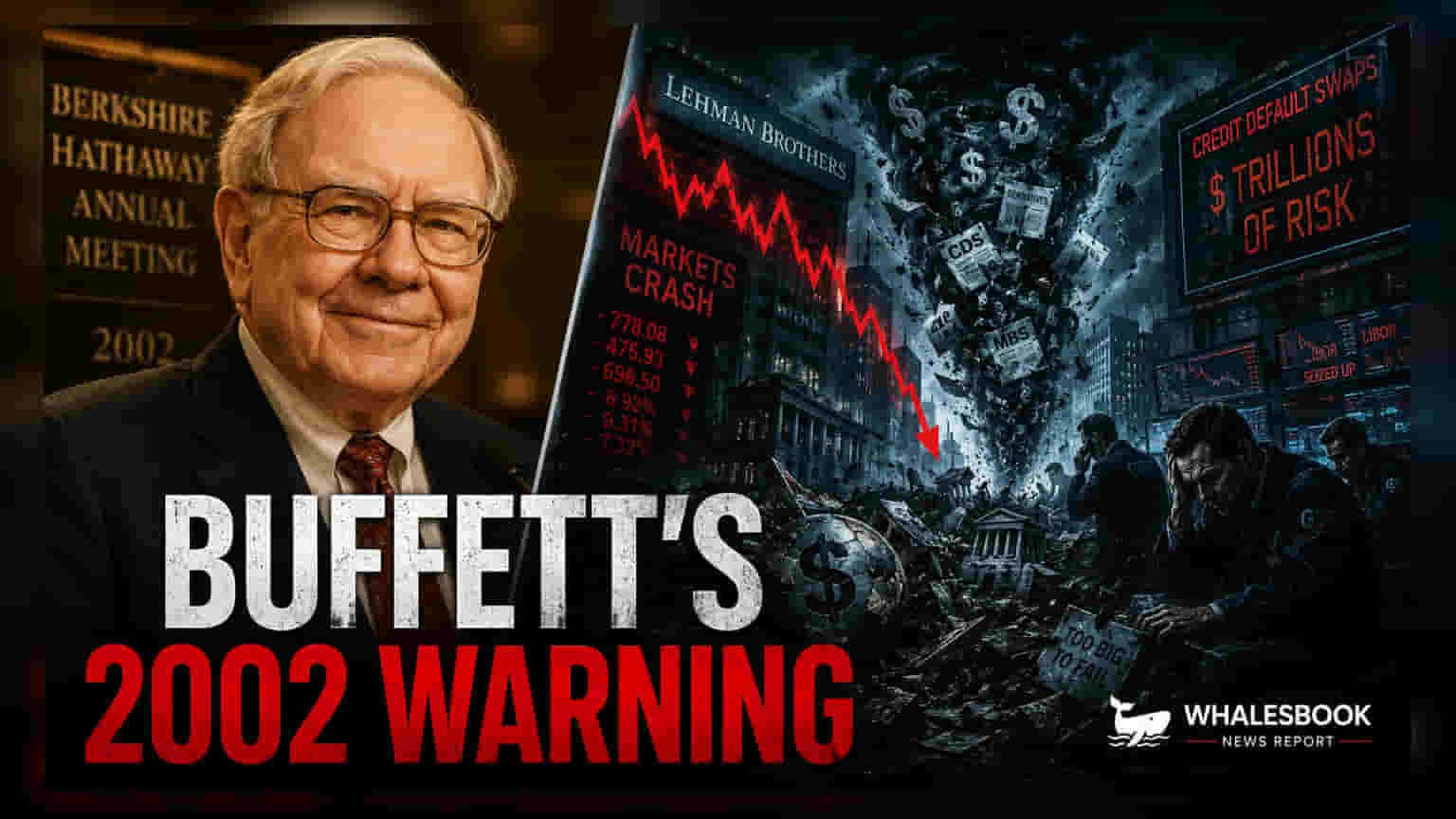
Warren Buffett’s 2002 Berkshire Hathaway letter highlighted dangers in derivatives and opaque accounting, predicting risks that later fueled the 2008 financial crisis. His focus on transparency, long-term discipline, and avoiding complex financial instruments remains a key lesson for modern investors evaluating company balance sheets.
Buffett’s 2002 Warning on Systemic Risk
In his 2002 shareholder letter, Warren Buffett shifted focus from Berkshire Hathaway's strong financial performance to warn about systemic dangers in the financial system. He famously labeled derivatives as "financial weapons of mass destruction." Buffett argued that the interconnected nature of these complex contracts meant the failure of a single counterparty could trigger a chain reaction, leading to systemic instability. He cited the 1998 Long-Term Capital Management crisis as a clear example of how hidden leverage and interdependencies could threaten the broader market, a foresight that proved accurate during the 2008 global financial crisis.
The Dangers of Opaque Accounting
Beyond derivatives, Buffett warned against "mark-to-model" accounting. This practice allows companies to value complex financial instruments using internal models rather than real-time market prices. Buffett cautioned that when these models become overly optimistic, they result in "mark-to-myth" valuations. He urged investors to look past reported earnings, especially when they rely heavily on internal estimations or complex accounting footnotes, as these figures can mask a lack of actual cash flow. He viewed reliance on EBITDA and confusing financial notes as potential warning signs of poor management transparency.
Insurance Float and Long-Term Discipline
Buffett also detailed the competitive advantage of Berkshire Hathaway’s insurance float—premiums collected from policyholders that are held before claims are paid. In 2002, this float reached $41.2 billion at a very low cost of roughly 1%. This capital provided the company with significant liquidity, allowing for long-term investments. Buffett emphasized that maintaining such strength requires rigid underwriting discipline and the patience to avoid "short-termism," contrasting his strategy with firms that rely on constant buying and selling for quick profits.
Lessons for Modern Investors
Buffett’s 2002 analysis remains highly relevant for investors today. He advocated for a "buy to keep" philosophy, focusing on acquiring businesses with intrinsic value rather than trading based on temporary market trends. His "reverse confession" approach—where he would voluntarily adjust reported earnings downward to reflect underlying realities—highlighted the value of management honesty. For investors, the takeaway is to prioritize companies with simple business models, transparent financial reporting, and the financial strength to endure market downturns without relying on excessive debt or complex financial instruments.