

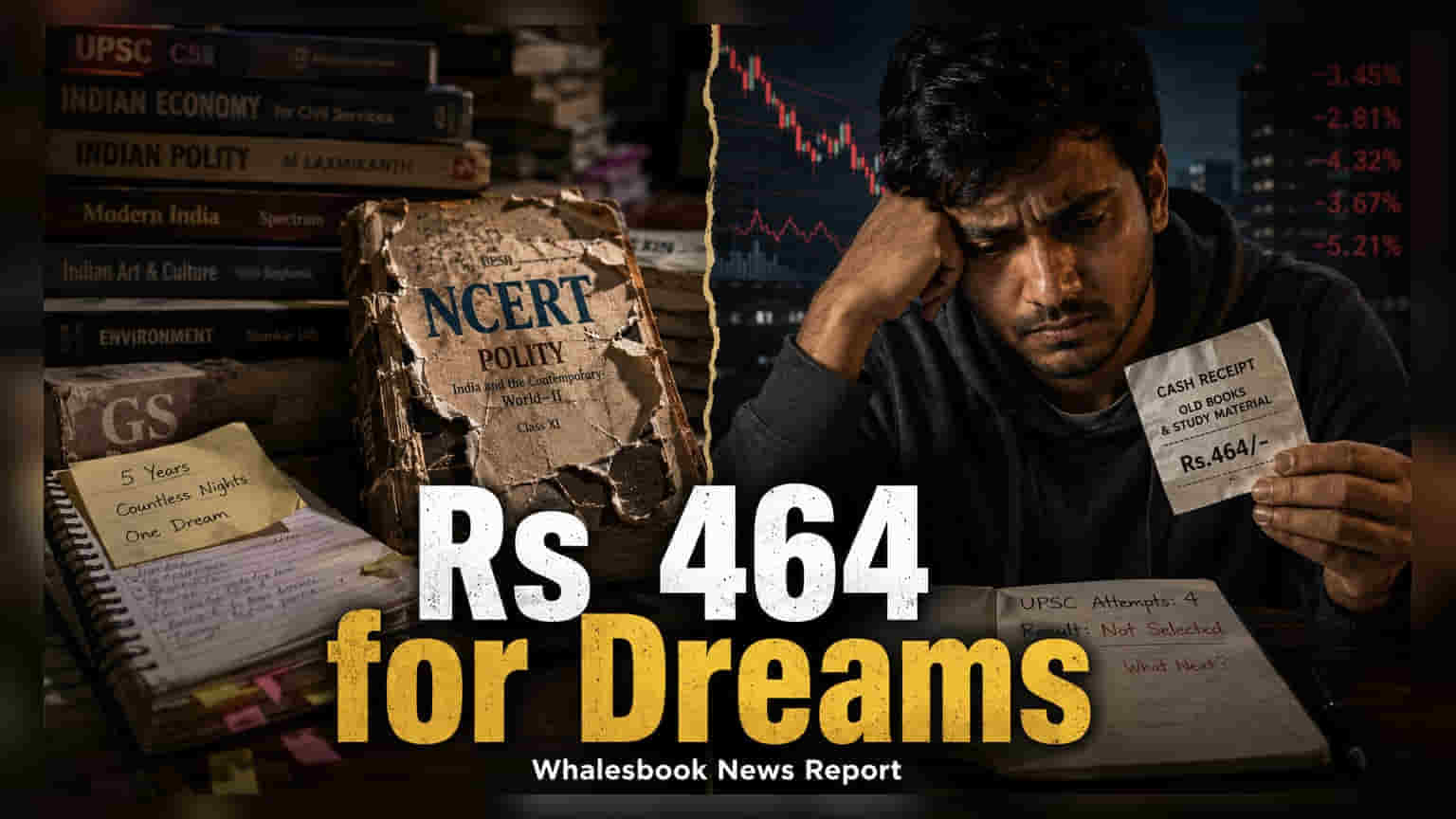
A UPSC aspirant’s viral account of selling study materials for Rs 464 has ignited conversations about the high costs and risks associated with competitive exam preparation. This event underscores the intense pressure within India’s massive test-prep industry, a segment closely watched by investors in education and skill-development firms.
A 26-year-old UPSC aspirant's decision to sell five years of study materials for just Rs 464 after four unsuccessful attempts has gone viral, serving as a stark reminder of the emotional and financial toll embedded in the competitive examination cycle. While this is a personal narrative, it resonates deeply within the context of India’s competitive coaching sector—a massive industry that remains a critical component of the country's broader education economy.
The coaching industry, ranging from large-scale test-prep chains to various edtech firms, has historically attracted significant investor attention due to the persistent demand for government jobs and professional certifications in India. However, the "success-at-all-costs" model is increasingly facing public and regulatory scrutiny. Recent discussions in the public sphere have centered on the sustainability of marketing tactics, the mental health of students, and the high opportunity cost for candidates who dedicate their prime earning years to these exams without a guaranteed return on investment.
For investors and analysts observing the education sector, this story highlights a shifting market sentiment. There is a growing focus on the necessity for education models to diversify beyond high-pressure entrance exam coaching. Regulatory bodies and government agencies are also paying closer attention to how these coaching entities operate, with increasing concerns regarding transparent advertising, student support systems, and the overall quality of educational outcomes provided to students.
The human capital risk associated with this sector is significant and is now becoming a part of the discourse regarding the long-term sustainability of the industry. As the job market evolves, investors often monitor how education companies adapt their value proposition to align with broader employability standards. The key monitorable for the industry is not just student enrollment numbers, but the regulatory environment and the ability of coaching firms to provide tangible value to students, ensuring that the educational products offered remain relevant regardless of the competitive outcome.