

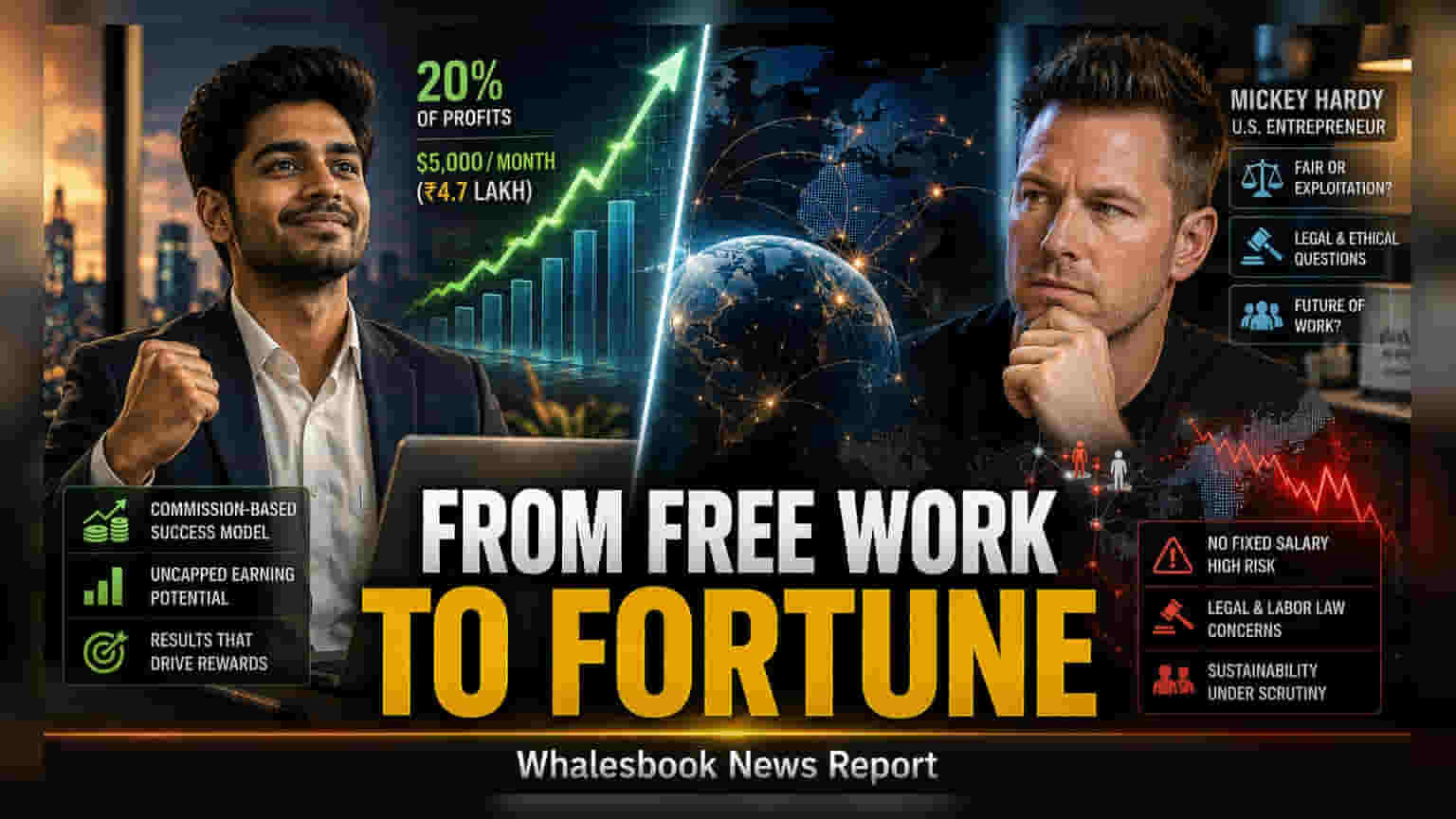
A U.S. entrepreneur is receiving attention after hiring an Indian worker on a purely commission-based contract. The model, where the employee earns 20% of generated profits, has led to a monthly income of $5,000 but triggered concerns regarding labor fairness and the sustainability of unpaid-to-paid work arrangements.
A recent social media post by U.S. entrepreneur Mickey Hardy has ignited a global debate regarding modern hiring practices and compensation structures. The discussion centers on a case where an Indian job seeker initially offered to work for free to demonstrate his skills, leading to a role where he now operates on a purely commission-based model. Under this arrangement, the employee receives 20% of the profits he directly generates, which Hardy claims has resulted in monthly earnings of approximately $5,000, or about ₹4.7 lakh.
From a business perspective, the story highlights a shift toward performance-linked compensation, often referred to as an outcome-based or "eat what you kill" model. In this setup, the company avoids fixed payroll costs, shifting the risk entirely to the employee. For businesses, this can be an attractive way to scale media assets or sales outreach without increasing overheads. For talent, the model provides an uncapped earning potential, provided the employee has the skills to deliver results that translate into immediate profit.
However, this approach faces significant scrutiny. Critics argue that "working for free" to prove one’s worth can set a dangerous precedent, potentially leading to the exploitation of vulnerable job seekers who may lack the bargaining power to demand fair, fixed wages. There are also legal and ethical questions regarding whether such arrangements bypass local labor protections, such as minimum wage laws, particularly when entry-level workers or interns are involved.
For investors and market watchers, this story reflects broader trends in the global gig economy and remote outsourcing. As companies increasingly look for ways to optimize costs, models that move from fixed salaries to variable, performance-linked pay are becoming more common in freelance and remote work sectors. While this can drive efficiency and lower operational costs for firms, it also introduces variability in how companies manage and retain human capital.
Looking ahead, the sustainability of this model remains the key point of interest. While high-performing individuals may thrive under such structures, the potential for high attrition, legal challenges, and brand reputation risks makes it a double-edged sword for organizations. The next development to track in this space is how regulatory bodies and corporate HR policies respond to the growing prevalence of non-traditional, commission-only labor agreements in a digital-first global economy.