

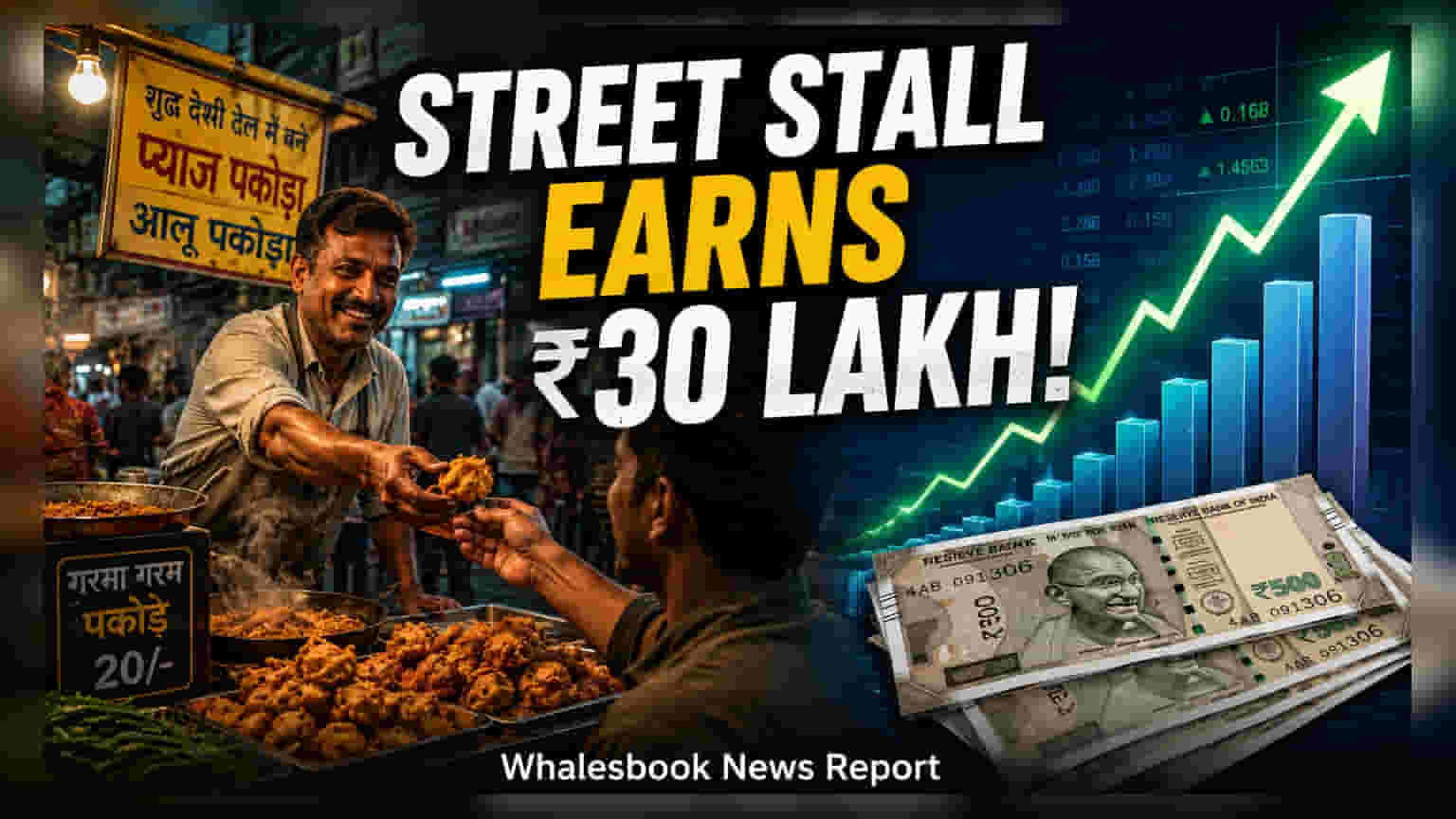
A viral post estimating a roadside vendor’s annual profit at ₹30 lakh has sparked online debate. Investors should differentiate between social media anecdotes and audited financial performance. Street food businesses in the informal sector operate without the transparency, tax disclosures, or regulatory oversight required of listed companies, making such profit claims difficult to verify.
A recent social media post estimating that a local bread pakoda stall earns ₹30 lakh annually has captured widespread attention. The claim, shared by a user online, relies on a simple calculation: an estimated 400 customers per day, spending an average of ₹30 per bill, leading to a daily revenue of ₹12,000. The post further suggests that the vendor saves 70% of these earnings after covering costs.
The Informal Economy vs. Corporate Data
For investors and market observers, it is important to distinguish between viral internet claims and actual corporate financial health. Unlike listed companies, which are mandated by law to provide audited financial statements, tax filings, and clear disclosure of operational costs, street-side stalls belong to the unorganized, informal economy. There is no official way to verify the revenue, margins, or cost structure of such a business.
In the corporate world, profit margins are calculated after accounting for complex variables like taxation, depreciation, professional staff costs, compliance, and overheads. The 70% savings rate claimed in this viral narrative is an unverified user estimate. It does not account for the hidden costs inherent in running an informal business, such as irregular demand, weather-related disruptions, potential civic body fines, or the physical toll of operating a stall without the protection of long-term commercial leases.
Understanding Operational Risks
While the story highlights the grit and potential of individual entrepreneurship, street food businesses face significant operational risks that differ from established retail chains. The most prominent risk is the lack of a 'moat' or business advantage. Street food is a low-barrier-to-entry sector; if a specific location becomes highly profitable, new vendors can quickly emerge nearby, increasing competition and potentially squeezing margins.
Furthermore, street vendors are vulnerable to regulatory action. In many Indian cities, stalls must navigate municipal licensing, hygiene regulations, and local zoning laws. A change in local policy or a civic drive can disrupt operations overnight. These are 'execution risks' that corporate entities manage through legal teams and established compliance departments, which are absent in the informal setup.
Why Data Matters More Than Buzz
Investors analyze businesses based on sustainable growth, recurring cash flow, and scalability. A roadside stall, while capable of generating cash, typically lacks the ability to scale efficiently without becoming a formal business entity. The excitement around such numbers often ignores the reality of the daily struggle and the instability of the model.
For readers, this story serves as a reminder that viral financial success stories on social media are rarely backed by the rigorous data required to call them a viable business model. When analyzing any business opportunity, whether small or large, the focus should always remain on audited revenue, verifiable tax returns, and a clear understanding of the risks, rather than anecdotal estimations from social media.