 Whalesbook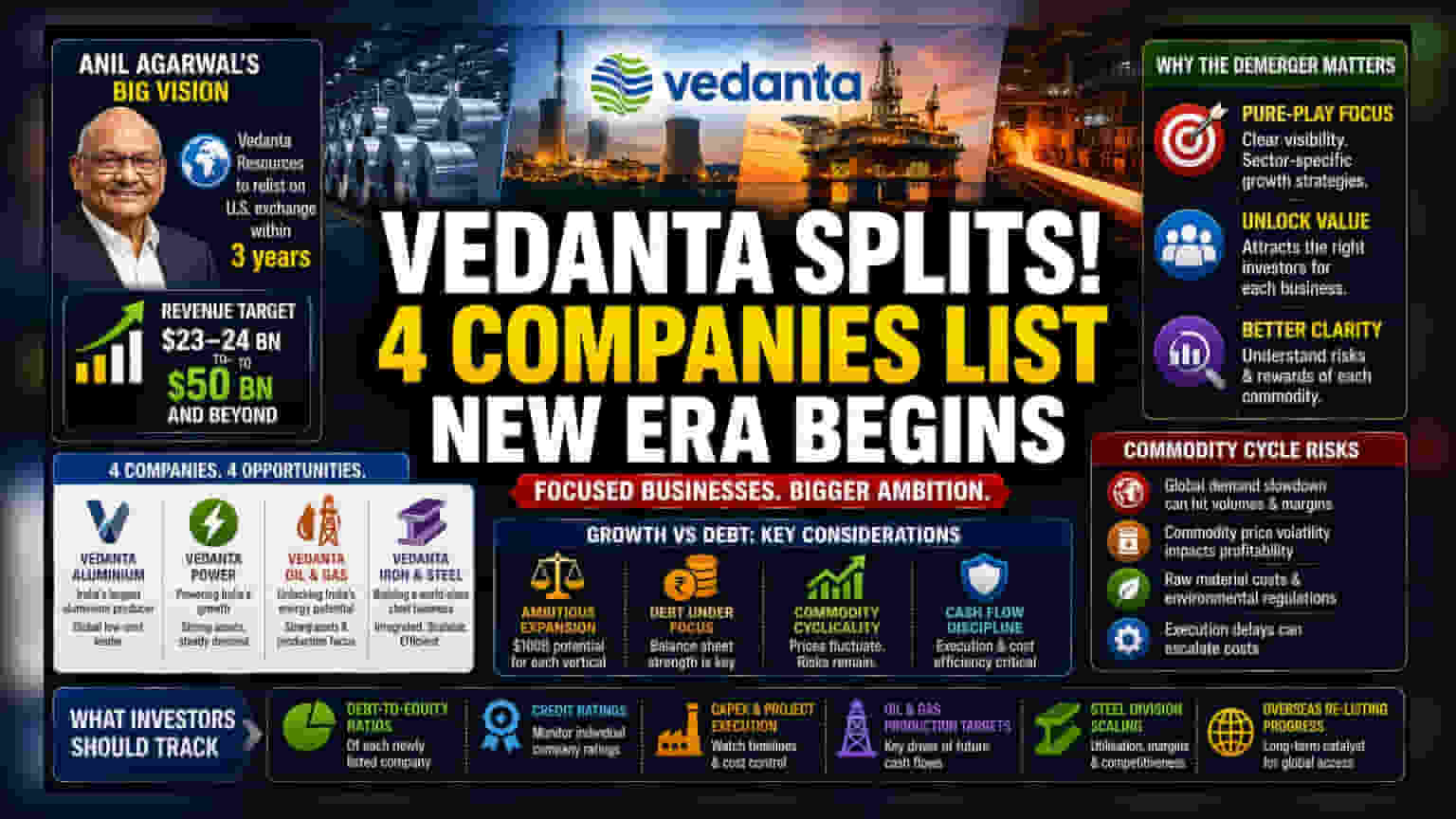


Vedanta’s four demerged businesses have officially started trading on Indian stock exchanges. Chairman Anil Agarwal has outlined ambitious growth targets, including a potential overseas relisting in the future. Investors are now assessing the value of these focused entities against the group's long-standing debt and commodity cycle challenges.
What Happened
Vedanta has officially split its operations into separate, focused companies, with four entities—Vedanta Aluminium, Vedanta Power, Vedanta Oil and Gas, and Vedanta Iron and Steel—making their stock market debut on Monday. This restructuring follows an approval process that aimed to create standalone, pure-play businesses from the group's diverse natural resource portfolio. Alongside the listing, Group Chairman Anil Agarwal shared a long-term vision, mentioning a potential future relisting of the parent entity, Vedanta Resources, on an overseas exchange like the U.S. within the next three years. The group has set a significant revenue target, aiming to grow from its current level of $23-24 billion to $50 billion.
Why The Demerger Matters For Investors
The move to separate these businesses is designed to provide greater operational clarity and allow each company to pursue its own growth strategy. In the commodity sector, investors often prefer focused companies over conglomerates because they can better understand the risks and rewards of specific products. For instance, an investor interested in aluminium can now invest directly in that business rather than a diversified mining and oil firm. By creating these entities, the group hopes to unlock value and potentially attract a different class of investors who prefer sector-specific exposure.
The Growth Versus Debt Question
While the expansion plans and the $100 billion revenue potential for individual verticals sound ambitious, investors are likely to focus heavily on the balance sheet. A long-standing point of discussion for Vedanta has been its debt structure. In the natural resources sector, revenue growth is highly dependent on commodity prices, which can fluctuate wildly. Large capital spending on new projects and capacity expansion, while necessary for growth, can put pressure on cash flow if commodity prices stay low or if execution takes longer than expected. Investors will be watching closely to see how debt is allocated across these newly listed entities and whether each company has the independent cash flow to manage its own leverage.
Commodity Cycle Risks
It is important for investors to remember that these businesses are cyclical. This means their profits are tied to global demand and pricing for aluminium, power, oil, and steel. While Agarwal highlighted that India’s low per capita consumption of aluminium is a strong growth driver, the company’s performance will remain sensitive to global market trends, raw material costs, and environmental regulations. Any slowdown in global demand or a drop in international prices could impact the profit margins of these standalone entities, making cost-efficiency a key factor to monitor.
What Investors Should Track Next
For shareholders and potential investors, the focus will now shift to how these companies perform as independent entities. Key monitorables include the debt-to-equity ratio of each new company, their individual credit ratings, and how they manage capital spending in a competitive market. Investors should also track management commentary on project execution, particularly regarding the oil and gas production targets and the scaling of the steel division. Finally, the progress on the proposed overseas relisting will remain a secondary point of interest, as it could change the group's access to international capital markets, though it remains a long-term goal rather than an immediate change.