 Whalesbook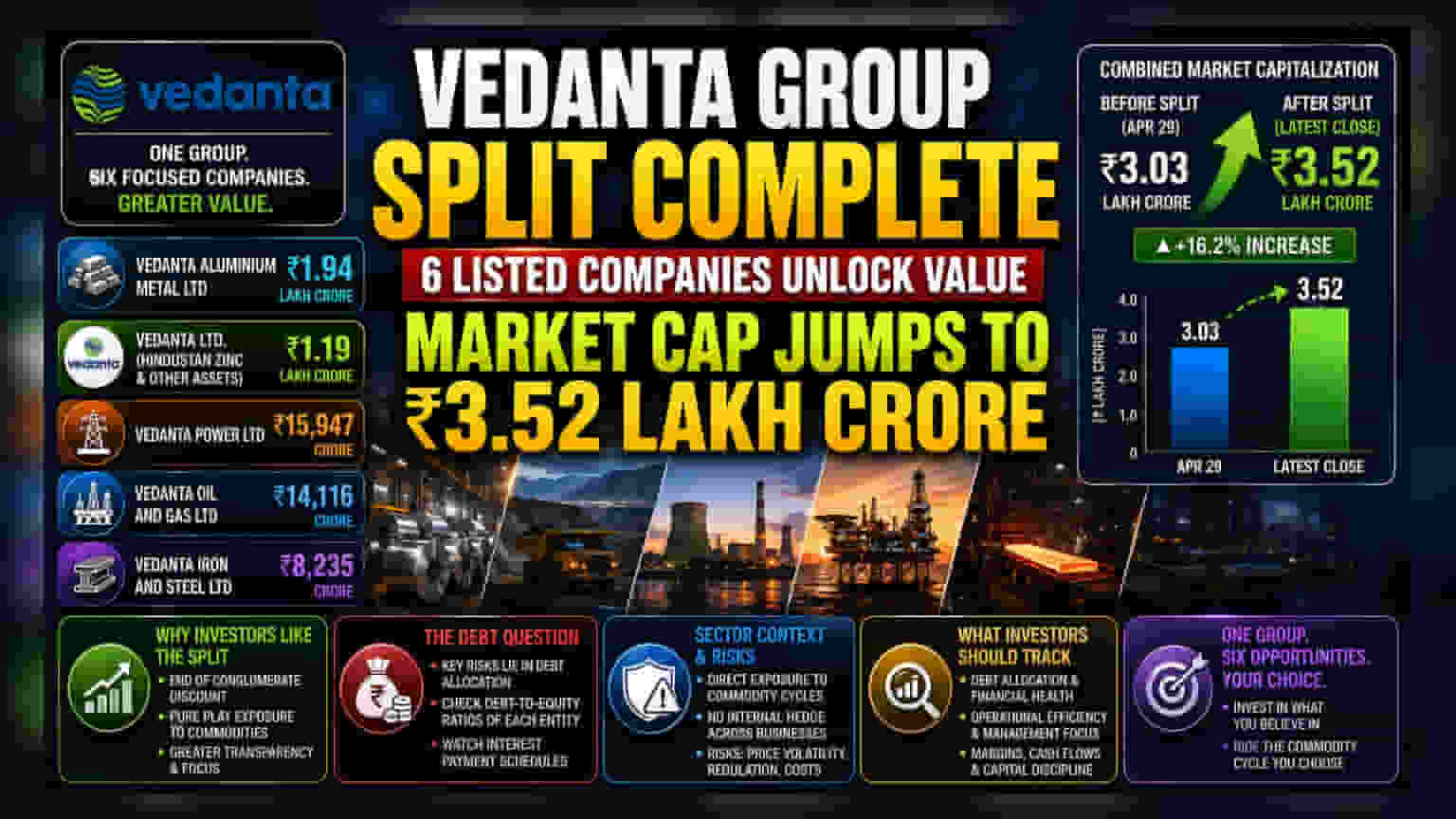


Vedanta’s restructuring into six independent entities has pushed the combined market capitalization to Rs 3.52 lakh crore, marking an increase of Rs 49,000 crore since the split. While the market has rewarded the move toward a 'pure-play' business model, investors should look beyond the stock price to understand how debt and operational focus are managed across these new units.
What Happened
Vedanta Group has successfully split its business into six independent, listed entities. This restructuring was designed to create focus, allowing each unit to operate without the complexity of a diversified conglomerate. By Monday’s market close, the combined market capitalization of these entities reached approximately Rs 3.52 lakh crore. This represents a significant jump from the Rs 3.03 lakh crore valuation seen on April 29, just before the restructuring process was finalized.
Among the new units, Vedanta Aluminium Metal Ltd has captured the most investor interest, securing a market valuation of about Rs 1.94 lakh crore. The parent entity, Vedanta Ltd., which retains interests in businesses like Hindustan Zinc, ended with a valuation of roughly Rs 1.19 lakh crore. The remaining units—Vedanta Power (Rs 15,947 crore), Vedanta Oil and Gas (Rs 14,116 crore), and Vedanta Iron and Steel (Rs 8,235 crore)—also reflect the market’s specific pricing for those commodities and business models.
Why The Market Likes 'Pure Plays'
Investors often apply a 'conglomerate discount' to large, complex companies. This means the market values a company lower than the sum of its parts because investors cannot easily bet on just one part of the business. By splitting into separate companies, Vedanta has allowed investors to choose exactly which commodity cycle they want to invest in. For example, an investor who specifically wants exposure to aluminium prices can now invest in the aluminium entity without their capital being tied up in the oil or power business. This increased transparency and focus is a primary reason for the valuation surge seen after the listing.
The Debt Question
While the stock market has assigned a higher value to these separate pieces, the underlying financial reality remains a critical monitorable. Historically, Vedanta Ltd. carried significant debt. A major concern for any investor is how this debt burden has been allocated among the newly formed entities. If the debt remains concentrated in the parent company while the high-growth, high-margin assets (like aluminium) are separated, the debt servicing capacity of the parent could come under pressure. Investors should carefully examine the debt-to-equity ratios for each specific entity in their upcoming quarterly reports to see if the financial leverage is sustainable.
Sector Context And Risks
These entities are now directly exposed to their respective commodity cycles. Unlike before, when a weakness in oil prices might have been cushioned by strong aluminium profits, these standalone companies no longer have that internal safety net. If global aluminium prices fall, the aluminium entity’s margins will be directly hit, and there will be no other segment to balance it out. This makes the operational efficiency and cost-control measures of each unit more important than ever. Furthermore, the companies face typical sector risks, such as fluctuating raw material costs, regulatory hurdles in mining, and global demand shifts.
What Investors Should Track Next
Investors should focus on several key areas as these entities begin their independent journeys. First, watch for the specific debt allocation and the interest payment schedules for each company. Second, monitor the management's focus; without the distraction of a conglomerate structure, these companies should ideally demonstrate improved operational efficiency and faster decision-making. Finally, track the profit margins of each unit to see if they can maintain their valuation without the backing of the larger group. The market’s initial enthusiasm is based on expectations, but long-term value will depend on the cash flow generated by each individual business.