

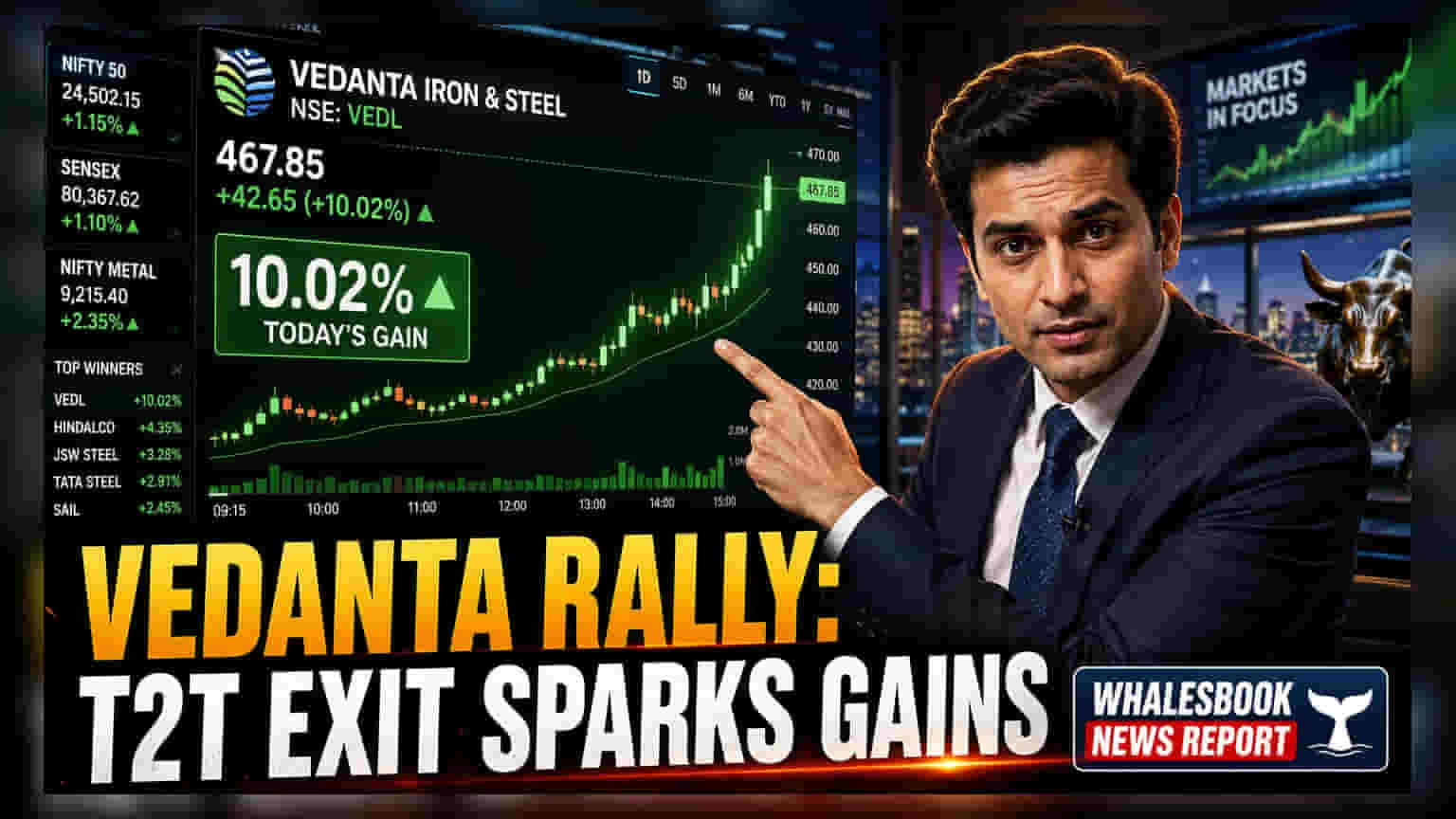
Shares of Vedanta Group’s demerged entities, including Vedanta Iron and Steel, rallied after being removed from the restrictive Trade-to-Trade (T2T) segment. This regulatory shift allows for intraday trading, which has increased liquidity and investor interest. Investors are now watching how these independent business units perform as they operate separately under the group umbrella.
What Happened
Shares of the recently demerged entities under the Vedanta Group recorded gains on Thursday following their removal from the T2T (Trade-to-Trade) segment. Vedanta Iron and Steel, one of the key units, hit the upper circuit limit of 10% during the session. Other entities, including Vedanta Aluminium, Vedanta Oil and Gas, and Vedanta Power, also registered gains for the second consecutive trading day. This move is significant for investors because it changes how these stocks can be traded on the exchange.
Why The T2T Exit Matters
The Trade-to-Trade (T2T) segment is a regulatory classification where shares can only be bought or sold for delivery. This means intraday trading—buying and selling the same stock on the same day—is not permitted. By placing a stock in this segment, regulators typically aim to curb excessive speculation and volatility.
When a stock moves out of the T2T segment, it returns to the normal rolling settlement cycle. This allows investors to perform intraday trades and provides better price discovery. For the Vedanta demerged entities, this transition implies that regulators and exchanges have moved them to a standard trading framework, which often leads to increased participation from traders and improved liquidity.
Performance Highlights
The market reaction was swift, with Vedanta Iron and Steel reaching Rs 42.64, reflecting a rise of over 75% since its listing two weeks ago. Vedanta Oil and Gas also saw positive momentum, gaining over 8.5% to approximately Rs 42.12. The stock has delivered gains of more than 32% since its debut. Meanwhile, Vedanta Aluminium rose 1.5% to Rs 458.75. For context, analysts have begun tracking these entities separately; for instance, Emkay Global recently initiated coverage on Vedanta Aluminium with a price target of Rs 550, suggesting a potential upside based on their outlook for the business. Vedanta Power also contributed to the trend, moving up by 4.8% to Rs 46.25.
The Strategic Demerger
This market activity follows the Vedanta Group’s strategic decision to split its massive operations into five distinct, specialized entities: Vedanta Aluminium Metal Ltd, Talwandi Sabo Power Ltd, Malco Energy Ltd, Vedanta Iron and Steel Ltd, and the flagship Vedanta Ltd. The logic behind such a demerger is to allow each business unit to focus on its specific industry—such as oil and gas, aluminum, or iron and steel—without the complexity of a consolidated conglomerate. This structure is intended to give investors a clearer view of the performance and valuation of each business segment.
What Investors Should Track
While the current price action is driven by the change in trading status, investors should keep a few things in mind. The movement out of the T2T segment enables more normal trading, but it does not change the fundamental business operations of these companies. The long-term performance of these stocks will ultimately depend on the actual business results, such as revenue growth, profit margins, debt management, and the ability of each unit to compete in its specific sector. Investors should monitor quarterly financial results, production updates, and management commentary on future spending plans rather than focusing solely on temporary price swings caused by changes in trading segments.