

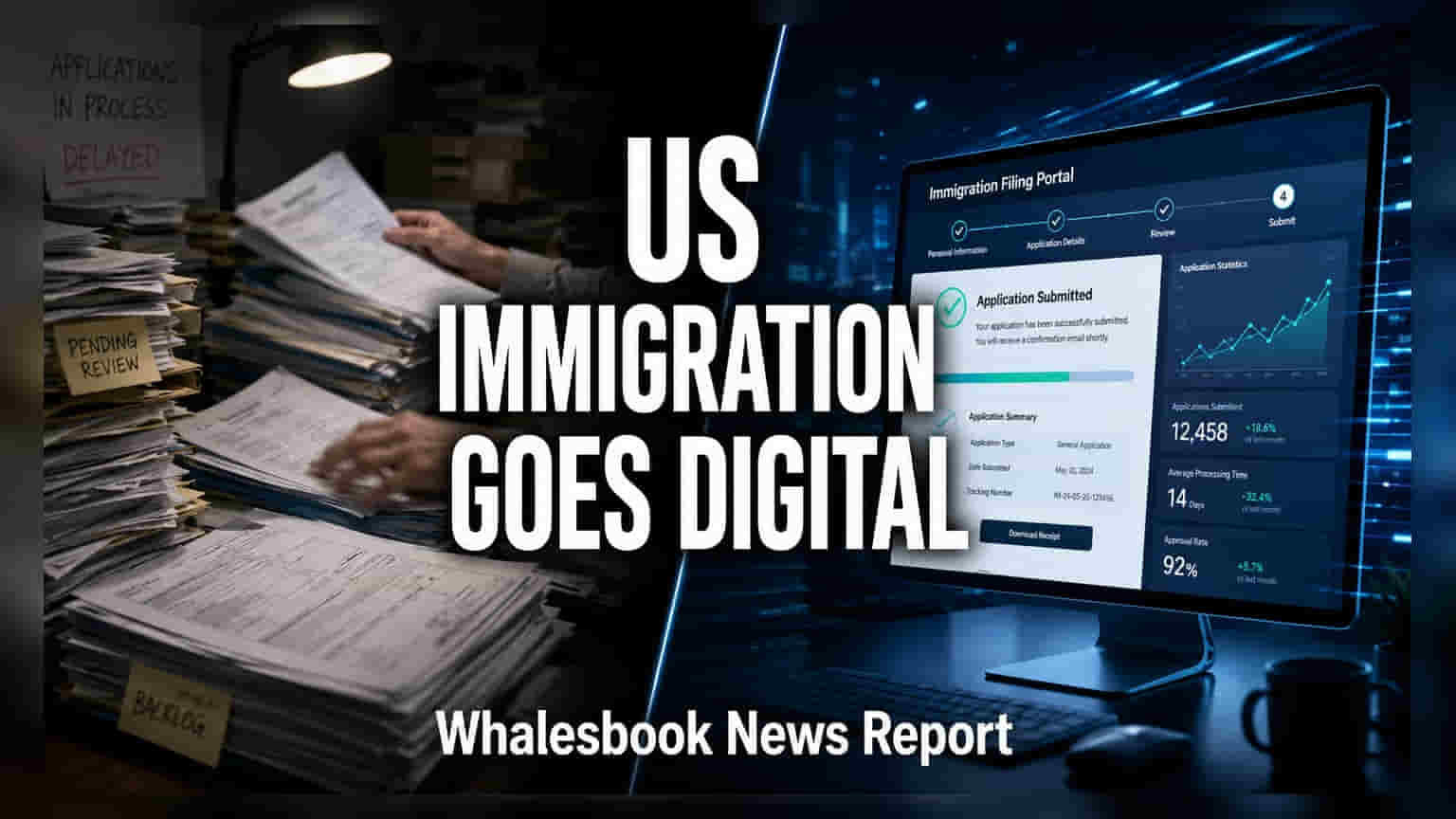
The U.S. Citizenship and Immigration Services is transitioning to online-only filing for forms available for at least 180 days. This policy, supported by a 60-day public notice requirement, aims to reduce the agency's $396 million annual paper-processing cost. For Indian applicants, the move could potentially improve processing speeds for visas and green cards, provided the digital systems remain stable.
The U.S. Citizenship and Immigration Services (USCIS) has finalized a new policy that will transition a broad range of immigration applications to a mandatory online-only format. This move is designed to modernize the agency's infrastructure, which has historically relied on heavy paper usage. Under the new directive, any immigration form that has been available for electronic filing for at least 180 days will eventually become mandatory for online submission, following a 60-day public notice period.
This shift is primarily aimed at boosting operational efficiency. In fiscal year 2025 alone, the USCIS handled over 14 million benefit requests. The scale of this paper-based process was immense, requiring approximately 453 million pages of documentation. By digitizing these requests, the agency aims to cut down on the $396 million it spent on lockbox operations and the additional $10 million in annual postage expenses. For the USCIS, these savings are expected to free up resources that can be redirected toward improving application review times.
For the large number of Indian professionals and students who frequently apply for U.S. work visas, student visas, and permanent residency, this change is significant. The efficiency of the U.S. immigration system is a direct factor in the mobility of skilled talent between India and the United States. If the digitization effort succeeds, it could lead to faster turnaround times for various applications. However, the success of this transition depends entirely on the stability and user-friendliness of the USCIS online portal. Any technical glitches or system downtimes during this rollout could lead to processing bottlenecks, which have historically been a pain point for applicants.
To address the potential for a digital divide, where some applicants may lack the internet access or technical skills to file online, the USCIS has included a waiver process. Individuals who cannot file electronically can request an exemption, which will be reviewed on a case-by-case basis. There is a $25 fee associated with these waiver requests, which serves as a mechanism to manage the volume of paper filings that might still persist.
Investors and observers will now track whether the agency can effectively manage this transition without creating new hurdles. The key monitorable will be the actual reduction in processing wait times for common visa categories. If the system experiences frequent failures or if the waiver process becomes overly burdensome, it could delay the very efficiency gains the agency is trying to achieve.