

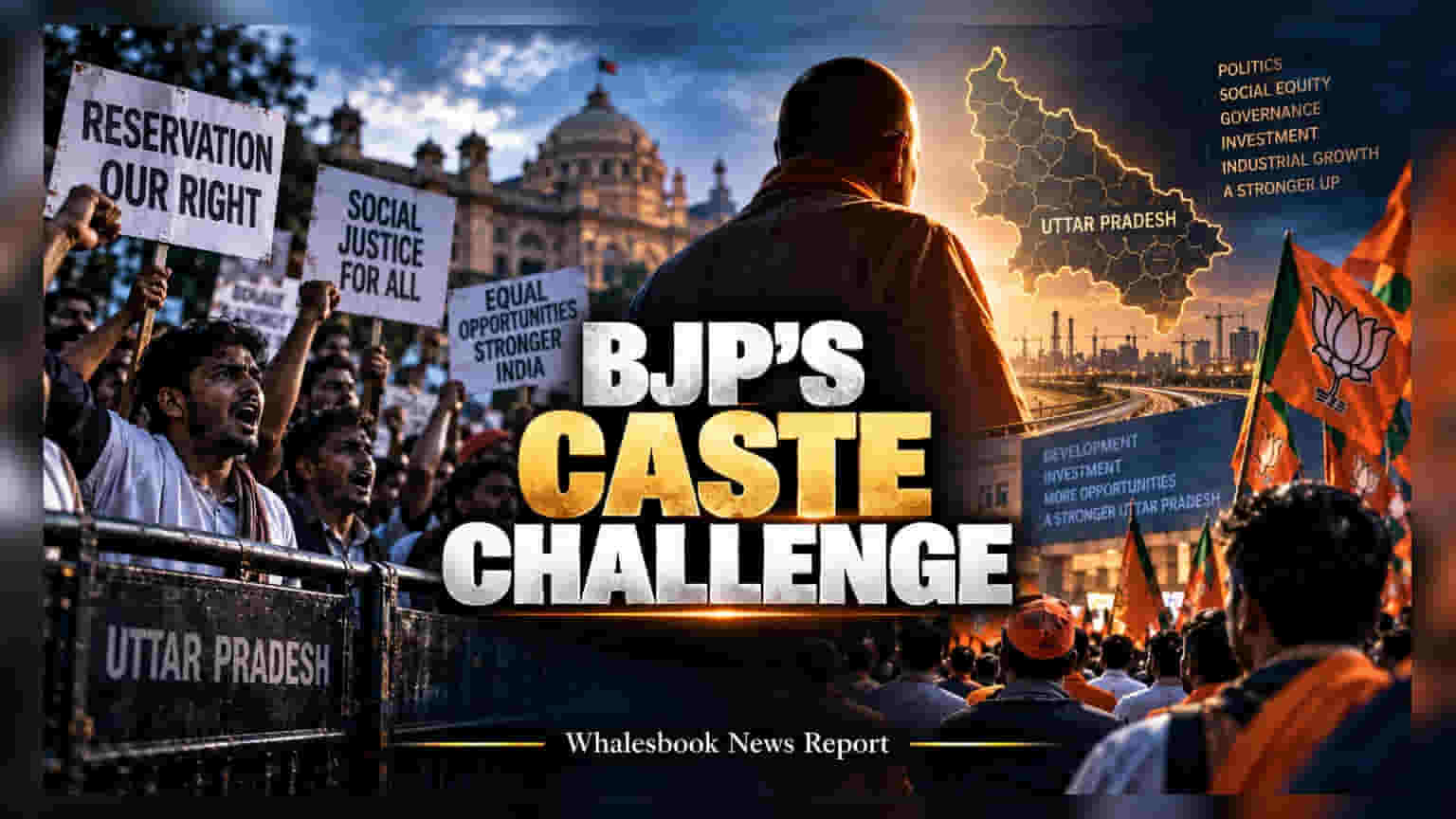
Social and political friction regarding reservation policies in Uttar Pradesh is emerging as a potential point of instability. For investors, the state remains a critical manufacturing and infrastructure hub, making policy and social continuity key monitorables for business sentiment and project timelines.
The political environment in Uttar Pradesh is seeing rising tension due to ongoing protests and debates surrounding reservation policies. While these developments are primarily political in nature, they carry significance for the business community due to Uttar Pradesh’s status as a major destination for industrial investment and manufacturing capacity in India. Investors often monitor state-level social and political stability, as consistent governance and social harmony are foundational for the smooth execution of large-scale infrastructure and industrial projects.
The current situation involves competing demands from various social groups regarding reservation norms and equity mandates, such as those from the University Grants Commission. For the ruling party, this presents a challenge in balancing the interests of diverse electoral constituencies while maintaining a stable environment for governance. In the context of business, any prolonged uncertainty or social friction within a state can sometimes lead to localized disruptions or a temporary shift in the focus of administrative resources, which are factors institutional investors and companies track closely.
Uttar Pradesh has significantly improved its standing in ease-of-doing-business metrics in recent years, attracting substantial private capital into sectors like electronics, defense manufacturing, and urban infrastructure. The business community generally prefers environments where policy frameworks remain stable and social cohesion is maintained, as these conditions reduce the risk of operational delays or regulatory pivots. The ability of the state administration to manage these social pressures without allowing them to escalate into broad-based unrest or policy volatility is a key monitorable for those with long-term capital deployed in the region.
Market participants and corporate strategists typically view political stability as a proxy for regulatory predictability. When electoral arithmetic becomes a dominant concern, there is sometimes a risk that policy focus shifts away from long-term economic development toward short-term consensus building. Investors may continue to watch for updates on how the state government handles these conflicting demands and whether this tension results in any significant changes to existing state-level industrial or administrative policies. For now, the primary interest remains whether the state can sustain its recent momentum in industrial development while navigating these complex social dynamics.