

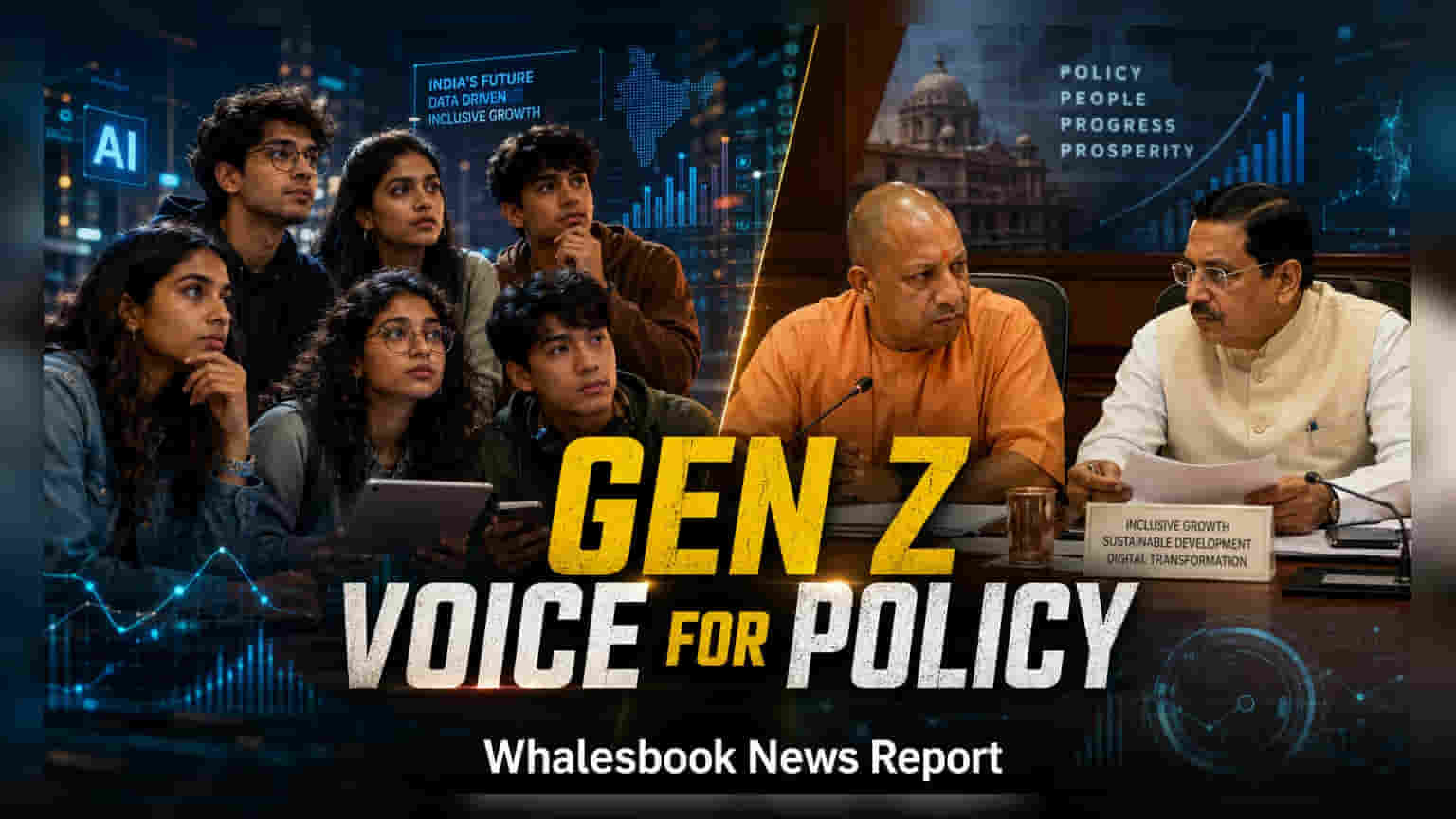
BJP MLA Rajeshwar Singh has proposed a 'Youth Advisory Council' to include citizens aged 18-35 in policy decisions on AI, startups, and education. The initiative aims to address youth concerns following recent controversies regarding competitive examination integrity.
Detailed Coverage
Uttar Pradesh BJP MLA Rajeshwar Singh has officially proposed the formation of a 'Youth Advisory Council' designed to integrate the perspectives of the 18 to 35-year-old demographic into public policy. In a formal communication directed to Uttar Pradesh Chief Minister Yogi Adityanath and Union Education Minister Pralhad Joshi, Singh suggested that this body should operate at both the state and national levels to ensure young voices influence governance.
The proposal focuses on several key sectors, including the integration of artificial intelligence in the economy, reforms for competitive examinations, and the development of startup ecosystems. This initiative follows a period of heightened national debate surrounding the integrity of standardized testing, notably the allegations involving the NEET-UG 2026 examination. By formalizing this council, the MLA aims to transition the role of the youth from being passive recipients of government schemes to active partners in the policy-making process.
Membership and Policy Focus
The structure proposed by Singh includes a transparent selection process for council members, drawing from a diverse pool of high achievers. Targeted participants would include top performers from examinations like UPSC, UPPSC, IIT-JEE, and NEET, as well as students and alumni from prestigious institutions such as the Indian Institutes of Technology, Indian Institutes of Management, and the All India Institute of Medical Sciences. The proposal mandates that at least 40% of the members be female, with additional representation from sectors such as agriculture, sports, and entrepreneurship.
Functionally, the council is intended to provide evidence-based recommendations through what the MLA termed 'Youth Pulse Reports.' These reports would cover critical areas such as skill development, digital safety, and mental health. The council's advisory mandate is aimed at aligning government policy with the rapid technological and labor market shifts currently affecting the younger workforce.
Implications for Governance
If adopted, the model would mark a shift in how state governments interact with young citizens. Singh noted that periodic consultations are often insufficient in the face of rapid technological disruptions and evolving economic needs. By institutionalizing this council, the goal is to create a constant feedback loop between the government and the youth. For the state of Uttar Pradesh, this could establish a precedent as the first state to formalize a Chief Minister-led advisory body of this nature. Investors and policy watchers will likely monitor whether this council receives official approval and how it might influence future regulatory approaches toward the education and technology sectors in the state.