

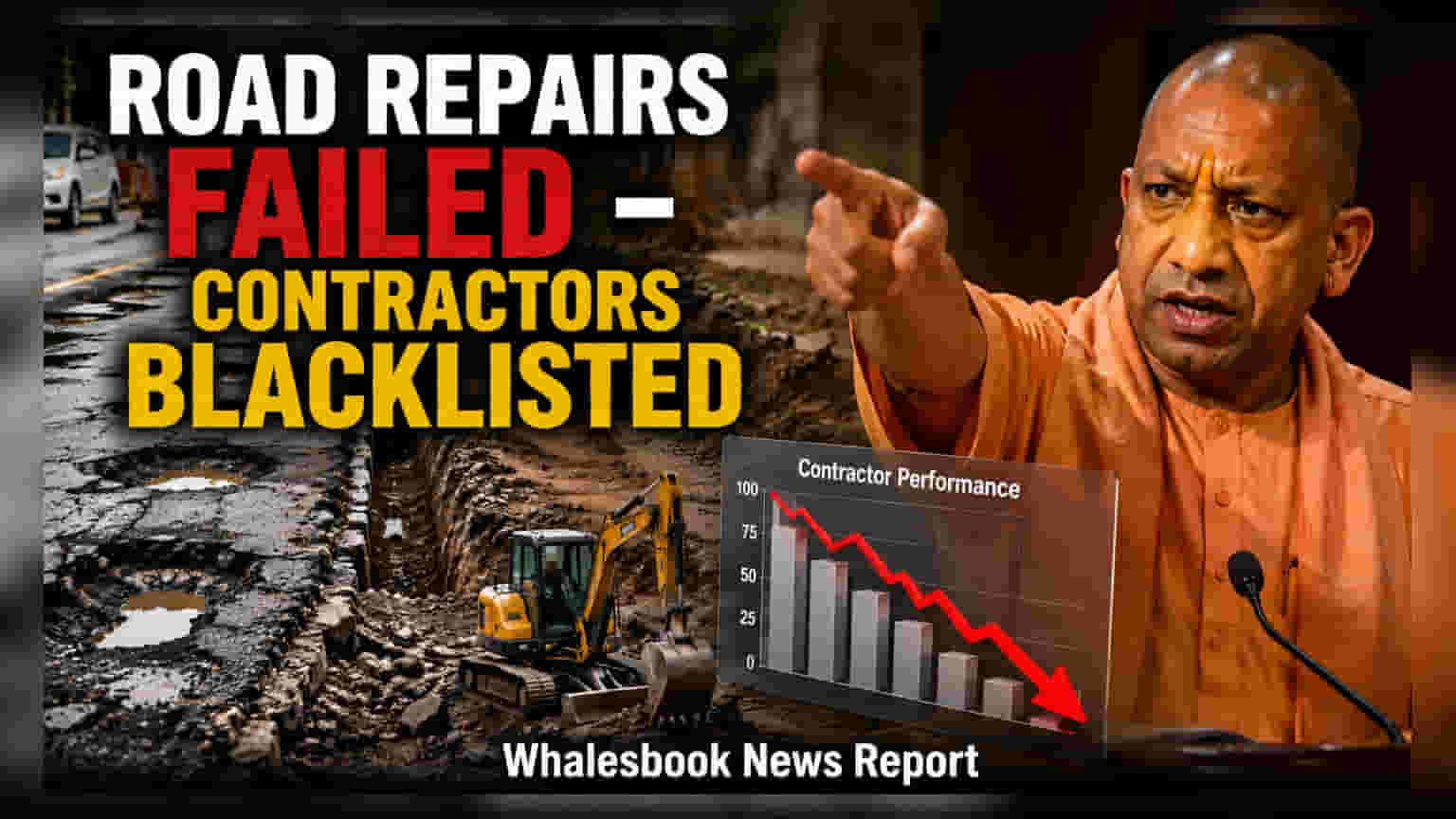
Uttar Pradesh Chief Minister Yogi Adityanath has ordered officials to blacklist contractors for poor road restoration linked to the Jal Jeevan Mission. The directive mandates strict action, including FIRs against negligent employees, to ensure infrastructure quality in regions like Agra and Mathura. This move aims to prevent delays and hold private firms accountable for project execution standards.
Detailed Coverage
Uttar Pradesh Chief Minister Yogi Adityanath has introduced a stricter accountability framework for infrastructure projects across the state, specifically targeting road restoration work linked to the Jal Jeevan Mission. During a recent review meeting in Agra, the Chief Minister expressed dissatisfaction with the quality of road repairs following the installation of drinking water pipelines. He has directed officials to blacklist contractors who fail to meet quality standards and initiate legal proceedings against officials found responsible for negligence.
The directive clarifies that contractors must restore roads to their original condition rather than merely making them motorable. This stance reflects a growing regulatory focus on the execution risks associated with public utility projects, where infrastructure is often left in poor condition after utility-laying work. For investors and businesses operating in the infrastructure and construction sectors, this indicates a potential shift toward tighter compliance requirements and stricter penalties for project delays or cost-cutting measures.
Industrial and Infrastructure Focus in Braj Region
Beyond road maintenance, the state government is prioritizing development in the Agra and Mathura-Vrindavan region. The Chief Minister has pushed for the development of leather and defense manufacturing industries, aiming to leverage local strengths. These sectors are key employment generators in the region, and government support could potentially improve operational environments for MSMEs. The administration also highlighted a Supreme Court decision that allows the Taj Trapezium Zone Authority to process applications for non-polluting industrial units, which may help resolve some of the long-standing regulatory bottlenecks for small-scale industries in the area.
Infrastructure Proposals and Future Connectivity
During meetings with the Braj Tirth Vikas Parishad, the government discussed several connectivity-related projects to boost tourism and logistics. Key proposals include a new ropeway project for Vrindavan, a combined road-rail project for the Mathura-Vrindavan route, and initiatives to expand parking facilities through land-pooling. Additionally, the government is considering the introduction of 50 small electric buses to improve public transport. These projects represent potential opportunities for construction and engineering firms, though their realization will depend on the speed of government approvals and the availability of clear land parcels. Investors may monitor the progress of these proposals, specifically tracking government orders related to the Tirth-Mitra policy and the tendering process for the mentioned transport infrastructure.