

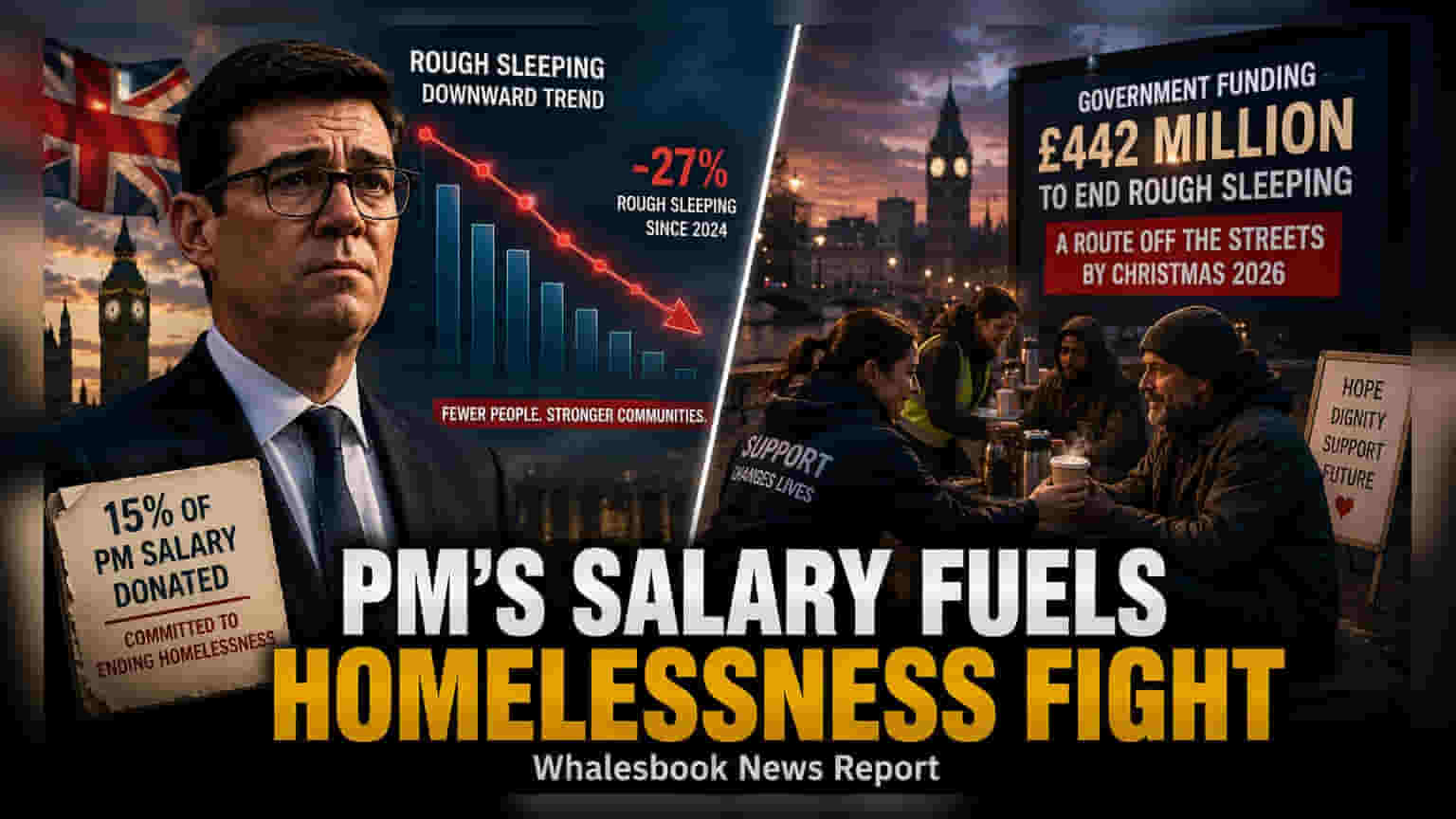
UK Prime Minister Andy Burnham will donate 15% of his salary to charity, alongside the government's new £442 million anti-homelessness funding package. While the plan aims to address social concerns, the market is weighing the potential fiscal impact against national debt pressures and previous execution challenges.
UK Prime Minister Andy Burnham has announced a personal commitment to donate 15% of his salary to charities dedicated to fighting homelessness. This pledge, which mirrors a practice he maintained during his tenure as the Mayor of Greater Manchester, accompanies a broader government initiative to combat rough sleeping. The administration has confirmed a £442 million funding package aimed at providing emergency accommodation and long-term support, with the stated goal of ensuring a route off the streets for rough sleepers in England by Christmas 2026.
Fiscal and Policy Direction
This announcement is part of the administration's intensified focus on the cost-of-living crisis and public service reform. For the broader economy, the introduction of this £442 million package is being viewed within the context of the government's overall spending strategy. While social spending is a stated priority, investors and economists are monitoring the government’s fiscal discipline. The UK is currently navigating a period of subdued economic growth and high national debt, which necessitates a balance between essential social interventions and broader fiscal sustainability.
Execution and Economic Risks
The government’s initiative to end rough sleeping by the end of the year faces several practical hurdles. While the funding is intended to accelerate progress, the feasibility of meeting such an aggressive timeline is a point of debate. Critics and analysts have pointed to the Prime Minister’s previous tenure as Mayor of Greater Manchester, where similar ambitious targets to eliminate rough sleeping were not fully achieved. This historical context creates an execution risk that the market will likely track.
Furthermore, the long-term sustainability of the current funding model remains a key monitorable. As the government attempts to address systemic issues like homelessness, the challenge lies in managing these expenditures without exacerbating existing debt pressure. The administration is currently in a phase of navigating public sector demands while trying to foster a stable economic environment. Any future budgetary adjustments or reallocation of funds to support these programs will be important indicators of the government's ongoing fiscal policy and its capacity to meet its stated public service targets.