

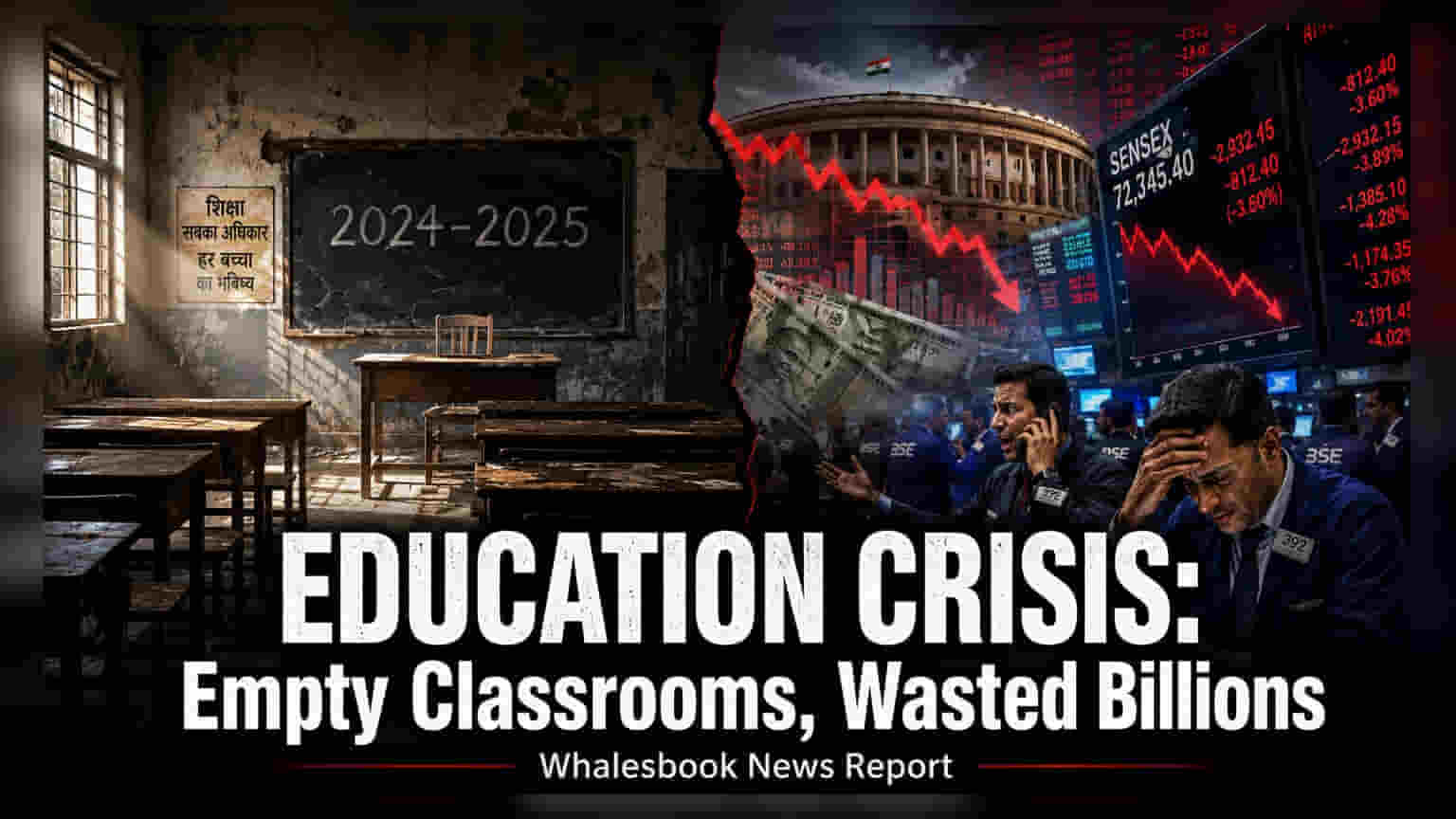
A recent UDISE+ report reveals that 5,663 schools across India currently have zero students enrolled, while over one lakh schools operate with only one teacher. These findings highlight significant inefficiencies in resource allocation and a pressing need for state-level school rationalization to improve the quality of public education.
Detailed Coverage
The latest Unified District Information System for Education Plus (UDISE+) report has brought to light systemic inefficiencies within India's public school infrastructure. While national data often emphasizes improvements in broad metrics like the Gross Enrolment Ratio, the underlying data points to a misallocation of resources that impacts both fiscal efficiency and student learning outcomes.
Impact of Zero-Enrolment and Single-Teacher Schools
The persistence of 5,663 schools with zero students enrolled indicates a critical disconnect between school infrastructure and local demand. In these instances, public funds continue to support school operations, including staff salaries, despite the absence of students. Simultaneously, the education system is grappling with the burden of over one lakh single-teacher institutions. In these schools, a solitary educator is often responsible for managing multiple grade levels, administrative duties, and the oversight of mid-day meal programs. This structural imbalance suggests that the national pupil-to-teacher ratio of 24:1 fails to capture the day-to-day reality in many understaffed institutions.
Regional Disparities in School Infrastructure
The challenges are not distributed evenly across the country, with specific states reporting significantly higher numbers of underutilized or understaffed schools. West Bengal, for example, is noted for having 4,133 schools with zero enrolment and 6,769 single-teacher schools. Similarly, Andhra Pradesh has recorded 16,357 single-teacher institutions. Other states including Jharkhand and Maharashtra also face substantial difficulties in balancing their teacher-to-student distribution, affecting hundreds of thousands of students.
Potential for Rationalization and Reform
The report identifies school rationalization—the process of merging schools with very low attendance and redeploying teaching staff to schools with high teacher deficits—as a necessary path forward. There are approximately 20,667 teachers currently assigned to schools with no students. Reassigning these professionals to single-teacher schools could alleviate the staffing pressure in high-need areas. These operational challenges are closely tied to concerns about educational quality, which the report links to a national secondary-level dropout rate of 7%. For stakeholders in the education sector and policymakers, the next important updates will involve tracking whether state governments implement these mergers and how effectively they manage the redeployment of teaching resources to optimize the existing educational budget.