

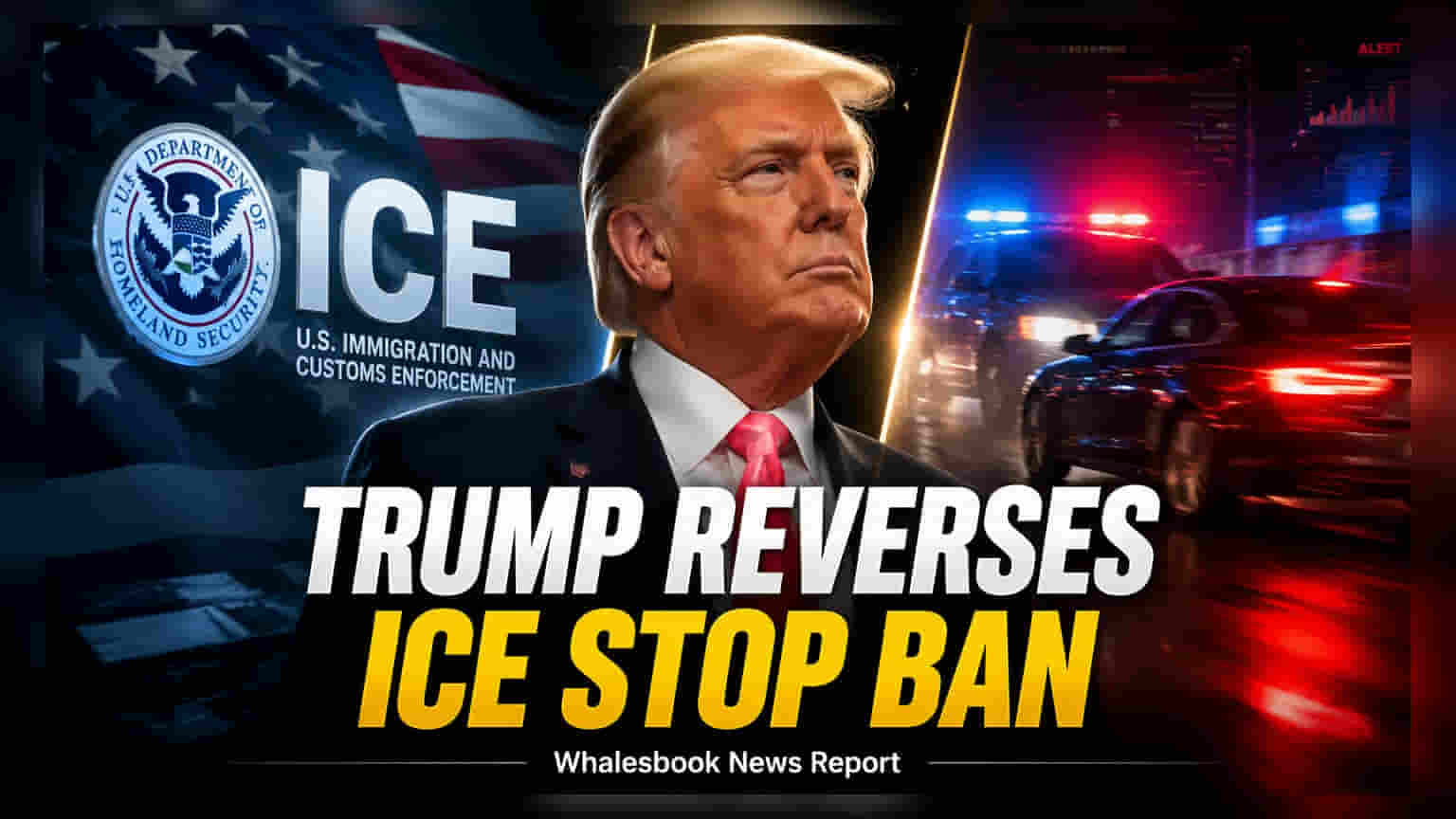
President Donald Trump has resumed ICE traffic stops just one day after a temporary suspension. The pause was initially called to review safety protocols following fatal shootings in Texas and Maine. The policy reversal highlights ongoing federal efforts to prioritize enforcement tools despite intense scrutiny over officer conduct and public safety concerns.
President Donald Trump announced on Wednesday that Immigration and Customs Enforcement (ICE) agents will resume conducting traffic stops, reversing a temporary suspension that had been in place for less than 24 hours. The initial pause was intended to allow federal officials time to evaluate enforcement practices and officer safety protocols after two high-profile fatal incidents involving immigration agents occurred within a six-day window.
Impact of the Policy Reversal
President Trump emphasized the importance of traffic stops as a primary tool for immigration enforcement and crime prevention. By rescinding the pause, the administration has signaled that it will continue utilizing these stops as part of its operational strategy. Earlier, Border czar Tom Homan had characterized the now-lifted suspension as a short-term review rather than a permanent policy change, aiming to ensure adherence to established conduct guidelines while continuing arrest operations through alternative methods.
Background on Recent Incidents
The decision to pause and subsequently resume these operations follows intense public and political scrutiny surrounding the deaths of two individuals. In Biddeford, Maine, 26-year-old Joan Sebastian Durn Guerrero was killed during an enforcement operation. While federal officials stated the action was taken due to perceived public safety concerns, the Department of Homeland Security later confirmed that Guerrero was not the target of the operation. Advocates have since challenged the official narrative, noting that the individual possessed legal work authorization.
A separate incident occurred in Houston on July 7, resulting in the death of 52-year-old Lorenzo Salgado Araujo. While the Department of Homeland Security claimed the officer acted in self-defense after the individual’s vehicle rammed a law enforcement unit, witnesses have provided conflicting accounts, alleging that the encounter involved unmarked vehicles and a lack of clear identification. Similar to the Maine incident, federal officials acknowledged that the deceased was not the intended target of the primary enforcement action.
Investigations and Accountability
The controversy surrounding these events has led to several ongoing investigations involving the Department of Homeland Security’s Office of Inspector General, the FBI, and local law enforcement agencies in both Texas and Maine. Concerns regarding the lack of body camera usage among agents have intensified, prompting a pledge from the Department of Homeland Security to speed up the deployment of this equipment. Furthermore, reports indicate that prosecutors in Houston have faced challenges in obtaining evidence from federal authorities, citing issues with compliance regarding subpoenas. The next steps for the administration will involve balancing these rigorous enforcement policies with the outcome of multiple independent investigations into officer conduct and operational safety.