

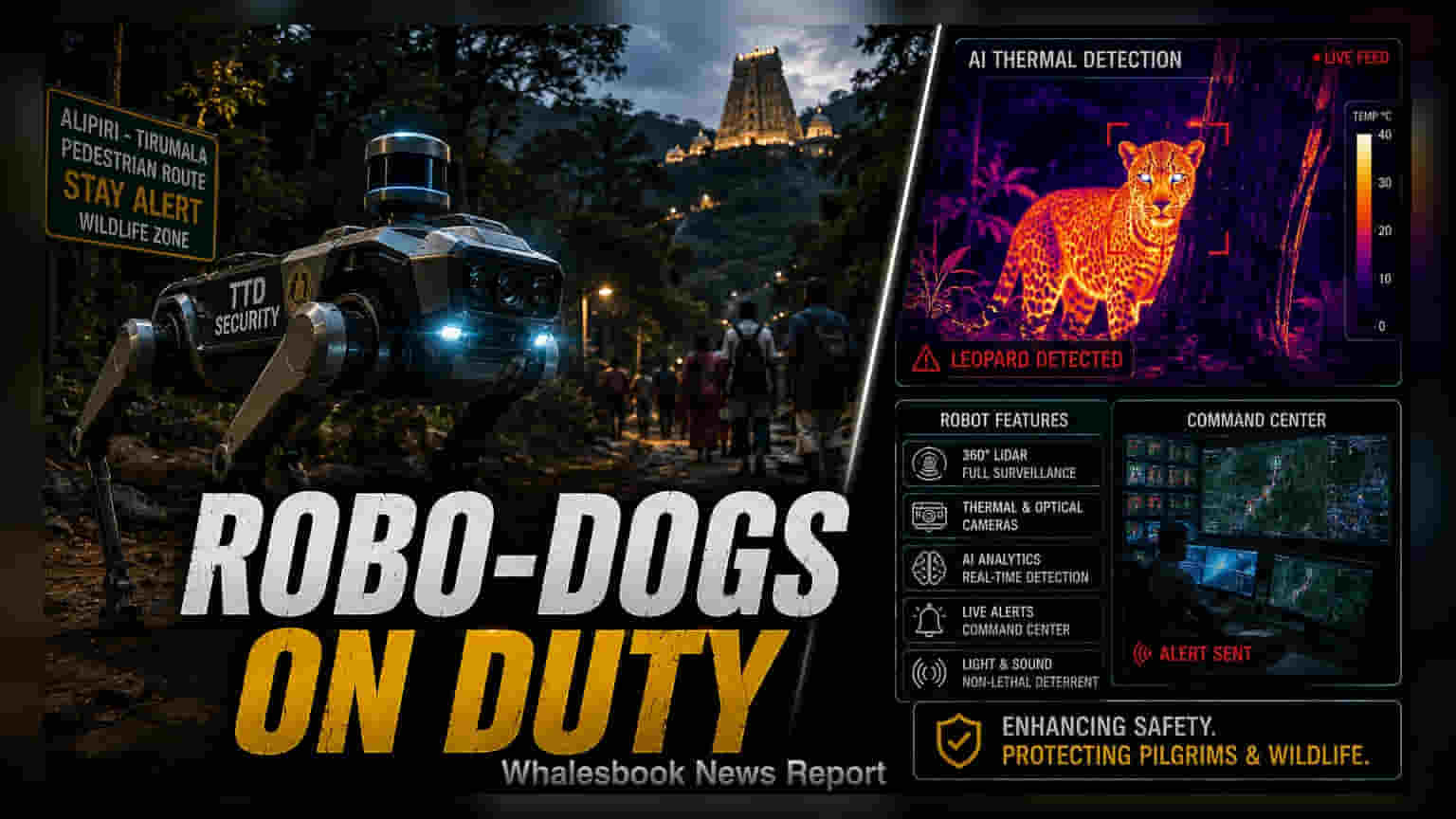
The Tirumala Tirupati Devasthanams has begun testing AI-powered robotic dogs to improve wildlife monitoring and pilgrim security in the Tirumala hills. Each unit is reportedly priced between ₹20 lakh and ₹25 lakh, marking a high-tech shift in public infrastructure surveillance. Investors may monitor whether these capital-intensive investments effectively improve operational security compared to traditional methods.
The Tirumala Tirupati Devasthanams (TTD) is testing the use of advanced robotic technology to enhance security and wildlife management along the sensitive Alipiri-Tirumala pedestrian route. The organisation has introduced AI-powered, four-legged robots designed to navigate the rugged, forested terrain of the Tirumala hills, where traditional human surveillance faces limitations.
These robotic units are equipped with 360-degree LiDAR, thermal cameras, and optical sensors. An integrated artificial intelligence system processes visual data in real-time to identify humans, vehicles, and animals, including leopards. Upon detecting a threat, the system can live-stream thermal imagery and trigger alerts to a central command center, allowing for rapid response. The robots also feature non-lethal deterrents, such as specialized light and sound systems, to steer wildlife away from pilgrim pathways without causing physical harm.
From a financial and operational perspective, the initiative represents a significant adoption of high-end surveillance technology. Reports indicate each robotic unit costs between ₹20 lakh and ₹25 lakh. Because the project is currently in an experimental 20-day trial phase, the TTD is evaluating whether the operational benefits, such as reduced human risk and improved response times, justify the capital expenditure. Officials have clarified that these robots are intended to supplement, not replace, existing security measures like foot patrols and camera traps.
For the broader sector, this deployment highlights the growing integration of robotics and AI in India’s public safety and infrastructure maintenance. As public bodies and large corporations look to automate surveillance in difficult-to-access areas, the demand for such specialized robotics may increase. However, the success of this model will depend on several factors, including the technology's long-term durability in forest conditions, maintenance requirements, and the necessity of external vendor support for software updates.
The key monitorable for stakeholders will be the results of the initial trial. If the robots prove effective in reducing human-wildlife conflicts and lowering security risks, it may encourage similar adoptions in other wildlife sanctuaries or critical infrastructure zones across the country. Conversely, if the high cost and maintenance demands outweigh the benefits, the project may face scrutiny regarding its return on investment.