

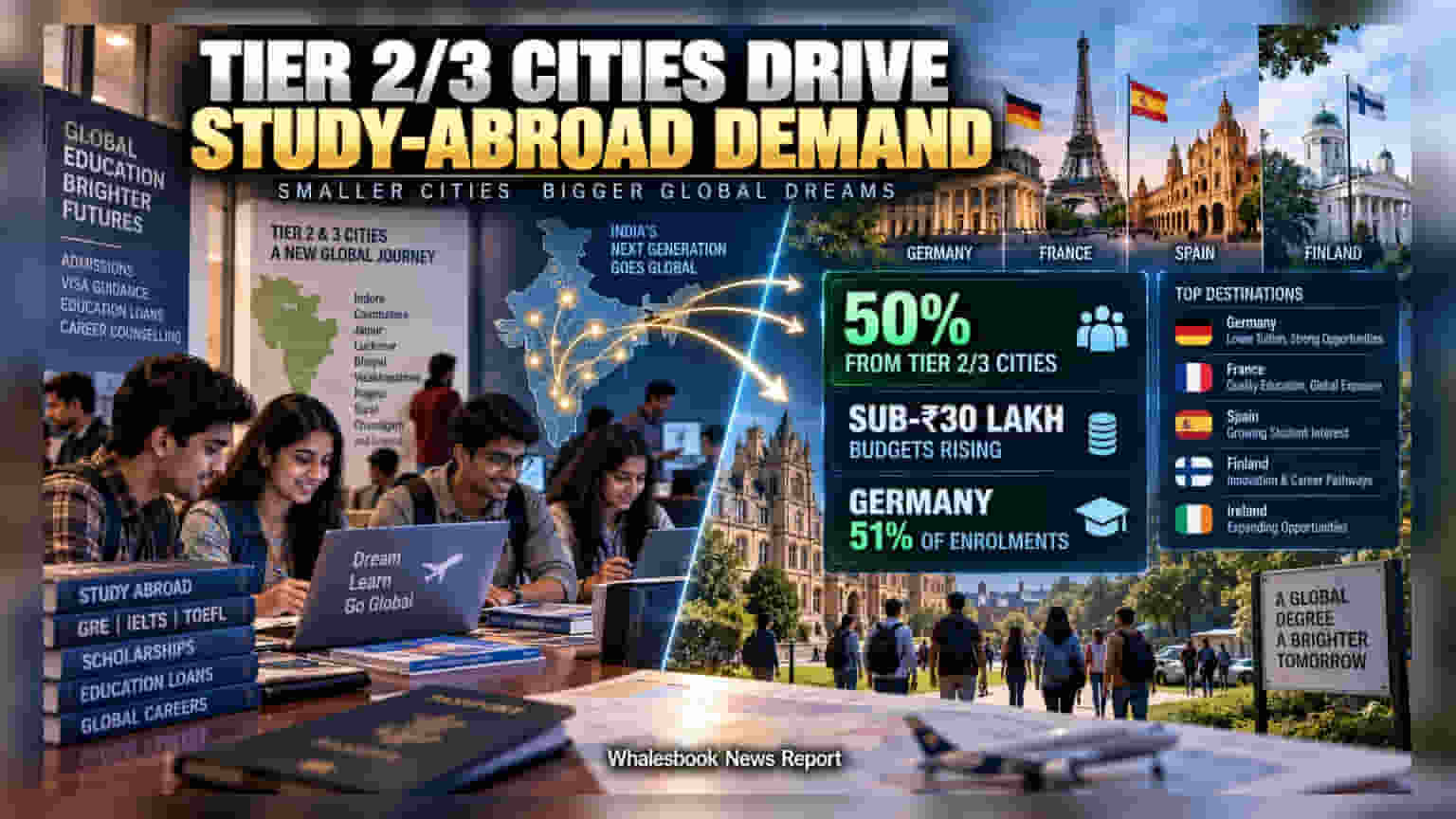
Half of India's study-abroad aspirants now originate from Tier 2 and Tier 3 cities, with a clear pivot toward budget-friendly European destinations like Germany. This shift is reshaping the business models of EdTech and student-lending firms, as affordability becomes the primary driver for a broader, cost-conscious student demographic.
India’s overseas education market is undergoing a structural shift, with half of all study-abroad aspirants now originating from Tier 2 and Tier 3 cities. Recent analysis of 53,800 learners by EdTech firm upGrad highlights that international education is no longer restricted to affluent families in major metropolitan hubs. This broader geographic reach suggests a growing middle-class aspiration for global degrees, provided the costs remain manageable for families outside the top metros.
A major factor behind this geographic dispersion is a heightened focus on affordability. Students from smaller cities are increasingly filtering their choices to target total study budgets under ₹30 lakh. This shift is steering demand away from traditional, high-cost markets like the United States toward European nations that offer lower tuition fees and clearer pathways to post-study work. Consequently, the addressable market for overseas education service providers has expanded, but the nature of the customer has become more price-sensitive.
Germany has emerged as a standout beneficiary of this trend. According to enrollment data for the period between January 2025 and June 2026, Germany accounted for 51% of upGrad's study-abroad learners. Beyond Germany, countries such as France, Spain, Finland, and Ireland are also gaining traction. These destinations often feature public universities with minimal or no tuition costs, making them more accessible for aspirants from smaller Indian cities who are weighing the return on investment of a foreign degree against high upfront expenses.
The transformation of the study-abroad segment holds significant implications for the broader education ecosystem, including EdTech platforms, student loan providers, and visa-counselling services. Historically, many of these businesses focused on high-ticket, premium customers. With the influx of students from smaller towns, service providers are now under pressure to optimize their business models for volume rather than just high margins per student. As student financing becomes a key component of this market, the growth of education loan portfolios for banks and non-banking financial companies will act as a primary barometer for the health of this sector.
Investors in this space should watch several variables that could impact performance. First, visa policy stability in European nations is critical for maintaining long-term student demand. Second, the ability of service providers to maintain profitability while serving a more budget-conscious customer base remains a challenge. While the expansion into Tier 2 and Tier 3 cities offers a larger customer base, it also requires companies to manage potential margin compression. Delivering value-added services at lower price points, while navigating potential currency fluctuations that affect the cost of education abroad, will be the next major test for platforms operating in this segment.