

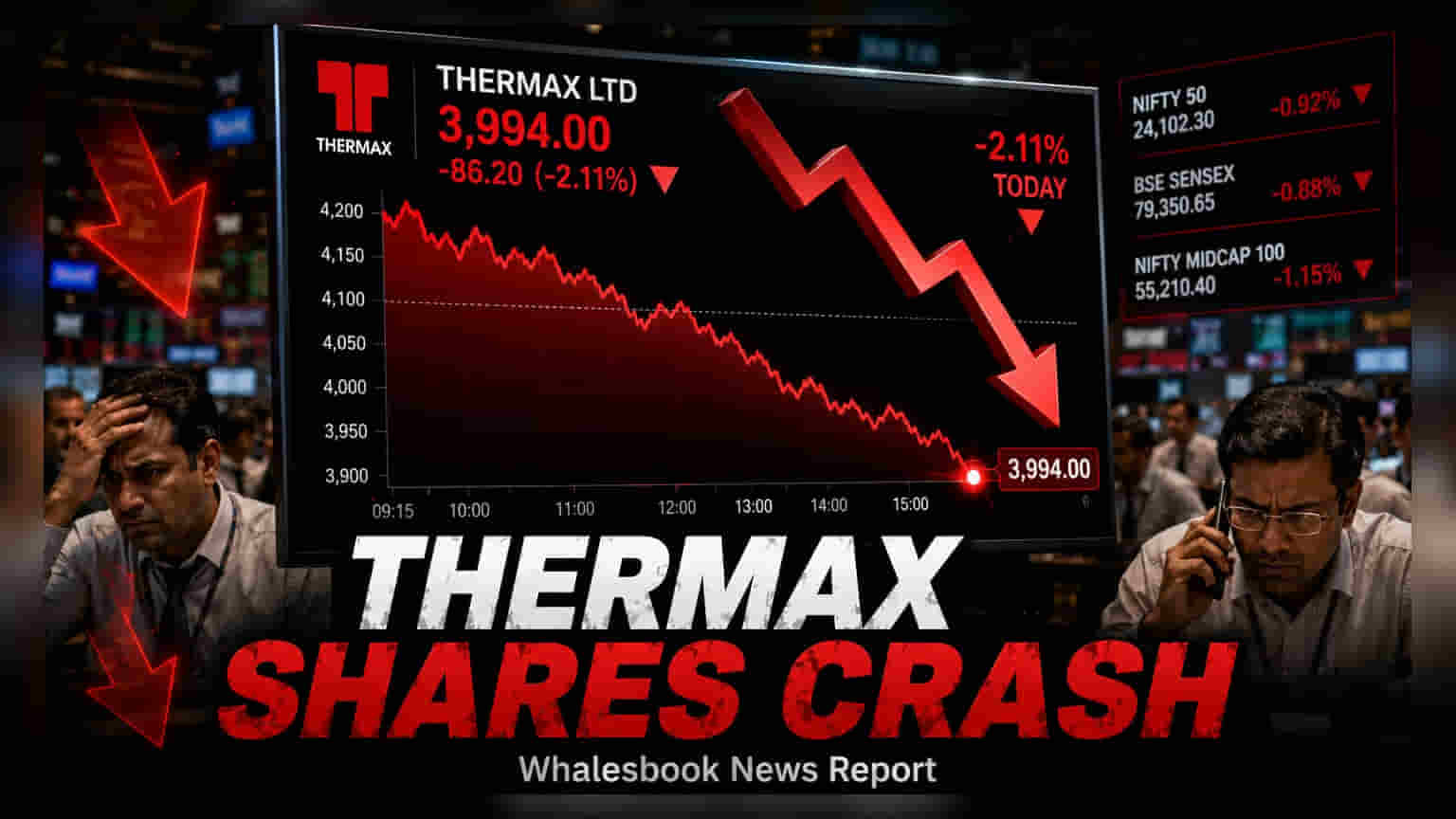
Thermax shares dropped 2.11% on August 19, 2026, following a sharp 86% decline in quarterly net profit. The weak performance was largely caused by a Rs 91 crore unexpected cost overrun in a major infrastructure project, sparking investor concerns over future project execution and profit margins.
Shares of Thermax Limited declined 2.11% to Rs 3,994.00 on August 19, 2026, as the market reacted to the company's recent quarterly financial report. The stock faced selling pressure after the company revealed a significant contraction in profitability for the first quarter of the fiscal year 2027 (ended June 2026).
Impact of Project Cost Overruns
The primary reason for the investor caution is the sharp drop in net profit, which fell to Rs 21.79 crore compared to Rs 244.39 crore in the previous quarter. While the company recorded a consolidated revenue of Rs 2,302.73 crore—a year-on-year increase of approximately 7%—this growth failed to offset the impact of rising costs. The most significant financial drag was a one-time cost overrun of Rs 91 crore within the Industrial Infrastructure segment. When such unexpected expenses occur in large infrastructure projects, they directly reduce the company’s bottom line, leading to the sharp decline in profit margins that concerned shareholders.
Rising Debt and Operational Risks
Beyond the quarterly performance, investors are paying closer attention to the company’s balance sheet. Financial filings indicate that Thermax’s debt-to-equity ratio rose to 0.41 as of March 2026. While the company holds a strong reserve position, the trend of increasing leverage, combined with the recent profit contraction, has heightened caution regarding the company’s financial flexibility.
Furthermore, the broader Industrial Products segment is facing headwinds. Volatile global prices for raw materials like steel and non-ferrous metals have put pressure on profit margins across the sector. Additionally, lower export demand, partly attributed to regional geopolitical tensions, is limiting the company's ability to maintain high utilization levels in certain segments. These factors, when combined with the execution challenges seen in the infrastructure vertical, create a more difficult environment for immediate margin recovery.
What Investors Should Monitor
For investors, the most important update to track in the coming quarters will be the company’s ability to manage costs on ongoing infrastructure projects to avoid further overruns. Additionally, any commentary from management regarding the stabilization of raw material prices and the recovery of demand in the Industrial Products segment will be critical. The market will likely look for signs that the Rs 91 crore expense was an isolated event rather than a recurring issue in the project execution cycle.