

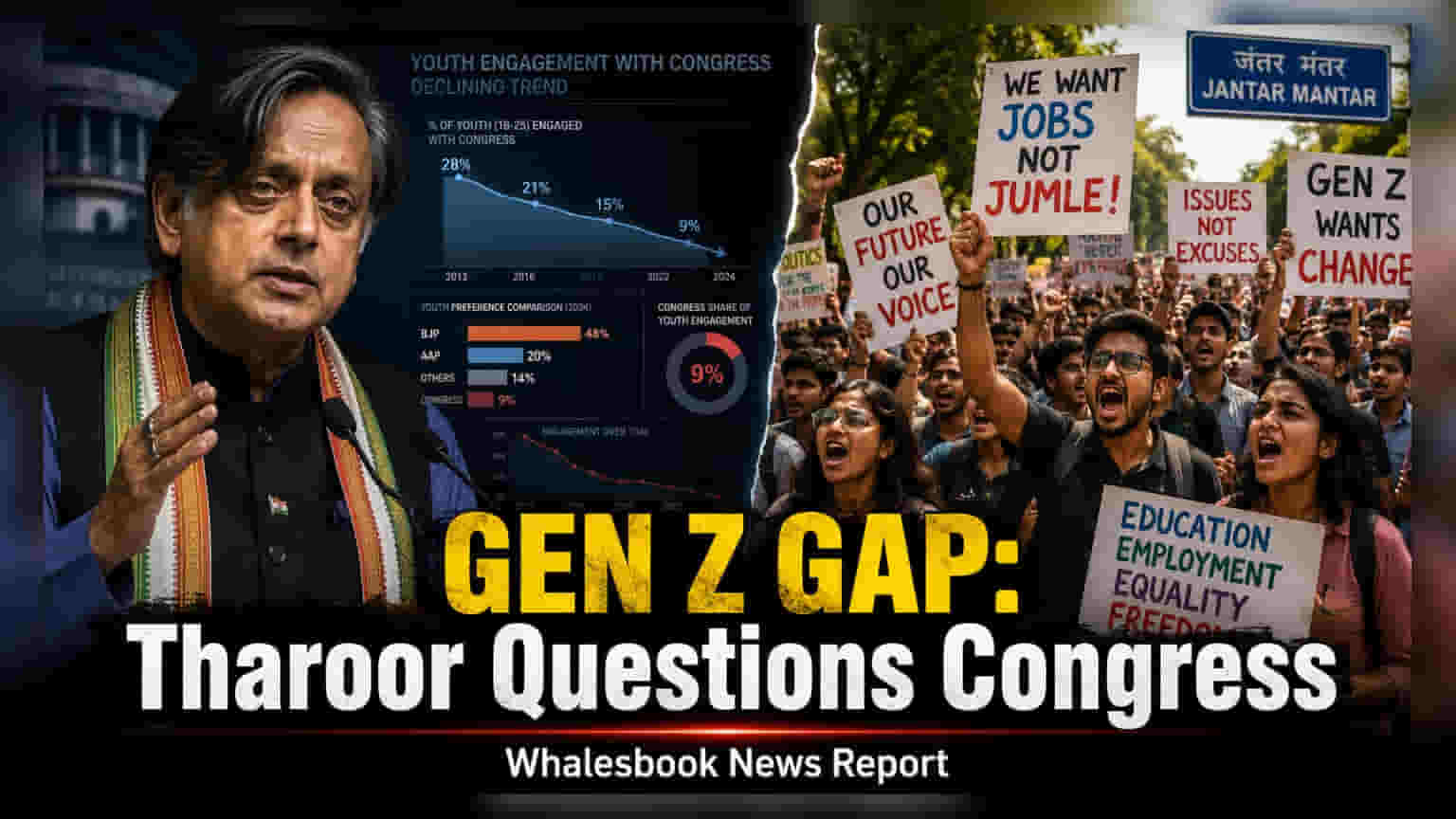
Congress leader Shashi Tharoor has urged for a re-evaluation of the party's youth outreach following successful student-led protests by the CJP. While this event involves no publicly traded companies, it highlights shifting political sentiment among Gen Z voters that may influence future education and policy discourse.
Senior Congress leader Shashi Tharoor has called for an introspective look at how established political parties connect with India's younger generation. Speaking at the 15th anniversary of the International Movement to Unite Nations (IIMUN) in Mumbai, Tharoor noted a visible gap between the Congress party's previous efforts to engage students—such as the 'Chhatron Ki Goonj' campaign—and the high-impact student movements seen recently.
Tharoor specifically pointed to the success of the protests led by the Cockroach Janta Party (CJP), which gained significant national attention between June and July 2026. These protests, centered at Jantar Mantar, successfully drew public focus to the irregularities surrounding the 2026 NEET-UG paper leak and pushed for examination reforms. The sustained pressure from these protests was a key factor leading to the resignation of the Union Education Minister, Dharmendra Pradhan.
Reflecting on the situation, Tharoor questioned why the Congress party, despite raising similar issues regarding education and employment, failed to mobilize the same level of support or participation from Gen Z. He suggested that traditional political structures might be creating barriers for new entrants, thereby preventing fresh perspectives from entering the mainstream political process.
While this event is a significant development in the political landscape, it does not involve any publicly traded companies or listed entities on the NSE or BSE. Investors and market participants should note that this is a political development rather than a corporate one. However, the rise of youth-centric pressure groups and the government's response to such movements—including leadership changes in key ministries like Education—can influence broader policy direction.
The central issue raised by Tharoor is the evolving nature of political participation. With Gen Z projected to become the largest voting bloc by the 2029 elections, political parties are increasingly under pressure to create meaningful pathways for this demographic. Future developments to watch include how political manifestos and organizational structures adapt to address the concerns of younger voters, particularly regarding education standards, examination integrity, and employment opportunities.