

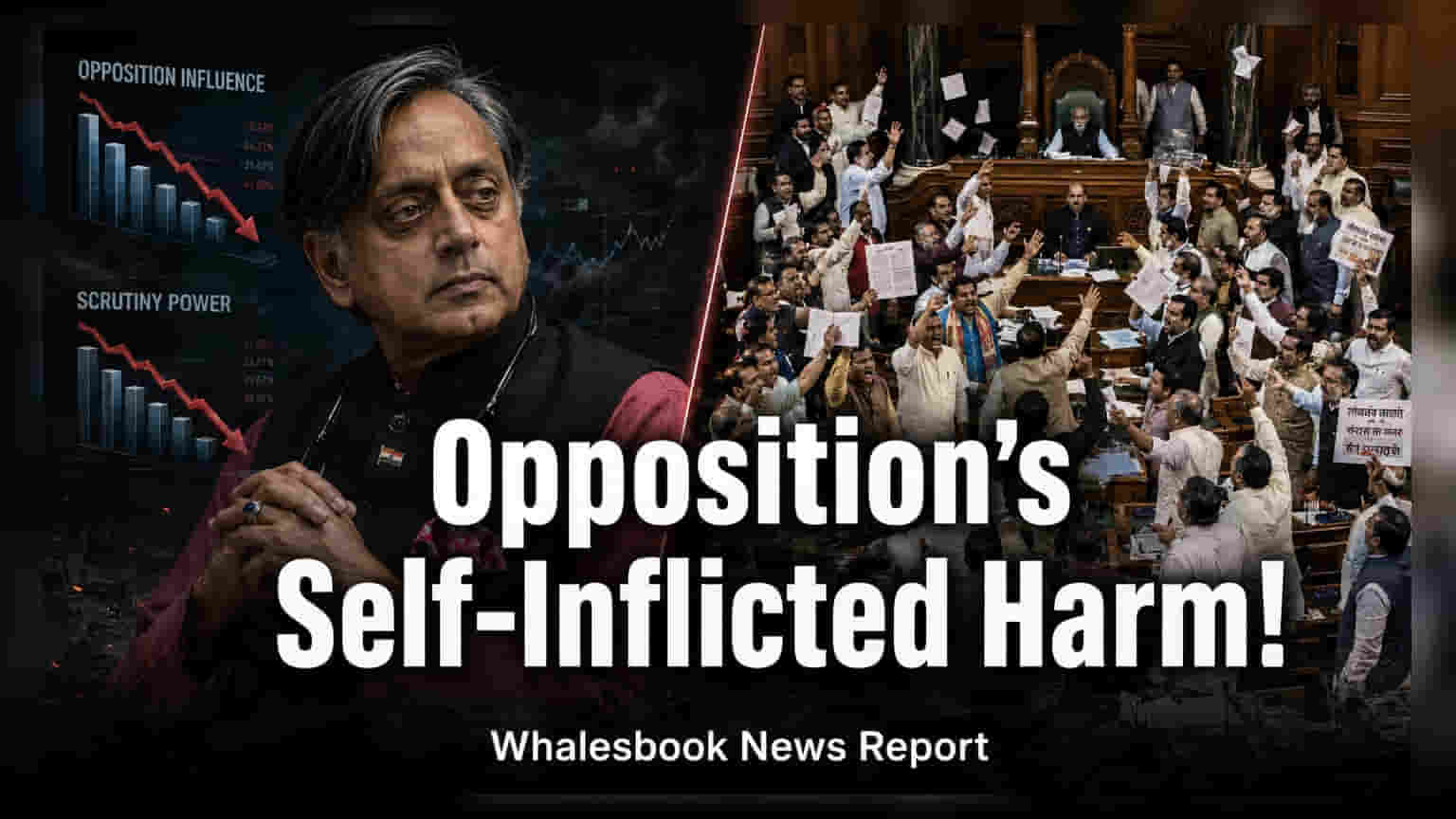
Congress MP Shashi Tharoor warns that constant parliamentary disruptions hinder the Opposition's ability to hold the government accountable. He notes this obstruction limits critical scrutiny of new laws, which can lead to rushed legislation and regulatory uncertainty, potentially impacting the broader governance and business environment.
Congress MP Shashi Tharoor has argued that frequent disruptions in Parliament ultimately work against the Opposition. He contends that by obstructing proceedings, the Opposition loses its most effective tools to challenge government policies and ensure executive accountability, effectively disempowering itself while the government maintains its legislative momentum.
The Loss of Legislative Scrutiny
Tharoor emphasized that Parliament is not merely a venue for protest but a space for converting political disagreement into structured scrutiny. He highlighted that essential mechanisms like Question Hour and Zero Hour serve as the Opposition's primary means to demand answers from ministers and raise urgent public concerns. Question Hour allows MPs to force ministers to go on record regarding government operations, providing real-time accountability that is otherwise unavailable. When disruptions wash out these sessions, the Opposition forfeits its constitutional and political leverage.
Governance and Regulatory Impact
For the broader economy and business environment, this trend of disruption poses specific governance risks. When bills are passed without debate, as seen with the recent passage of the Tribunals Reforms Bill, 2026, the legislative process loses the benefit of detailed committee examination. Parliamentary committees are designed to deliberate on, amend, and refine proposed laws, identifying potential unintended consequences or operational hurdles before they become policy.
Passing legislation without such debate limits the clarity of legislative intent. This ambiguity often requires the judiciary to intervene later, which can create regulatory friction or legal uncertainty for businesses and investors. Detailed deliberation provides a record of intent that aids in legal interpretation and ensures that the final law is robust. When this process is bypassed, the risk of drafting errors or conflicting regulations increases, which can complicate compliance for sectors governed by such legislation.
Next Steps for Monitorables
While the parliamentary process is political, investors and analysts often track the productivity of legislative sessions as a proxy for governance stability. The ability of the Parliament to function effectively—conducting debates, utilizing committee reviews, and maintaining a clear legislative record—remains a key indicator of institutional health. The next major monitorable is the government's approach to future legislative sessions and whether there is an improvement in the functioning of debate mechanisms, as this directly affects the predictability of the legal and regulatory framework in India.