

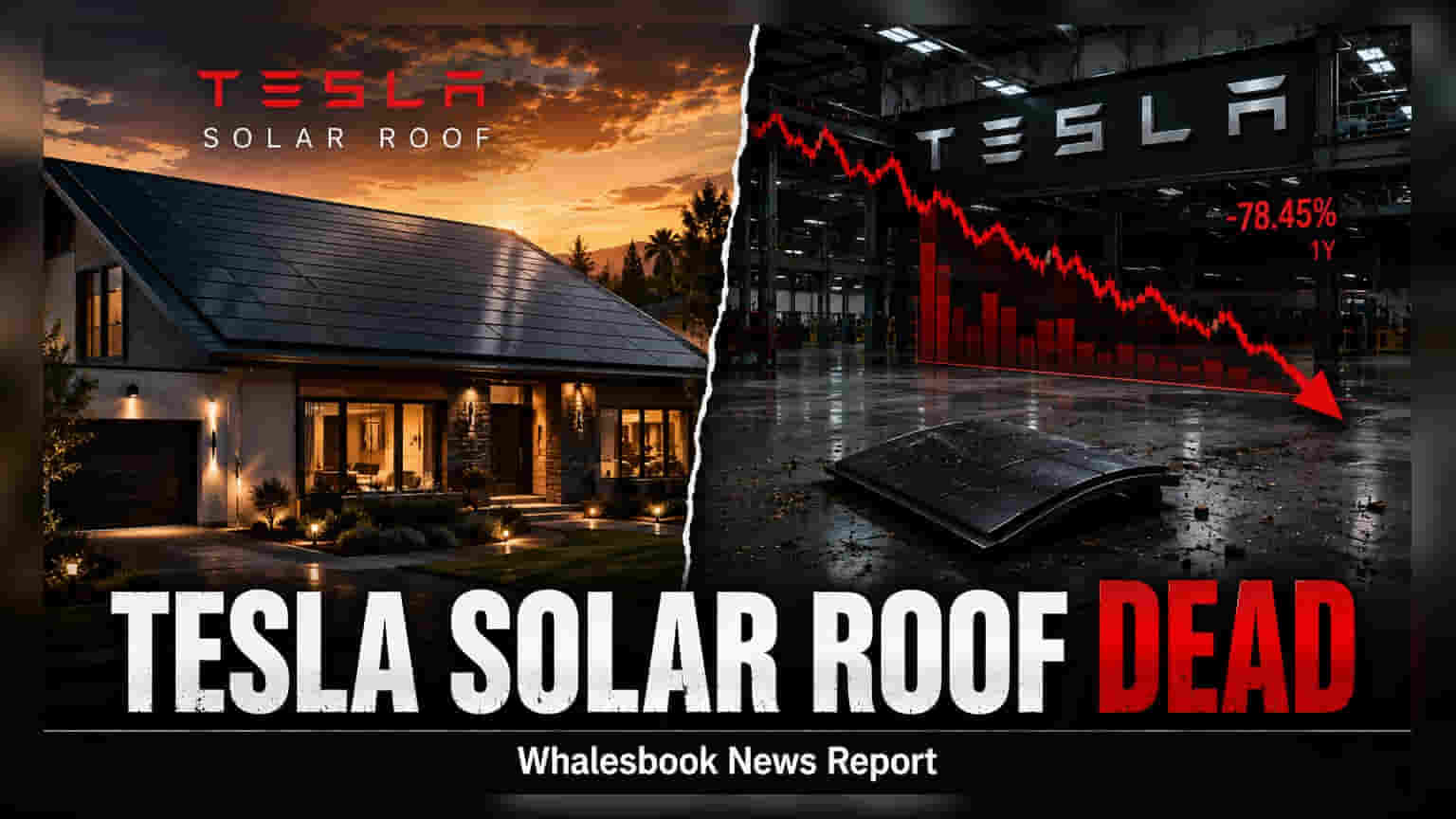
Tesla has officially discontinued its Solar Roof tile product as of August 2026, removing the offering from its website. The decision follows years of production difficulties and financial struggles to reach mass-market scale. For investors, the move marks a strategic shift to prioritize Tesla’s core energy storage and traditional solar businesses, potentially improving focus on profitable segments.
Tesla has officially pulled the plug on its Solar Roof product line, bringing a formal end to an initiative that first launched in 2016. As of August 2026, Tesla has stopped supplying the specialized tiles to third-party installers and has scrubbed references to the product from its official website. The pages that once detailed the solar roofing system now redirect visitors to the company’s conventional solar panel and storage offerings.
The Solar Roof was initially pitched as a premium alternative to traditional solar panels, designed to replace a home's entire roof with energy-generating tiles. However, the project faced significant hurdles from the start. While Tesla set ambitious targets—including a goal of 1,000 installations per week—the product struggled to gain widespread adoption. By the time of its discontinuation, actual installation volumes had consistently fallen short of these benchmarks.
From a business perspective, the primary challenge was economic viability. Unlike standard solar panels, which benefit from standardized manufacturing processes and economies of scale, the Solar Roof required complex, custom manufacturing for its unique tile design. This led to high per-unit production costs, making it difficult to price the product competitively while maintaining healthy profit margins. Internal assessments eventually determined that the resources required to scale the project were better directed toward other parts of the business.
For investors, the discontinuation highlights a critical aspect of capital allocation: the ability to identify when an ambitious project is not delivering the expected return on investment. Rather than continuing to sink capital into a niche, high-cost product line, Tesla is narrowing its focus to its core energy segment, which includes the Powerwall and the larger-scale Megapack storage solutions. This pivot could allow the company to streamline its operations and concentrate on products that have proven to be more scalable and financially sustainable.
This move also underscores the inherent difficulties in the integrated building-products market. While the concept of blending energy generation with construction materials is appealing, the physical demands of roofing—such as heat resistance, installation complexity, and durability requirements—often create friction that tech-focused companies struggle to overcome at scale. For now, Tesla is steering its customers toward traditional solar panels, which offer a more established and cost-effective path to residential energy adoption. The key monitorable for investors going forward will be the performance and growth trajectory of the remaining energy division, particularly as Tesla continues to compete in the expanding solar and energy storage markets.