

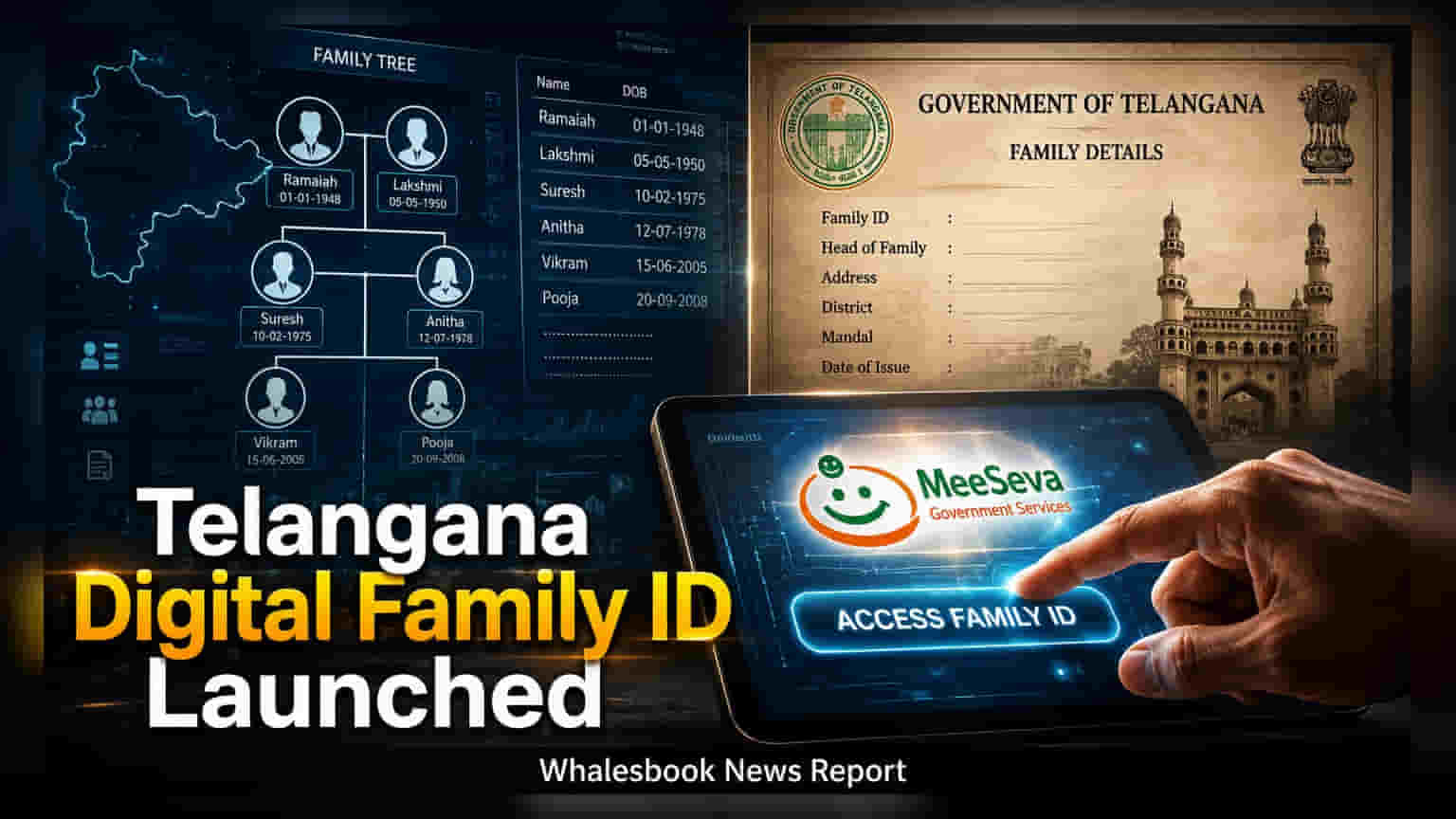
Telangana has introduced a digital Family Register and certificate service via the MeeSeva portal to simplify access to government schemes. This system provides a unified, authenticated record of family members, age, and address, helping citizens avoid the documentation hurdles previously faced when applying for welfare benefits or electoral enrollment.
Detailed Coverage
The Telangana government has launched a statewide electronic Family Register and a corresponding certificate issuance service, now accessible through the MeeSeva citizen service portal. This digital initiative is designed to create a single, reliable source of family information for administrative purposes. By centralizing data, the government aims to reduce the documentary burden on citizens who previously struggled to verify family structure when applying for various state-sponsored welfare schemes.
The electronic system maintains detailed records for every family unit. Each entry is assigned a unique Family Register Identification Number, which links the head of the family with all members. The register tracks essential demographic data, including the name, relationship to the family head, age, date of birth, gender, Aadhaar number, and current residential address. By digitizing these records, the state seeks to replace fragmented documentation with a uniform, government-verified certificate.
Beyond general citizen services, the initiative holds significance for administrative processes such as the Special Intensive Revision of electoral rolls. Political figures, including AIMIM president Asaduddin Owaisi and government advisor for minority affairs Mohammed Ali Shabbir, have expressed support for the platform. It is highlighted as a practical tool to assist citizens in providing necessary documentation for official processes, potentially improving accessibility for those who may lack traditional paper-based proof of family details.
For residents and observers, the next phase will be how effectively this system integrates with existing state portals to reduce processing times for government services. Investors and those tracking administrative policy may monitor whether this digital infrastructure leads to faster service delivery and reduced manual verification requirements in the future.