

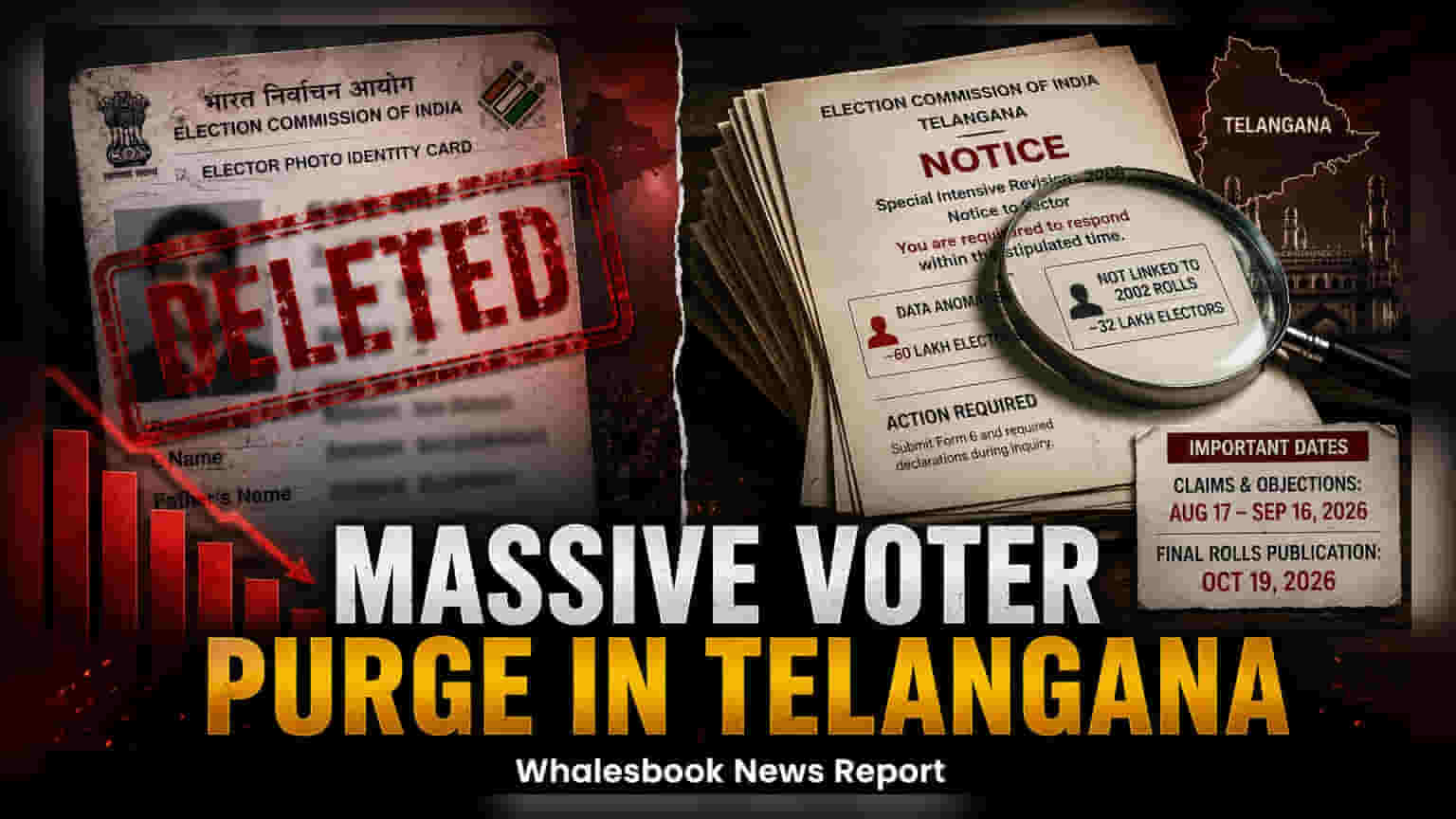
The Telangana government has published draft electoral rolls involving a significant cleanup of 73 lakh voters categorized as absent, shifted, or dead. Additionally, 92 lakh citizens have been issued notices regarding data anomalies or linkage issues with the 2002 electoral roll. Eligible voters have until September 16 to file claims or objections ahead of the final roll publication on October 19.
The government of Telangana has initiated a major revision of its electoral rolls following a Special Intensive Revision exercise conducted between June 25 and August 10, 2026. This process has resulted in the deletion of approximately 73.39 lakh names from the draft rolls, with the Election Commission categorizing these individuals as Absent, Shifted, Dead, or Duplicate. As of the latest update, the state counts 3.38 crore registered electors, a figure derived after 2.64 crore citizens submitted their enumeration forms.
Alongside these deletions, the authorities have issued notices to nearly 92 lakh voters to address specific concerns. These notices are split into two primary categories: approximately 60 lakh electors were flagged for data anomalies, while 32 lakh were flagged because their records could not be successfully linked to the 2002 electoral rolls. The administration has clarified that no name is permanently deleted without a formal inquiry, giving the affected individuals an opportunity to provide the necessary documentation during the hearing process.
This large-scale exercise, while aimed at refining the database, brings with it significant administrative and civic challenges. There are valid concerns regarding the potential for unintentional disenfranchisement of legitimate voters, given the complexity of manual verification and the sheer volume of notices issued. Critics and public representatives have also raised questions about the 2002 linkage requirement, arguing that it may disproportionately impact citizens who lack the necessary historical documentation. The administrative burden of processing these millions of notices within a short timeframe also presents a logistical risk to the accuracy of the final roll.
Citizens whose names do not appear in the draft, or who have received notices regarding their eligibility, have a specific window of opportunity to rectify the status. The claims and objections period is officially open from August 17 to September 16, 2026. During this time, residents can submit Form 6 along with required declarations. The process includes an appeals mechanism; if an individual is unsatisfied with the decision of an Electoral Registration Officer, they may approach the District Magistrate or the Chief Electoral Officer.
The final electoral rolls are scheduled for publication on October 19, 2026. The coming weeks will be critical for the administration to manage the influx of claims and ensure that the verification process remains transparent and accessible to the public, minimizing the risk of errors in the final voter list.