

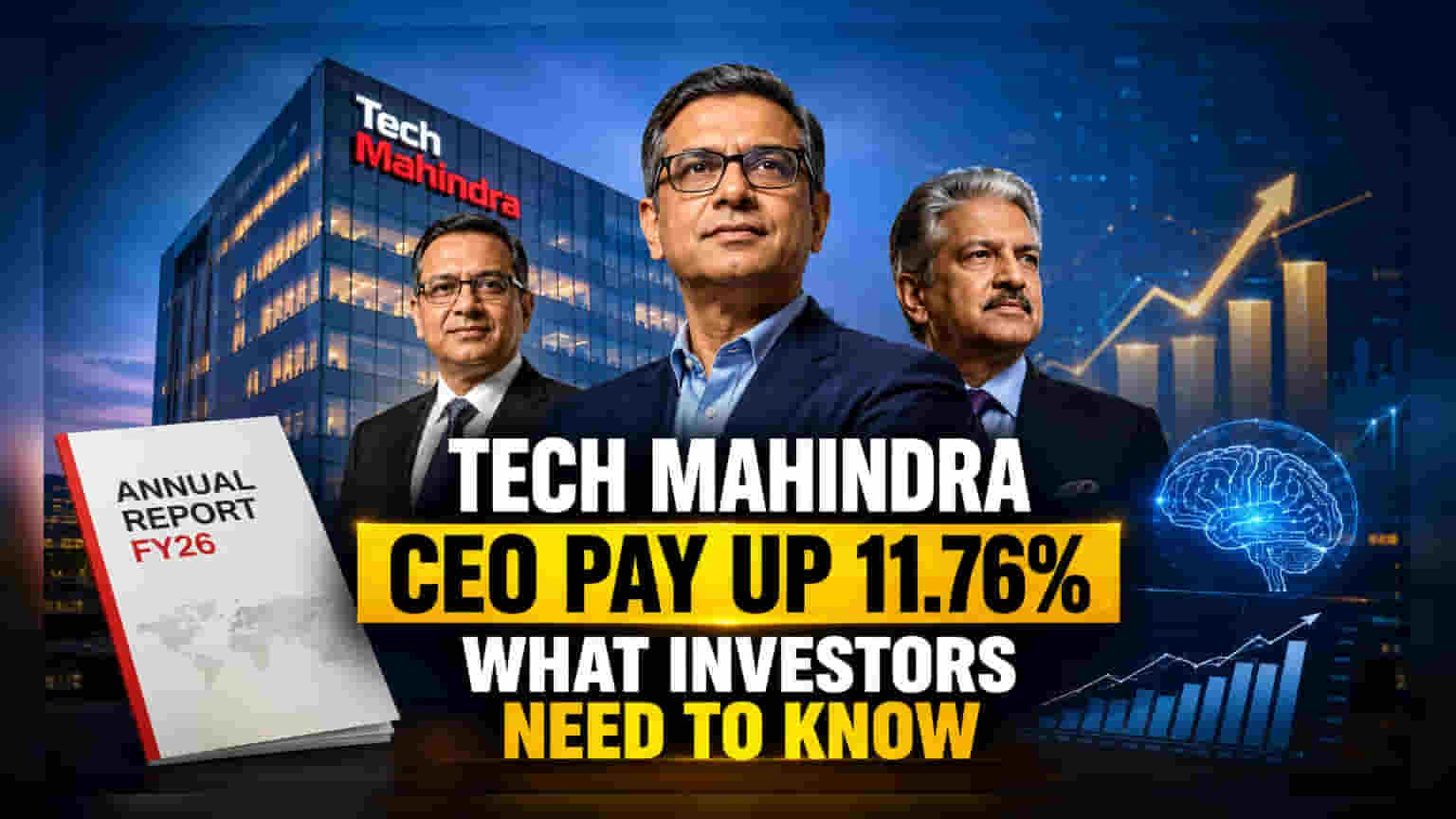
Tech Mahindra CEO Mohit Joshi’s remuneration increased by 11.76% in FY26, with the total package reaching 1,085 times the company's median employee salary. The hike, reported in the latest annual filing, coincides with the company’s push for margin expansion and operational turnaround. Investors are currently focused on the company's 15% EBIT margin target for FY27.
What Happened
Tech Mahindra’s latest annual report for fiscal year 2026 revealed that Managing Director and CEO Mohit Joshi received an 11.76% increase in his total remuneration. When employee stock ownership plans (ESOPs) are excluded, his pay actually rose by 20.39%.
This update comes alongside significant pay increases for other top leadership. CFO Rohit Anand saw his remuneration rise by 24.29% including stock options, and by 87.52% when those options were excluded. The company’s Chairman, Anand G. Mahindra, also received a 10.95% pay increase. The filing also noted that the CEO's compensation was 1,085 times the median pay of the company’s employees.
Why The Pay Structure Matters
For investors, executive compensation often reflects the board’s view on performance and future goals. A large portion of these pay packages, particularly the difference between total pay and pay excluding stock options, suggests a heavy reliance on stock-linked incentives.
In the Indian IT sector, companies frequently use these stock-linked plans to tie executive rewards to long-term stock performance and financial targets. While this aligns management's interests with those of shareholders, the high ratio of CEO pay to median employee salary—often a point of discussion in corporate governance—highlights the compensation gap inherent in large-scale IT service firms. Investors typically review these disclosures to assess if management’s goals, such as profitability and margin improvements, are being aggressively pursued.
Performance and Margin Context
The board's decision on compensation follows Tech Mahindra's performance in FY26. The company reported a consolidated net profit of ₹1,354 crore for the fourth quarter of FY26, marking a 16% year-on-year increase. Throughout the year, the management emphasized a shift toward AI-led services and efficiency measures to support their goal of reaching a 15% EBIT margin range by FY27.
This operational focus, often called 'Project Fortius' internally, aims to streamline costs and improve profitability. Since pay hikes for senior leadership are often linked to achieving these specific internal performance milestones, the compensation data provides a window into the management's own confidence in hitting these targets.
Business Risks and Reality Check
While the company has seen improvement in profitability and deal wins, it operates in a challenging environment. The IT services sector faces pressure from global demand fluctuations and the need for constant investment in new technologies like Generative AI.
Any future compensation or management decisions will likely be viewed through the lens of whether the company meets its 15% margin guidance and sustains growth in an industry where competition for high-value contracts is intense. If operational targets are missed, the performance-linked portion of executive compensation may face scrutiny or reduction in future years.
What Investors Should Track Next
Investors should monitor the upcoming quarterly results to see if the margin expansion trend remains on track. Key indicators include:
- Margin Performance: Whether EBIT margins are steadily moving toward the 15% target.
- Deal Wins: Sustained growth in large deal wins, which supports the revenue outlook.
- Talent Costs: Any changes in employee attrition rates or fresher hiring, which impact the broader cost base and median pay figures.
- Management Commentary: Updates on 'Project Fortius' and other efficiency initiatives that the leadership has linked to their operational strategy.