 Whalesbook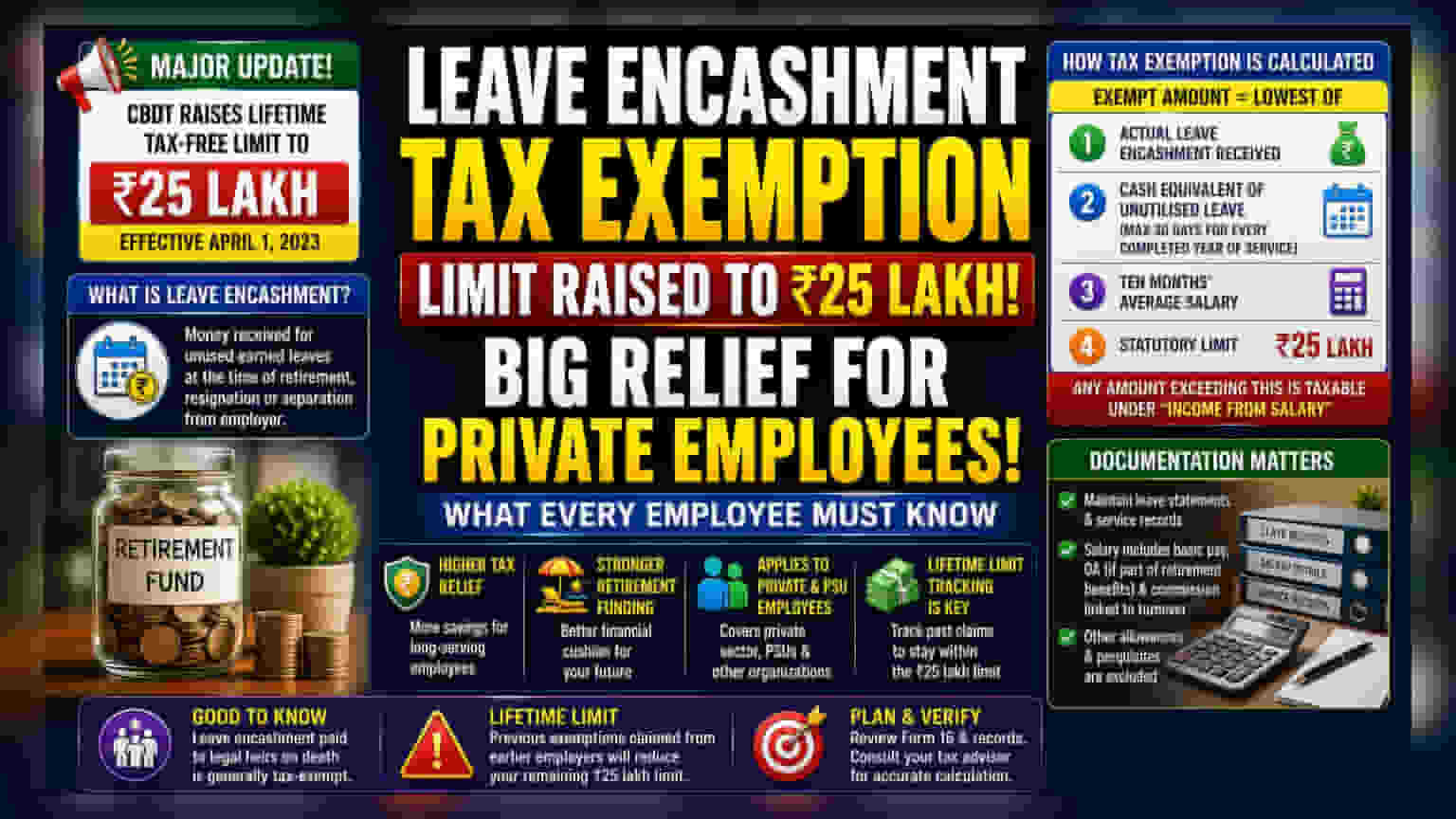


For private sector employees, the tax exemption limit on leave encashment stands at ₹25 lakh, significantly increased from the previous ₹3 lakh. Government employees continue to enjoy full exemption. This rule, effective since April 2023, is a key component of retirement tax planning. Understanding the calculation method and maintaining proper documentation is vital for claiming these tax benefits during resignation or retirement.
What Happened
The Central Board of Direct Taxes (CBDT) updated the tax exemption rules for leave encashment for non-government employees, raising the lifetime tax-free limit to ₹25 lakh. This change, which became effective on April 1, 2023, applies to employees in the private sector, public sector undertakings, and other non-government organisations. Leave encashment refers to the money an employee receives when they surrender their unused earned leaves at the time of retirement, resignation, or separation from an employer.
How The Tax Exemption Works
While government employees enjoy full tax exemption on leave encashment regardless of the amount, private sector employees face a defined limit. When an employee receives leave encashment, the tax liability is determined by comparing four different figures. The actual tax-exempt amount is the lowest of these four factors:
- The actual amount of leave encashment received.
- The cash equivalent of unutilised earned leave, calculated at a maximum of 30 days for every completed year of service.
- Ten months’ average salary, calculated based on the 10 months immediately preceding the retirement or separation.
- The statutory limit of ₹25 lakh.
Any amount that exceeds this lowest figure is treated as taxable income under the head "Income from Salary."
Why This Matters For Retirement Planning
For many employees, leave encashment serves as a significant financial cushion during retirement or when transitioning between jobs. The increase of the lifetime exemption limit to ₹25 lakh provides substantial tax relief, especially for long-tenured employees who have accumulated a large balance of unused leave over their careers.
It is important for taxpayers to remember that the ₹25 lakh threshold is a lifetime limit. If an employee has claimed tax exemption on leave encashment from a previous employer, that amount is deducted from the current limit. Therefore, accurate tracking of past claims is necessary to avoid tax complications during filing.
The Importance Of Documentation
Proper documentation is essential to claim these tax benefits accurately. Employees should maintain comprehensive records, including their official leave statements, service records, and detailed salary structures. The salary considered for the calculation typically includes basic pay, dearness allowance—provided it is part of retirement benefits—and commission linked to turnover. Other allowances and perquisites are generally excluded from this calculation.
What Investors And Employees Should Track
When preparing for retirement or resigning, employees should proactively review their Form 16 and leave records. Ensuring that the employer has correctly calculated the leave balance is the first step. In the event of an employee’s death, leave encashment paid to legal heirs is generally tax-exempt. Taxpayers should consult with their tax advisors to verify how these calculations apply to their specific employment contracts, especially if there are complexities regarding salary components or leave policies.