 Whalesbook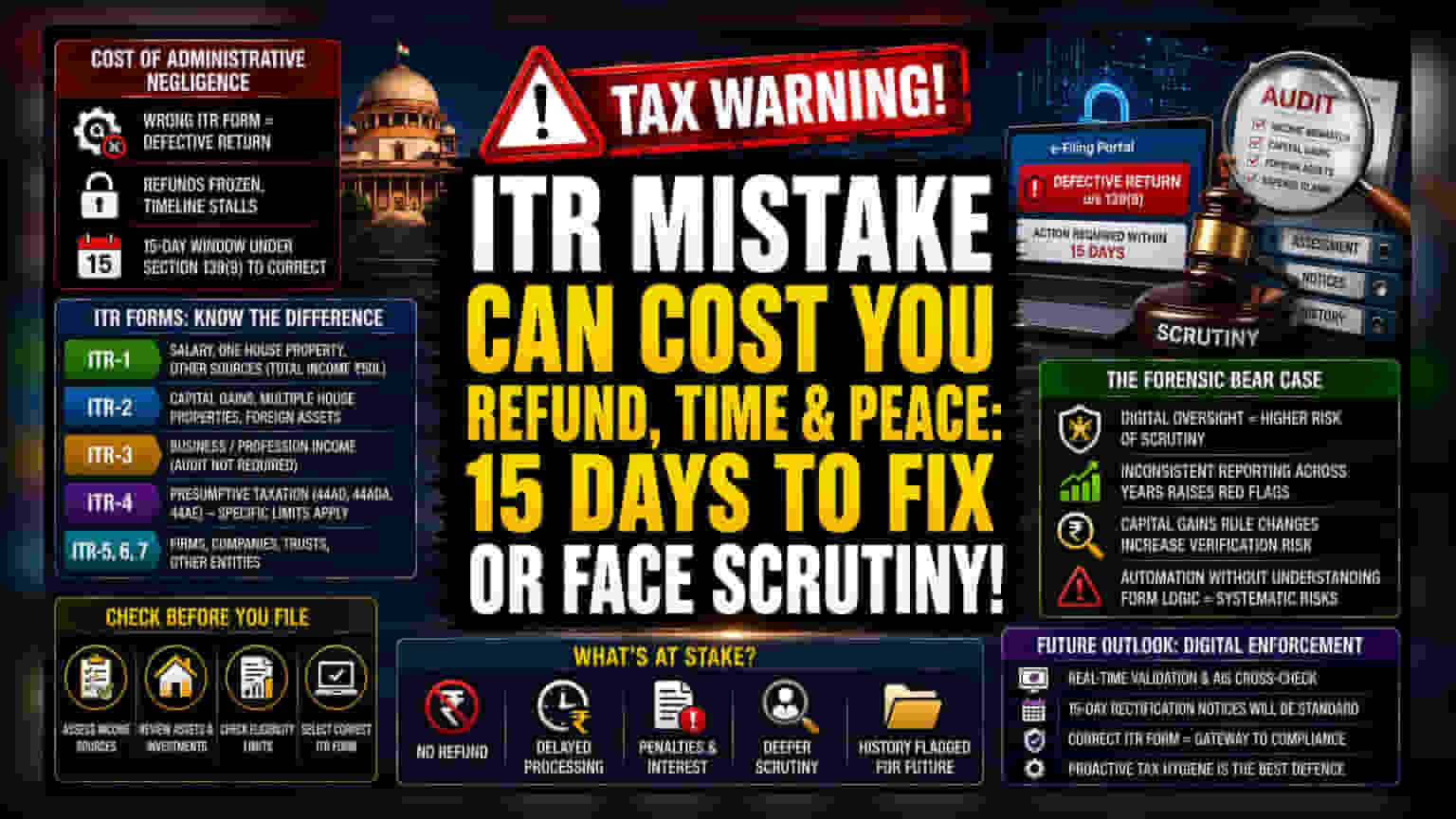


The Cost of Administrative Negligence
Compliance errors in the current assessment cycle carry consequences that extend far beyond mere administrative inconvenience. The shift toward automated scrutiny means that selecting an incompatible ITR form is no longer a simple oversight that gets corrected during processing; it is increasingly flagged by algorithmic systems as a failure to meet statutory obligations. When a return is classified as defective under Section 139(9), the entire fiscal timeline for that taxpayer stalls. Refund claims are frozen, and the burden shifts to the filer to navigate a compressed 15-day correction period.
The Complexity of Compliance Infrastructure
The seven-tier reporting structure mandated by the tax authorities is designed to capture specific economic behaviors, yet the overlap between forms often traps unsuspecting filers. For instance, the distinction between ITR-2 and ITR-3 hinges entirely on the nature of business or professional income. Many individuals with side-hustles or consultancy roles mistakenly utilize simpler forms, failing to realize that professional income streams necessitate more rigorous disclosure protocols. Similarly, the presumptive taxation eligibility defining ITR-4 carries specific caps that, if breached, automatically invalidate the filing, regardless of the tax paid. Understanding these boundaries requires more than basic literacy; it demands an audit of one's specific asset holdings and income sources before clicking the submit button on the e-filing portal.
The Forensic Bear Case: Systematic Risks
The current push for compliance reflects a broader move by fiscal authorities to maximize collection efficiency through increased digital oversight. The risk for the taxpayer is not just a missed refund, but the initiation of a formal scrutiny assessment. Once a return is invalidated, the tax department gains greater latitude to question historical filings. For those who frequently switch between employment and freelance contracts, the danger lies in inconsistent reporting across successive years. Discrepancies in the treatment of capital gains, particularly with the recent updates to equity taxation limits, create a high probability of manual verification by tax officers. Relying on automated software without reviewing the underlying form logic often leads to these systematic red flags, which can turn a routine refund into a multi-year audit struggle.
Future Outlook and Digital Enforcement
As the tax ecosystem moves toward real-time validation, the margin for human error is shrinking. Future filings will likely integrate deeper cross-referencing with Annual Information Statements, making the selection of the correct ITR form the primary gatekeeper for financial compliance. Taxpayers should anticipate that the 15-day rectification notice will become the standard communication channel for any deviations, necessitating a proactive approach to tax hygiene to avoid the permanent marking of their profiles for future scrutiny.