

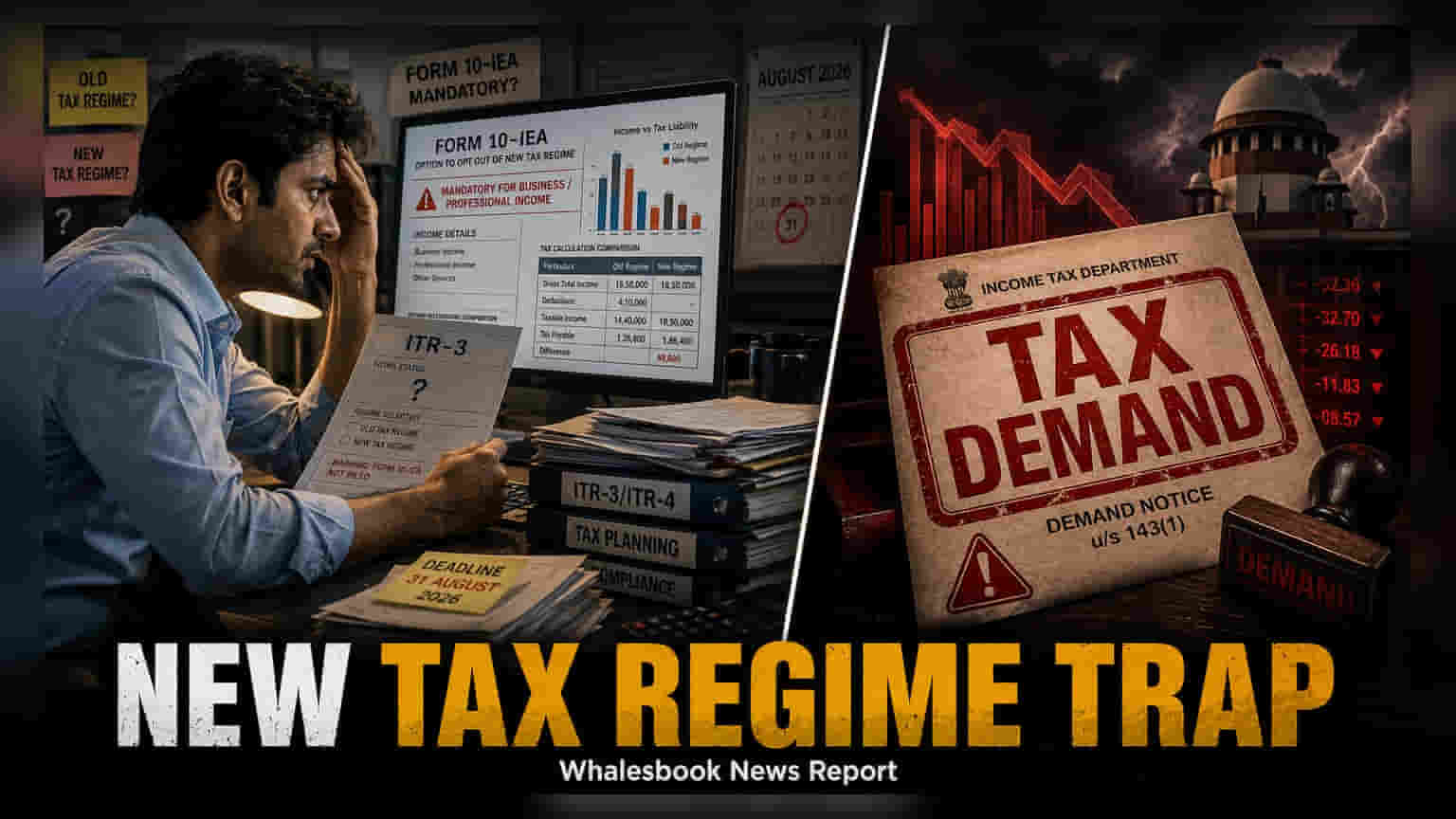
If you have business or professional income, simply ticking a box is not enough to choose the old tax regime. You must file Form 10-IEA by August 31 to avoid being taxed under the default new regime. Failure to do so could result in an unexpected tax demand from the Income Tax Department.
For many Indian taxpayers, choosing between the old and new tax regimes feels like a simple decision made during the filing process. However, for those with income from business or professional practice, this choice involves a specific compliance requirement that many often overlook: the filing of Form 10-IEA.
The new tax regime is the default setting for all individual taxpayers. While salaried individuals might find it easier to toggle between regimes, the rules for business owners, consultants, and professionals are much stricter. If you intend to opt out of the default new regime and use the old one, you cannot simply select that option in your income tax return form. You are legally required to furnish Form 10-IEA to the tax authorities to make your choice official.
Why Form 10-IEA Matters
The Income Tax Department processes returns based on specific rules. If you have business or professional income and do not file Form 10-IEA, the system will automatically treat your return under the default new tax regime, regardless of what you selected in your filing software. This oversight has led to many taxpayers receiving unexpected tax notices under Section 143(1), where the tax department corrects the liability based on the default regime.
Consider a scenario where a taxpayer earns just below a certain income threshold and assumes they are tax-efficient under the old regime. If they fail to file the mandatory form, the department may process the return under the default regime, potentially resulting in a higher tax demand than expected. In such cases, if the correction window is missed, the taxpayer may be left with no option but to pay the higher tax amount.
The August 31 Deadline
For non-audit business cases and professionals, the deadline to file their Income Tax Return (ITR-3 or ITR-4) is typically August 31, 2026. This date also serves as the cut-off for filing Form 10-IEA. It is important to remember that this is not merely a formality but a mandatory legal step. Waiting until the last minute can increase the risk of missing this compliance requirement, leading to processing errors and unnecessary communication with the tax department.
Strategic Tax Planning
Regime selection for those with business income should be a long-term strategic decision, not a year-by-year reaction. Before finalizing your choice, calculate your potential tax liability under both regimes for multiple years. The flexibility to switch regimes is limited for those with business or professional income; once you opt out of the default new regime, you are generally permitted only one opportunity to revert to it in the future, provided you continue to have such income.
Taxpayers should also be mindful if their income profile shifts during the year. For instance, a consultant who transitions into a salaried job and back to practice cannot assume the rules for salaried individuals apply to their total profile. If any part of your income is classified as business or professional, the requirements for Form 10-IEA remain in play. Investors and professionals should ensure their tax filings are reviewed by a qualified professional to avoid such procedural pitfalls as the filing deadline approaches.