

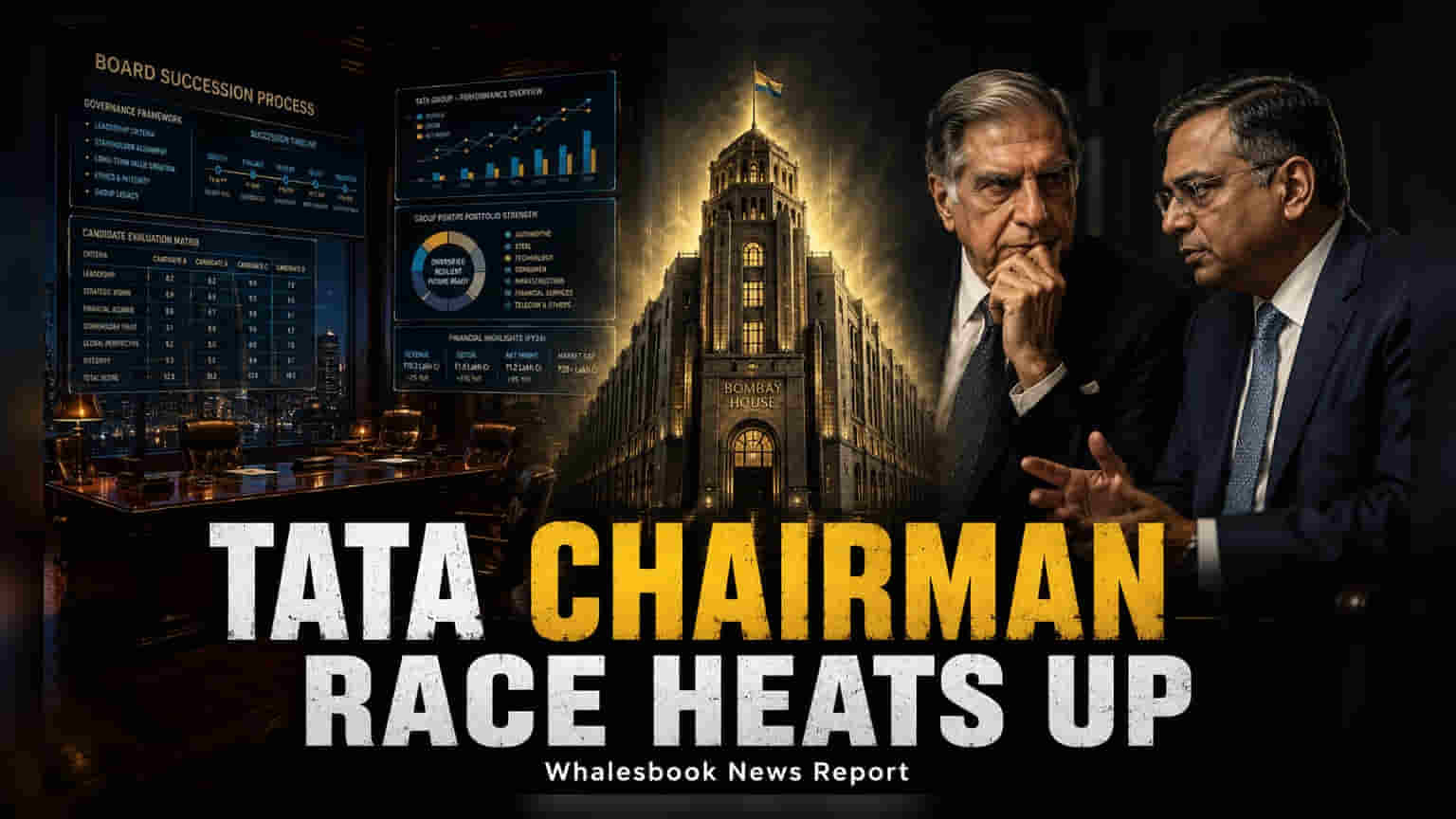
N. Chandrasekaran will not seek another term as Tata Sons Chairman when his tenure ends on February 20, 2027. A formal selection process is underway to find a successor, with media reports speculating on internal and external candidates. Investors are monitoring the transition, as leadership changes at the conglomerate can influence strategy, capital allocation, and governance across its listed companies.
N. Chandrasekaran, the Chairman of Tata Sons, has decided not to seek reappointment when his current term concludes on February 20, 2027. This decision officially kicks off the search for the next leader of India’s largest conglomerate, a process that carries significant weight for investors across the entire Tata Group ecosystem.
The succession process is formal and dictated by the company’s Articles of Association. A five-member selection committee has been tasked with identifying a successor who can manage the diverse interests of the group, which spans sectors from software and automotive to steel and aviation. The committee includes members nominated by the Sir Dorabji Tata Trust and Sir Ratan Tata Trust—which together own approximately 66% of Tata Sons—along with board representatives and an independent member.
Speculation and Selection Dynamics
While the company has not announced any official shortlist, media reports have frequently highlighted potential candidates. These include internal executives like T.V. Narendran, the CEO of Tata Steel, and external leaders such as Anish Shah, the Group CEO and MD of Mahindra & Mahindra. These reports suggest that the committee is evaluating a mix of leaders who understand the group's deep-rooted culture and those with experience in managing complex, federated business structures.
For investors, the primary focus is not just the name of the next chairman, but what the transition implies for the group's future strategy. The current leadership era has been defined by significant consolidation, digital transformation, and large-scale projects like the turnaround of Air India. A new chairman may bring a different approach to capital allocation, potential acquisitions, or the restructuring of group entities.
Governance and Market Monitoring
The succession announcement follows reports of boardroom friction regarding the requirement for unanimous support for a leadership extension. This dynamic highlights the unique governance structure where the Tata Trusts hold dominant influence over Tata Sons. Any potential delay in the selection process or disagreement between the Trusts and the board could lead to periods of uncertainty.
Investors may monitor how this transition affects the operational continuity of ongoing capital-intensive projects. Historically, leadership changes at major Indian conglomerates have triggered short-term volatility in stock prices as the market adjusts to potential changes in corporate vision. The stability of the transition and the eventual strategic direction of the new chairman will be key factors for shareholders to track in the coming months.