 Whalesbook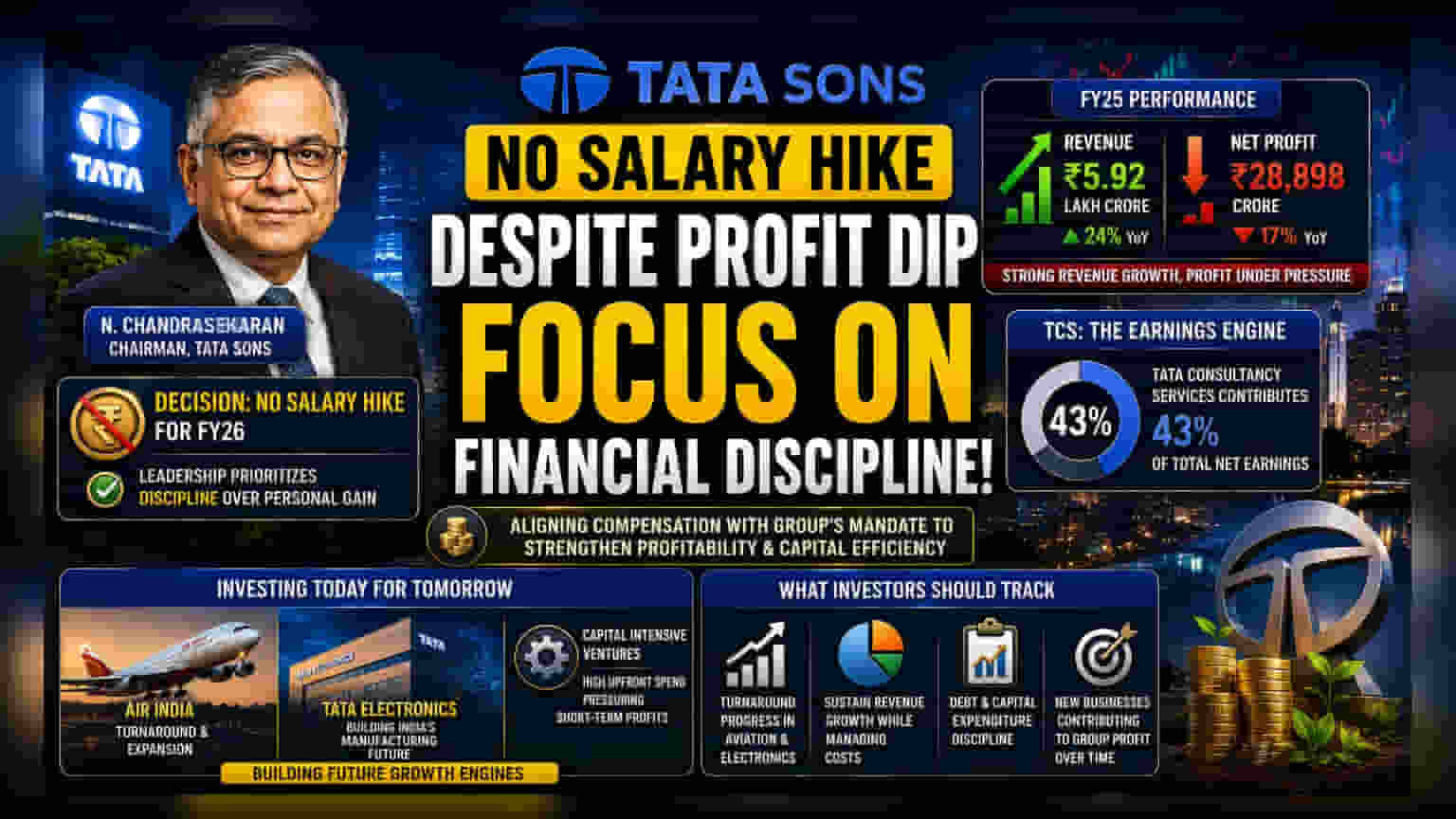


Tata Sons Chairman N. Chandrasekaran has declined a salary hike for FY26, signaling a focus on capital efficiency as the group manages large-scale investments. Despite a 24% revenue surge in FY25, net profit fell by 17% to ₹28,898 crore, reflecting the heavy capital spending required for new ventures like Air India and Tata Electronics. For investors, this move highlights the group’s shift toward optimizing profitability while balancing aggressive expansion.
What Happened
N. Chandrasekaran, the Chairman of Tata Sons, has decided not to seek a salary increase for the current financial year, FY26. This announcement follows a fiscal year where the holding company saw its net profit decline despite strong revenue growth. The decision was shared during recent discussions at the group level, highlighting a focus on disciplined capital management as the conglomerate continues to fund major expansion projects.
Financial Context and Performance
For the financial year 2025, Tata Sons reported a revenue of ₹5.92 lakh crore, which represents a 24% increase compared to the previous year. However, the company’s net profit saw a 17% decrease, landing at ₹28,898 crore. This contrast between rising revenue and falling profit is a key detail for investors to analyze. It suggests that while the group is successfully growing its business volume, the costs associated with these operations—and the heavy investment required for new business segments—are currently weighing on the bottom line.
Why This Matters For Investors
Tata Sons acts as the holding company for the diverse Tata Group, and its financial health influences the broader strategy across its listed subsidiaries. When leadership decides to forgo a salary hike in the wake of a profit dip, it often signals a strategic pivot toward financial discipline and capital efficiency. For shareholders, this provides insight into how the management is prioritizing cash flow and operational stability. It demonstrates that the leadership is aligning personal compensation with the group’s current mandate to improve profitability in emerging business lines.
The Investment Phase
Investors should understand that the current profit pressure is linked to the group’s aggressive expansion strategy. Tata Group is pouring significant funds into capital-intensive ventures, such as the turnaround of Air India and the establishment of Tata Electronics. These projects require massive upfront spending, which naturally compresses current profit margins. While Tata Consultancy Services continues to be the primary engine of the group, contributing 43% of the total net earnings, the holding company is heavily focused on nurturing these newer, higher-growth sectors. The challenge remains in balancing the long-term potential of these investments with the short-term need to protect the group’s financial standing.
What Investors Should Track
Going forward, the key monitorable for investors will be the turnaround progress of the new business ventures. Specifically, the market will watch for signs of operational efficiency in segments like aviation and electronics manufacturing. Investors may also track whether the group can sustain its revenue growth while simultaneously managing its debt and capital expenditure requirements. The ability of the newer businesses to contribute positively to the overall group profit over the next few years will be critical for determining the long-term success of this heavy investment cycle.