

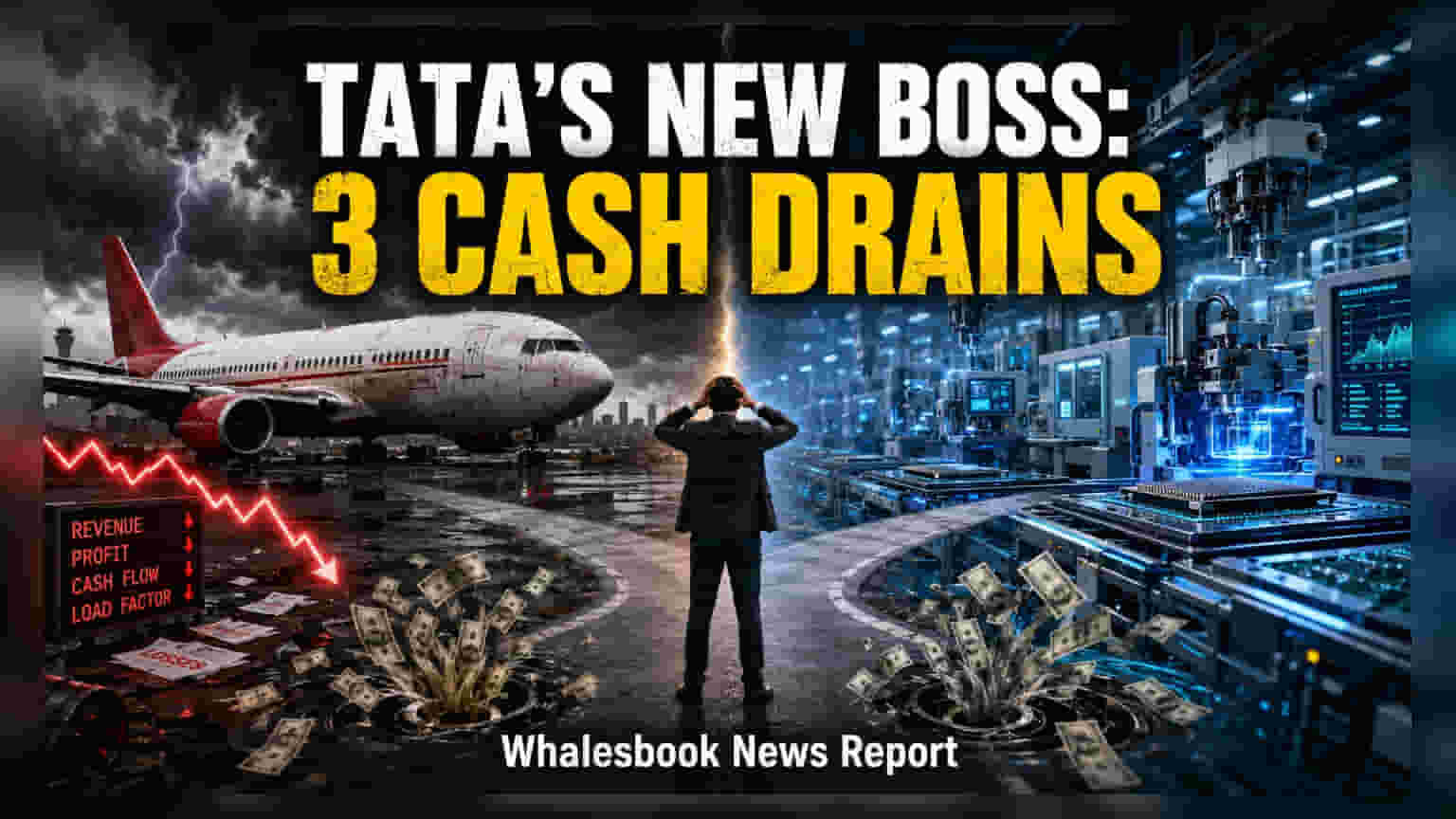
N. Chandrasekaran will step down as Tata Sons Chairman in February 2027 following a deadlock with Tata Trusts. His successor will inherit three major entities—Air India, Tata Digital, and Tata Electronics—which collectively reported losses of over Rs 28,800 crore in the last fiscal year, creating a major financial turnaround challenge.
N. Chandrasekaran has officially announced he will not seek a third term as Chairman of Tata Sons. He is set to step down on February 20, 2027, at the end of his current term. This decision follows a period of friction with Tata Trusts, the primary shareholder, regarding the group's long-term strategy, mounting debt, and the future listing of the holding company. As the leadership transition approaches, the incoming chairman will inherit a complex portfolio of high-growth bets that are currently straining the group's finances.
The Challenge of High-Loss Units
While the Tata Group continues to expand into strategic sectors like semiconductors and aviation, three major ventures have become significant financial drains. In the 2025-26 fiscal year, Air India, Tata Digital, and Tata Electronics collectively recorded losses of Rs 28,823 crore. Balancing the massive capital spending required for these businesses with the need to improve group profitability will be a primary focus for the new leadership.
Air India's Financial Hurdles
Air India remains the largest drag on the group's balance sheet. The airline reported losses of Rs 22,238 crore for FY26, a figure that has more than doubled from the previous year. While the Tata Group has positioned the airline to become a global aviation hub, the process of modernizing the fleet and fixing operational inefficiencies is capital-intensive and time-consuming. Investors will be watching for signs of operational stabilization, as a turnaround is expected to take several more years.
Tata Electronics and Digital Struggles
Tata Electronics has achieved a significant scale in revenue, crossing the Rs 1.3 lakh crore mark, driven by government-backed manufacturing initiatives and chip-making orders. However, the company is still in a phase of heavy investment, and achieving profitability remains a long-term goal. The intense competition in the electronics manufacturing sector means the company must manage costs effectively while scaling up production.
Simultaneously, Tata Digital continues to face stiff headwinds. The unit reported a loss of Rs 4,974 crore in the last fiscal year. Its flagship 'Neu' super app has struggled to create a distinct advantage in a market crowded with established players. Furthermore, the BigBasket acquisition has not yet delivered the expected market dominance. With intense competition in the quick commerce segment from rivals like Blinkit, Zepto, and Swiggy Instamart, BigBasket's market share remains in the low single digits, leaving the group with an uphill battle in the digital consumer space.
Governance and Listing Pressure
Beyond the operational losses, the new chairman will need to navigate potential regulatory pressures. Under current financial regulations, Tata Sons may be classified as an 'upper-layer' NBFC, which could force a public listing of the holding company. This, coupled with the ongoing tensions between Tata Sons and Tata Trusts—chaired by Noel Tata—regarding project oversight and capital allocation, adds a layer of governance risk. The market will monitor how the new leadership handles these internal dynamics while addressing the performance of the group's underperforming assets.