

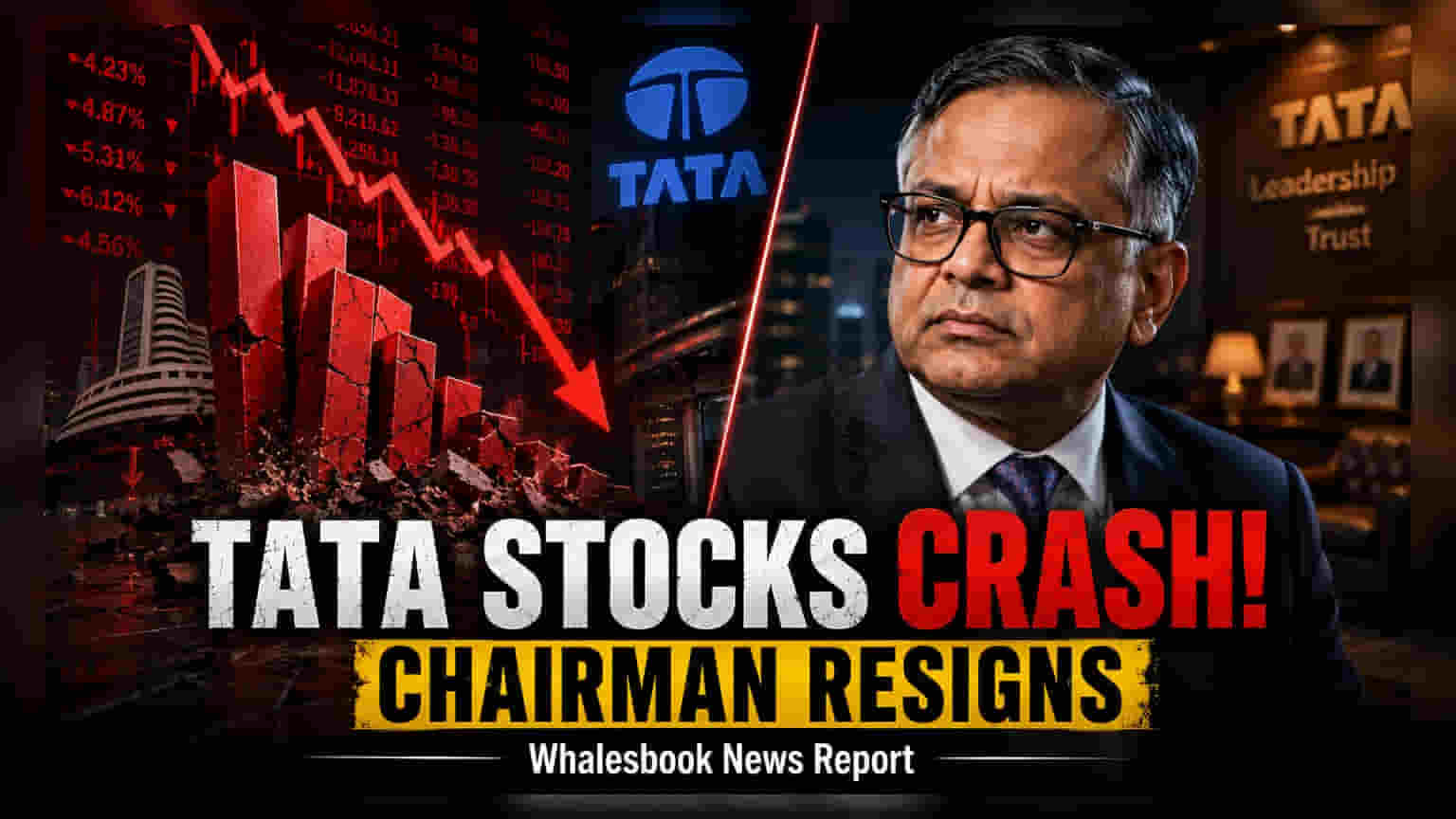
Tata Sons Chairman N. Chandrasekaran has resigned but will remain in office until his term ends in February 2027. The news triggered a sell-off in major Tata Group stocks, with investors reacting to concerns over leadership transition and reported internal governance differences.
Tata Sons Chairman N. Chandrasekaran has officially tendered his resignation, a development that has triggered a sharp sell-off across Tata Group stocks on Wednesday. Although Chandrasekaran will continue to lead the conglomerate until his current term expires in February 2027, the announcement has created immediate uncertainty regarding the future leadership and strategic direction of the group.
Market Reaction to Leadership News
Investors reacted swiftly to the news, leading to declines of 4% to 5% in shares of several prominent group companies, including Tata Consultancy Services (TCS), Tata Motors, and Tata Consumer Products. The selling pressure across the Tata portfolio coincided with a broader dip in the Indian equity markets, with both the Sensex and Nifty indices trading lower. For shareholders, the suddenness of the resignation announcement has introduced a new layer of risk, as the market typically prefers stability in the top management of large, complex conglomerates.
Governance and Internal Friction
The resignation follows reports of ongoing differences between Chandrasekaran and Noel Tata, the Chairman of Tata Trusts. These disagreements are believed to revolve around the group's future strategic roadmap, capital allocation, and governance structure, including debates over whether Tata Sons should pursue a public listing or remain an unlisted entity. Such friction within the top leadership levels often causes investor concern, as it can signal potential changes in management approach or delays in critical business decision-making.
What Investors Are Monitoring
With the Tata Sons annual general meeting (AGM) approaching on August 18, 2026, the focus for the market will now shift toward any formal communication regarding the succession plan and the resolution of these internal differences. Investors will be looking for clarity on whether the transition will be smooth or if it will lead to further instability within the group's management. The stability of the Tata conglomerate has historically been a significant factor for long-term investors, and any prolonged ambiguity surrounding its leadership is likely to remain a key area of concern until a clear path forward is established.