

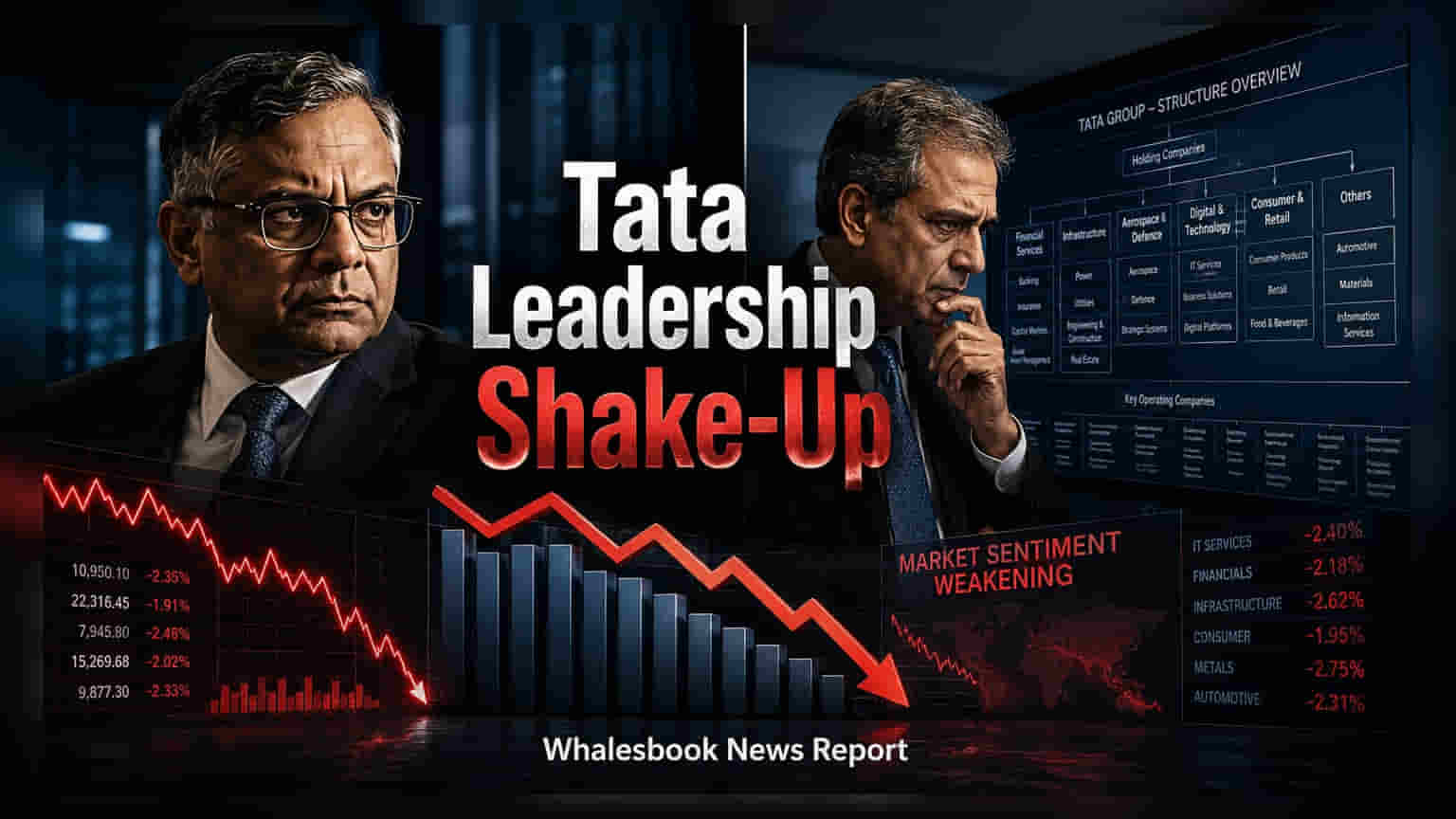
N. Chandrasekaran will not seek a new term as chairman of Tata Sons when his current tenure ends in February 2027. His decision follows a lack of unanimous board support, causing uncertainty for the conglomerate. The group now faces immediate tests including regulatory compliance, the exit of the Shapoorji Pallonji Group, and stabilizing newer, capital-intensive ventures.
N. Chandrasekaran, the chairman of Tata Sons, has informed the board that he will not seek another term once his current tenure expires in February 2027. This decision marks the end of a six-month deadlock within the conglomerate's top leadership. A proposal to extend his tenure for five years had been recommended by the Sir Dorabji Tata Trust and the Sir Ratan Tata Trust earlier in 2026, but it ultimately failed to pass because it did not receive unanimous support from the Tata Sons board. Reports indicate that Tata Trusts chairman Noel Tata withheld his support for the extension.
Following the announcement, Tata Group stocks, including IT major TCS, have experienced downward pressure. Market participants are reacting to the leadership uncertainty, which typically causes hesitation among investors in large conglomerates. The company is now expected to form a committee to identify a successor, and the process of this transition will be a key point of interest for shareholders.
Challenges for the Next Leadership
The incoming leadership will face several complex hurdles. First, the group must navigate evolving Reserve Bank of India (RBI) regulations, which could eventually require Tata Sons to list on the stock exchange. Such a move would be a fundamental change in how the group is structured and governed.
Second, the group must resolve the exit of the Shapoorji Pallonji Group, which continues to hold an 18.38% stake in Tata Sons. Managing this stake buyout requires significant financial planning and execution. Third, the group has been aggressively spending money to scale up newer, privately held ventures such as Air India and Tata Digital. These businesses have yet to consistently contribute to profits, and the management must prove that these investments can eventually generate positive cash flow and strong returns.
Succession Planning and Governance
The timing of this transition is also sensitive due to the internal governance structure. Noel Tata, who leads Tata Trusts, is approaching the mandatory retirement age of 70 for non-executive directors and is expected to step down from various boards by November. This creates a challenge in ensuring continuity and smooth leadership handovers.
Investors are now looking for clarity on the roadmap for the next chairperson. The primary focus for the market will be on how the board handles the selection process to ensure that the group’s strategic projects—particularly in semiconductors, digital services, and electric vehicles—do not lose momentum during this leadership change. The ability of the board to foster consensus will be a major monitorable for the long-term health of the group.