 Whalesbook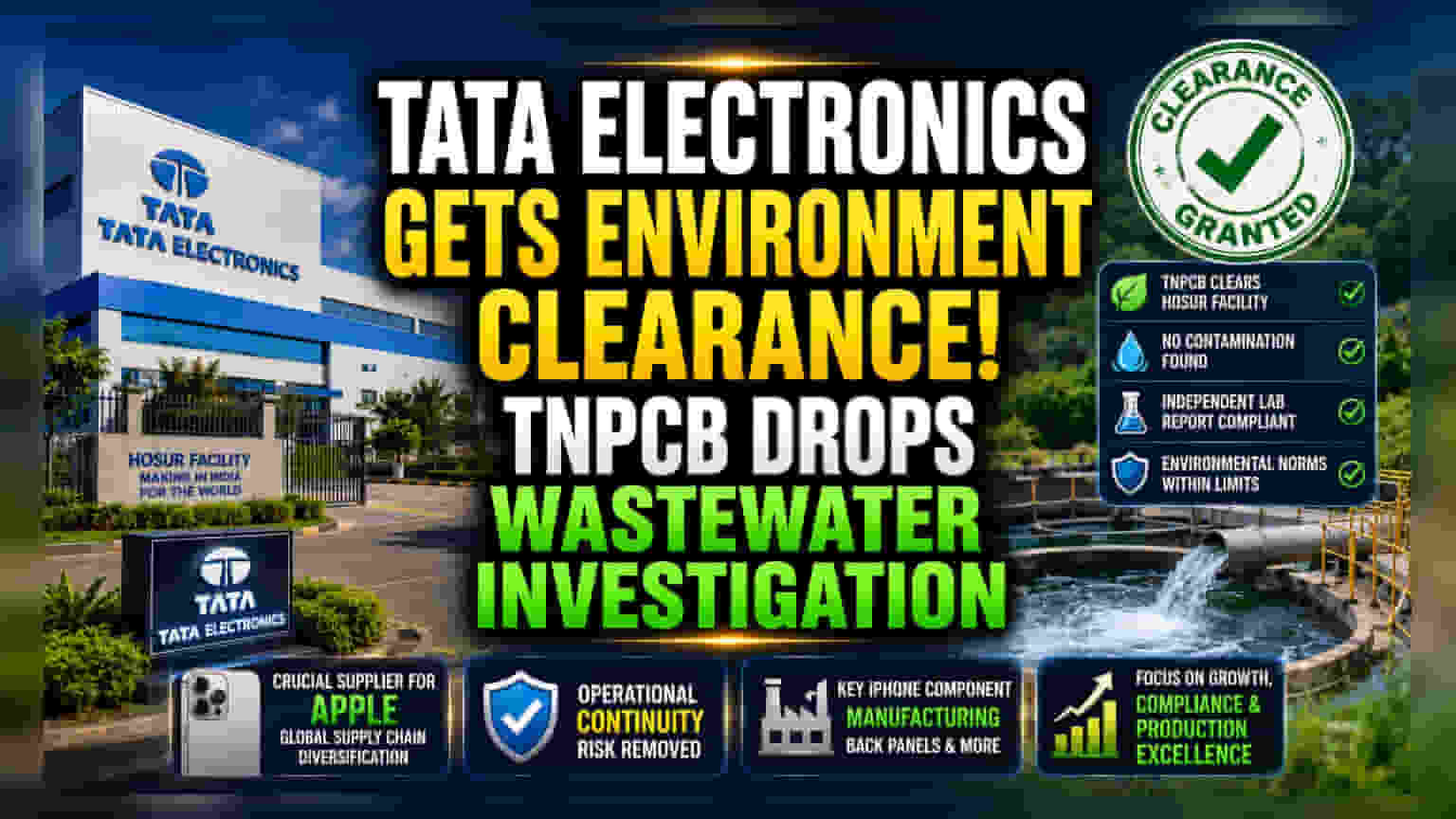


The Tamil Nadu Pollution Control Board has dropped its investigation into alleged wastewater contamination at Tata Electronics' Hosur plant. This decision resolves a major operational risk for the facility, which is a critical manufacturing hub for Apple’s iPhone components. The move ensures continuity for the plant's production as it plays a key role in global supply chain diversification.
What Happened
Tata Electronics has received official clearance from the Tamil Nadu Pollution Control Board regarding investigations into alleged wastewater contamination at its iPhone component manufacturing facility in Hosur. The state regulator had previously issued notices regarding the potential for a forced shutdown due to concerns about wastewater discharge potentially impacting nearby agricultural land. Following a review, the pollution board has officially dropped the investigation, confirming that the company has resolved all queries raised by the authority.
Why This Matters for Investors
For investors and the broader market, this development removes a significant operational risk for a facility that is central to Apple’s strategy of diversifying its supply chain away from China. The Hosur plant manufactures critical components, including back panels, and any regulatory intervention or shutdown could have disrupted production timelines and hurt supply stability. With this hurdle cleared, the company can maintain its operational continuity, which is vital for maintaining its standing as a reliable manufacturing partner in India's growing electronics sector.
Verification and Findings
The resolution followed a thorough analysis of the site's environmental impact. Tata Electronics submitted test results from the pollution board’s own assessment, which showed no signs of contamination. Additionally, the company provided findings from an independent, accredited laboratory to support its compliance. These reports confirmed that environmental parameters at the site remained within prescribed safety limits, effectively addressing the complaints regarding groundwater quality that triggered the scrutiny.
Historical and Operational Context
While this specific environmental concern has been resolved, the Hosur site has faced other operational challenges in the past. Investors typically monitor manufacturing hubs for stability, and this facility experienced a fire incident in September 2024 that briefly paused production. Such events are often monitored by observers to assess the company’s ability to manage safety, environment, and operational continuity under pressure. As companies scale up in the electronics manufacturing services sector, maintaining a clean track record on ESG—Environmental, Social, and Governance—standards is increasingly important for long-term viability and maintaining trust with global technology partners.
What Investors Should Track Next
The electronics manufacturing sector in India is currently in a phase of rapid expansion. Investors may monitor several key areas regarding Tata Electronics and its peers in the sector. These include the commissioning timelines for new capacity, adherence to environmental and safety regulations, and the ability to maintain consistent production output to meet high-volume demand from customers like Apple. Ongoing management commentary regarding operational stability, investments in safety infrastructure, and the ability to manage complex regulatory requirements will be key indicators of the company’s long-term execution capabilities.