 Whalesbook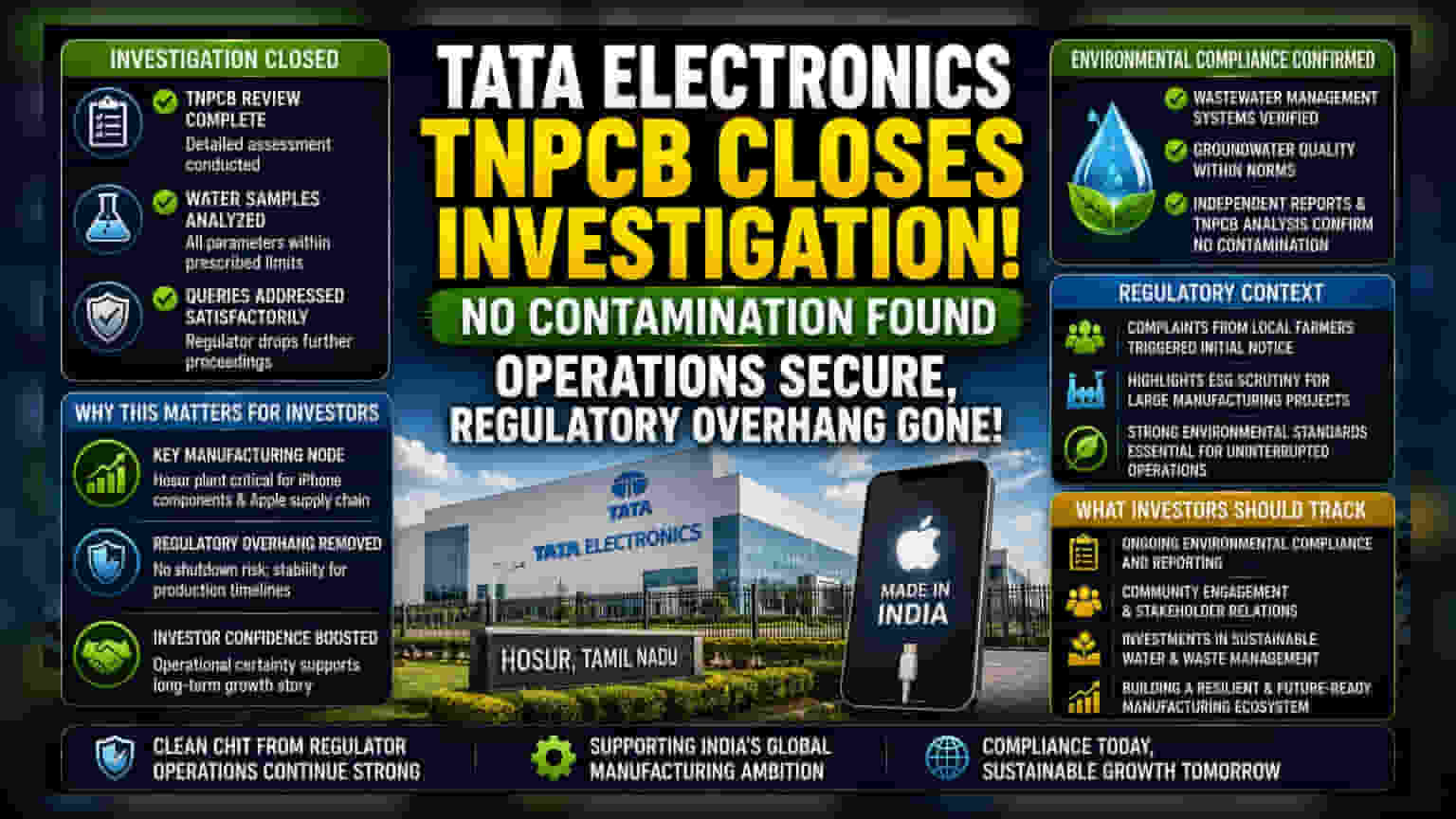
Tamil Nadu pollution authorities have dropped their scrutiny of Tata Electronics' Hosur facility after water quality tests confirmed compliance with environmental standards, removing a key regulatory hurdle for the critical iPhone component supplier.
What Happened
The Tamil Nadu Pollution Control Board (TNPCB) has officially closed its investigation into the Tata Electronics manufacturing facility in Hosur. The pollution regulator had previously issued a warning notice to the company, citing allegations that wastewater discharge from the plant had contaminated groundwater in nearby agricultural areas. Following a detailed review of the facility's water management and the submission of independent testing reports, the board has confirmed that the company has satisfactorily addressed all queries. The regulator has now dropped further proceedings, confirming that its own analysis of recently collected water samples showed no evidence of contamination, with key environmental parameters remaining within prescribed limits.
Why This Matters For Investors
The resolution of this investigation is a significant development for the company and its role in the global electronics supply chain. The Hosur plant is a vital manufacturing node for iPhone components, including back panels, making it central to Apple's strategy to diversify production and increase its reliance on India as a manufacturing base. A forced shutdown or prolonged regulatory action would have created uncertainty for production timelines and investor sentiment. With the matter now resolved, the immediate regulatory overhang has been removed, providing stability for the plant’s ongoing operations.
Understanding the Regulatory Context
This incident underscores the intense regulatory and public scrutiny faced by large-scale manufacturing projects in India. As the state of Tamil Nadu and the broader Indian manufacturing sector aggressively court global tech giants, the operational success of these projects is increasingly tied to strict adherence to environmental, social, and governance (ESG) standards. The initial warning notice, which was triggered by complaints from local farmers regarding well water quality, highlights the practical challenges of integrating massive industrial infrastructure into regions with agricultural activity. For investors, this demonstrates that while India’s manufacturing ecosystem is scaling rapidly, maintaining robust environmental management systems is essential to prevent operational disruptions.
Broader Business Implications
The incident serves as a reminder of the heightened focus on environmental compliance for major industrial players. While Tata Electronics successfully defended its position by commissioning independent lab analysis that proved compliance, the episode highlights the need for continuous monitoring of wastewater management and community engagement. Companies that are central to global supply chains like Apple's are under a microscope; any potential disruption, whether regulatory or operational, carries immediate weight in the market. The ability of the company to respond promptly to regulatory inquiries and provide verified data was critical in avoiding a prolonged dispute or production stoppage.
What Investors Should Track
Moving forward, investors may continue to monitor how the company handles environmental compliance and community relations, as these factors are becoming core components of long-term operational sustainability. While this specific investigation has concluded, the broader trend of environmental oversight in manufacturing hubs remains a key monitorable. Tracking consistent compliance reports, periodic updates on environmental management investments, and management's proactive engagement with local stakeholders will be useful in assessing the stability and maturity of the company's manufacturing footprint.

