

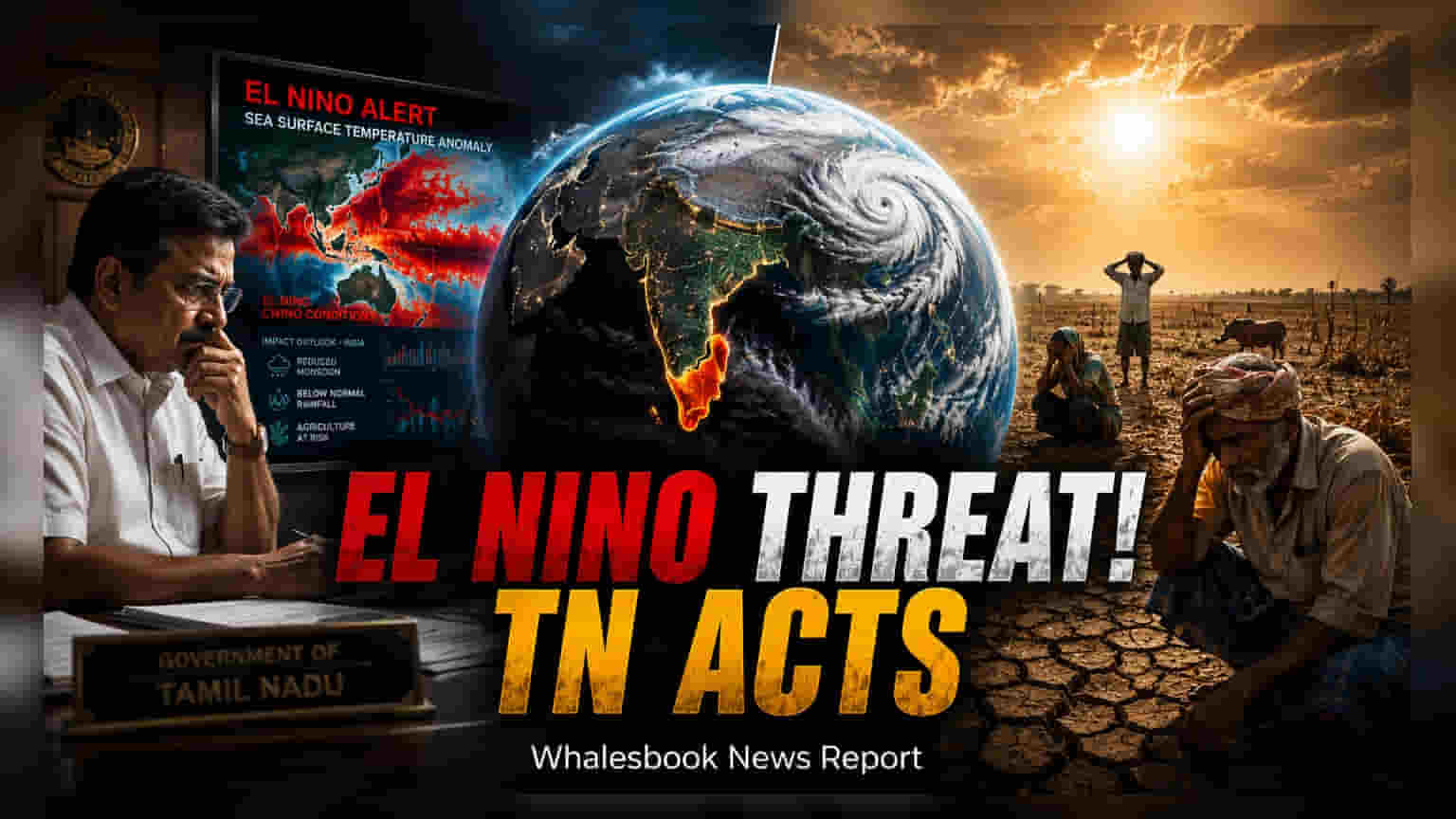
The Tamil Nadu government has formed an expert committee to address the risks of a severe El Nino, which may impact rainfall and agriculture. This initiative aims to guide disaster reduction agencies on water management and flooding risks by 2026.
The Tamil Nadu government has officially established an Expert Advisory Committee to navigate the potential climate-related risks associated with a severe El Nino weather pattern. This move is part of a broader strategy to strengthen the state's preparedness through the Tamil Nadu Disaster Risk Reduction Agency, or TNDRRA. The committee brings together experts from academic and research institutions, including IIT Madras, Anna University, the Suganthi Devadason Marine Research Institute, and the Tamil Nadu Marine Research Foundation.
Climate Risks and Economic Implications
The formation of this committee follows official government alerts regarding a high probability of a strong El Nino developing by 2026. For investors and the local economy, this creates significant uncertainty regarding water security and agricultural output. A weaker Southwest Monsoon, often linked to El Nino conditions, could reduce water levels in critical basins like the Cauvery River. This is a vital concern for the state's agricultural sector, which relies heavily on these water sources for irrigation and crop yields. Reduced water availability often leads to higher input costs for farmers and potential supply chain pressure for agro-based industries.
Beyond rainfall deficits, the state is also preparing for the potential of extreme weather shifts during the Northeast Monsoon. The government is concerned about the risk of sudden, heavy rainfall leading to flooding, which has historically caused damage to infrastructure and crops in the region. The inclusion of the Tamil Nadu Green Climate Company in these discussions suggests that the state is looking to integrate long-term climate resilience into its disaster management planning.
Monitoring Future Developments
For those tracking the impact of these environmental trends, the key monitorable will be the committee's specific policy recommendations regarding water usage and disaster prevention. Investors in sectors sensitive to agricultural performance and infrastructure stability in Tamil Nadu may watch for updates on government mitigation strategies. Further information on how these climate patterns affect reservoir levels and power generation, especially if hydroelectric projects are impacted by water shortages, will provide a clearer picture of the potential business risks and long-term economic stability in the state.