

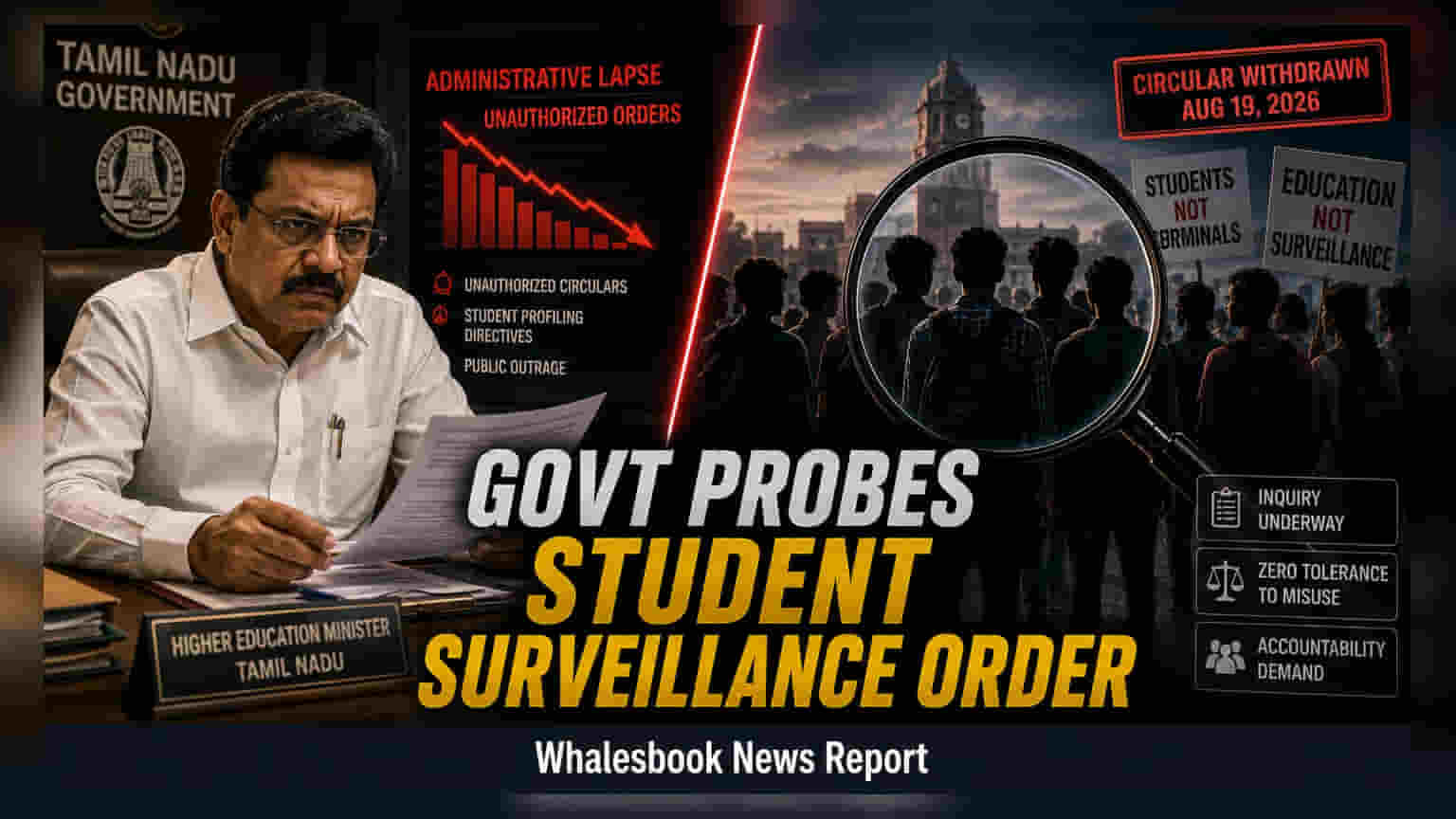
The Tamil Nadu government has launched an inquiry into officials following a controversial circular that ordered the profiling of students involved in protests. The directive was retracted after facing public backlash, with the Higher Education Minister confirming it lacked official ministerial approval. Separately, authorities are reviewing another incident involving the collection of political data in the Dindigul district.
The Tamil Nadu government is currently conducting an inquiry into administrative lapses following the issuance of unauthorized circulars. The Directorate of Collegiate Education recently faced scrutiny over a directive dated August 17, which instructed college principals to track and discourage student participation in political rallies, with a specific focus on students linked to Left-wing groups. This circular was retracted on August 19 following widespread criticism and public protests.
During a recent session in the State Assembly, Higher Education Minister P. Viswanathan addressed the issue, clarifying that the circular was an administrative error issued without the knowledge or approval of the ministry. He emphasized that the state government does not endorse or authorize the profiling of students engaged in peaceful protests. The Directorate of Collegiate Education has subsequently sought a formal explanation from Joint Director P. Cynthia Selvi regarding the circumstances that led to the issuance of this directive.
In a related administrative development, the state is also investigating a separate incident in the Dindigul district. In this instance, a local Tahsildar issued an order on August 18 instructing revenue inspectors to compile personal details of members belonging to the CPI and CPI(M). This order was withdrawn by the District Collector after political organizations raised concerns over the privacy and monitoring of political cadre. The government has taken steps to transfer the official involved, citing unauthorized individual bias, while signaling a zero-tolerance policy toward such administrative actions.
The political opposition, particularly the CPI(M), has called for greater transparency and accountability. Party leaders have expressed that penalizing mid-level or local officials is insufficient, demanding a thorough review of the decision-making process at higher administrative levels. They argue that these directives reflect a systemic issue that requires broader departmental inquiries to ensure that government machinery is not misused for political monitoring.
For observers of the state’s governance environment, the focus remains on the outcome of these inquiries. Investors and stakeholders in the region typically monitor such governance trends, as administrative stability and the fair application of departmental rules are important for the state’s overall operating environment. The next key update will be the findings of the departmental inquiry and any systemic policy changes implemented to prevent similar unauthorized administrative actions in the future.