

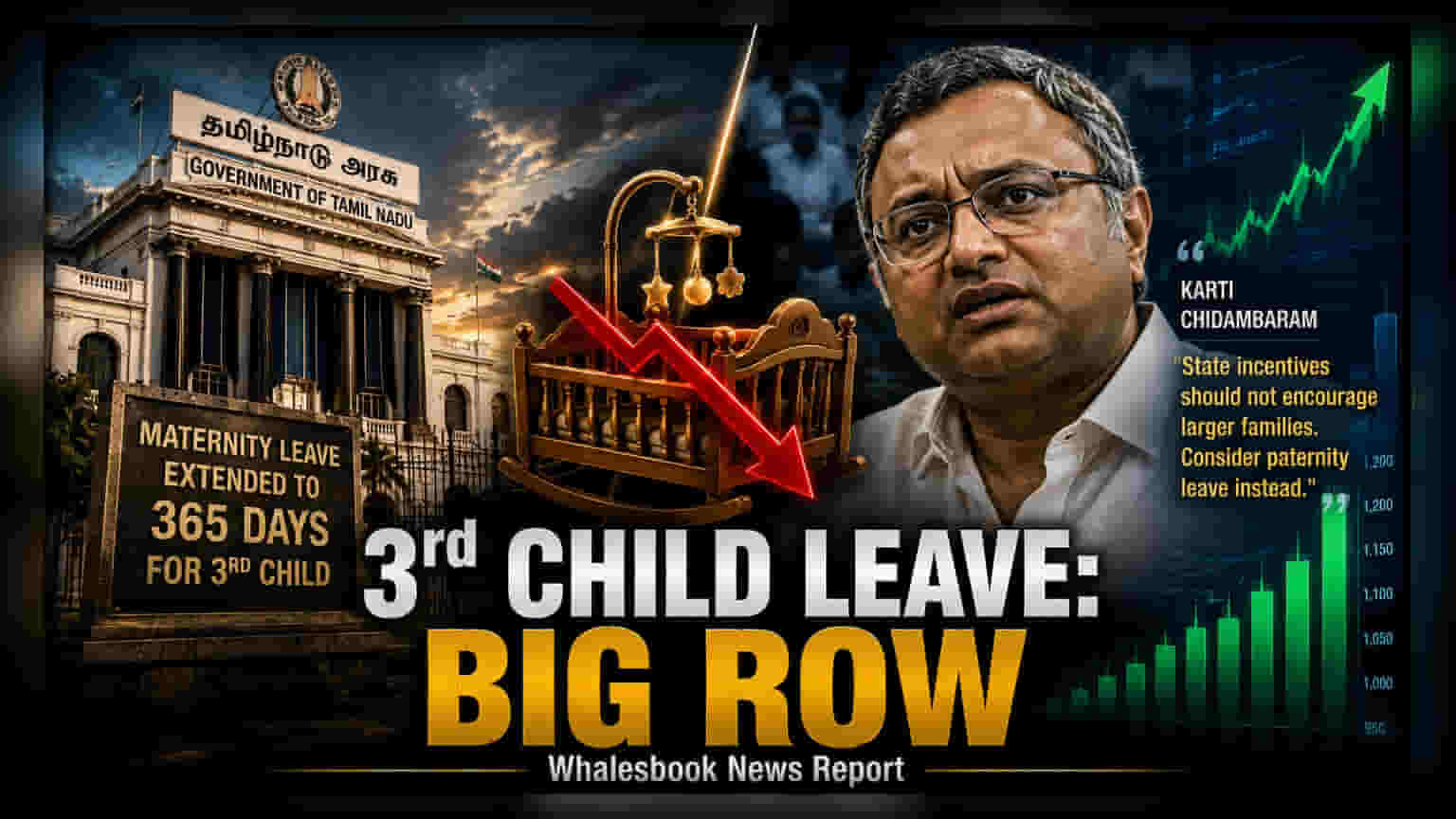
The Tamil Nadu government has increased maternity leave for women state employees to 365 days for a third child, matching the entitlement for the first two. This policy change, announced by Minister D. Sarathkumar, faces public criticism from Congress MP Karti Chidambaram, who questioned the government's approach to encouraging larger family sizes and suggested prioritizing paternity leave instead.
The Tamil Nadu government has revised its maternity leave policy, extending the benefit to 365 days for the birth of a third child. This announcement, made by Human Resources Management Minister D. Sarathkumar in the state Assembly, brings the leave duration for a third child in line with the benefits already available for the first two children. Previously, maternity leave for a third child was limited to 12 weeks, or 84 days, for government employees.
The policy shift aims to support the long-term social welfare and empowerment of women in the state government workforce. However, the decision has drawn public scrutiny from Congress Member of Parliament Karti Chidambaram. While acknowledging the value of maternity support, the MP expressed disagreement with the policy direction, arguing that state incentives should not actively encourage larger families. He further suggested that the government should consider the introduction or expansion of paternity leave as a more balanced alternative to support working families.
Broader Policy Context and Demographic Trends
The move by the Tamil Nadu government highlights an emerging trend of state-level policy interventions aimed at influencing demographic outcomes. In recent months, other states, such as Andhra Pradesh, have also introduced various incentives—including cash payments—for families with a third or fourth child, signalling a growing focus on population management strategies among Indian states. These policies are often discussed in the context of state fertility rates; Tamil Nadu, for instance, maintains a total fertility rate below 1.4, which is notably lower than the national replacement level of 2.1.
For investors and observers of state-level governance, these developments reflect changing priorities in public sector human resource management and state fiscal planning. While this specific policy applies to the state government workforce and does not directly impact private sector financial reporting, it provides insight into how states are adjusting their budgetary allocations and administrative policies to address shifting demographic trends.
Administrative and fiscal experts often monitor such policy changes as they can indicate the government’s approach to social spending and long-term workforce planning. As the debate continues, the key monitorable for stakeholders will be the government's formal response to the concerns regarding resource availability and family support, as well as whether these state-level trends lead to broader labor law discussions across other regions.