

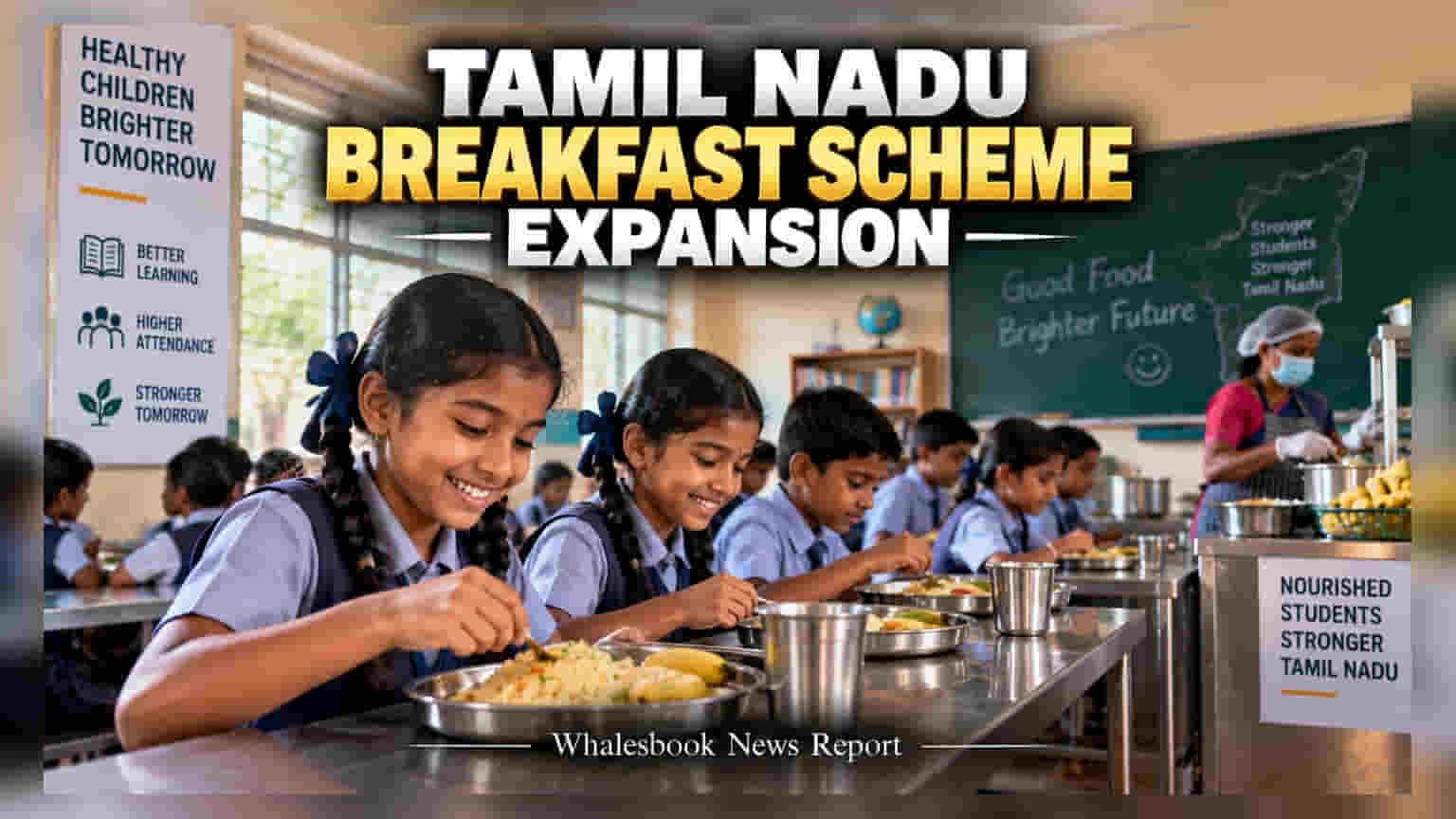
Tamil Nadu has extended its free breakfast program to cover students from Classes 6 to 8, adding 15.30 lakh children to the initiative. The state increased the annual budget by ₹217.63 crore, bringing the total to ₹724 crore. While the rollout has begun, the Model Code of Conduct will delay implementation in Chengalpattu and Tiruppur districts.
Tamil Nadu has officially expanded its flagship breakfast program to cover students from Classes 6 to 8, bringing an additional 15.30 lakh children into the scheme. The initiative, now renamed the Perunthalaivar Kamarajar Breakfast Scheme, previously served only primary school students from Classes 1 to 5. The state government has increased the annual budget allocation for this program by ₹217.63 crore to support the broader reach, raising the total yearly expenditure to ₹724 crore.
The expansion covers over 15,454 government and government-aided schools across the state. This increase in state-level social spending highlights the government's focus on nutritional security within public education, which officials link to improving student attendance and learning outcomes. The Social Welfare and Women Empowerment Department has mandated that district authorities maintain strict hygiene standards at all distribution centers and kitchens as the scale of meal preparation increases.
While the rollout is underway, the project faces immediate regulatory delays in specific regions. The implementation is currently paused in Chengalpattu and Tiruppur districts due to the active Model Code of Conduct, which is in place for local Assembly by-elections. This regulatory requirement restricts government announcements and certain administrative rollouts in these affected areas to ensure fair electoral practices.
For observers of state fiscal policies and social infrastructure, the key monitorables moving forward will be the efficiency of scaling these logistics to accommodate the higher number of students and the eventual timeline for commencing the program in the districts currently restricted by the Model Code of Conduct. Analysts typically monitor such large-scale social welfare commitments to assess the state's fiscal health and the allocation of resources toward public service initiatives.