

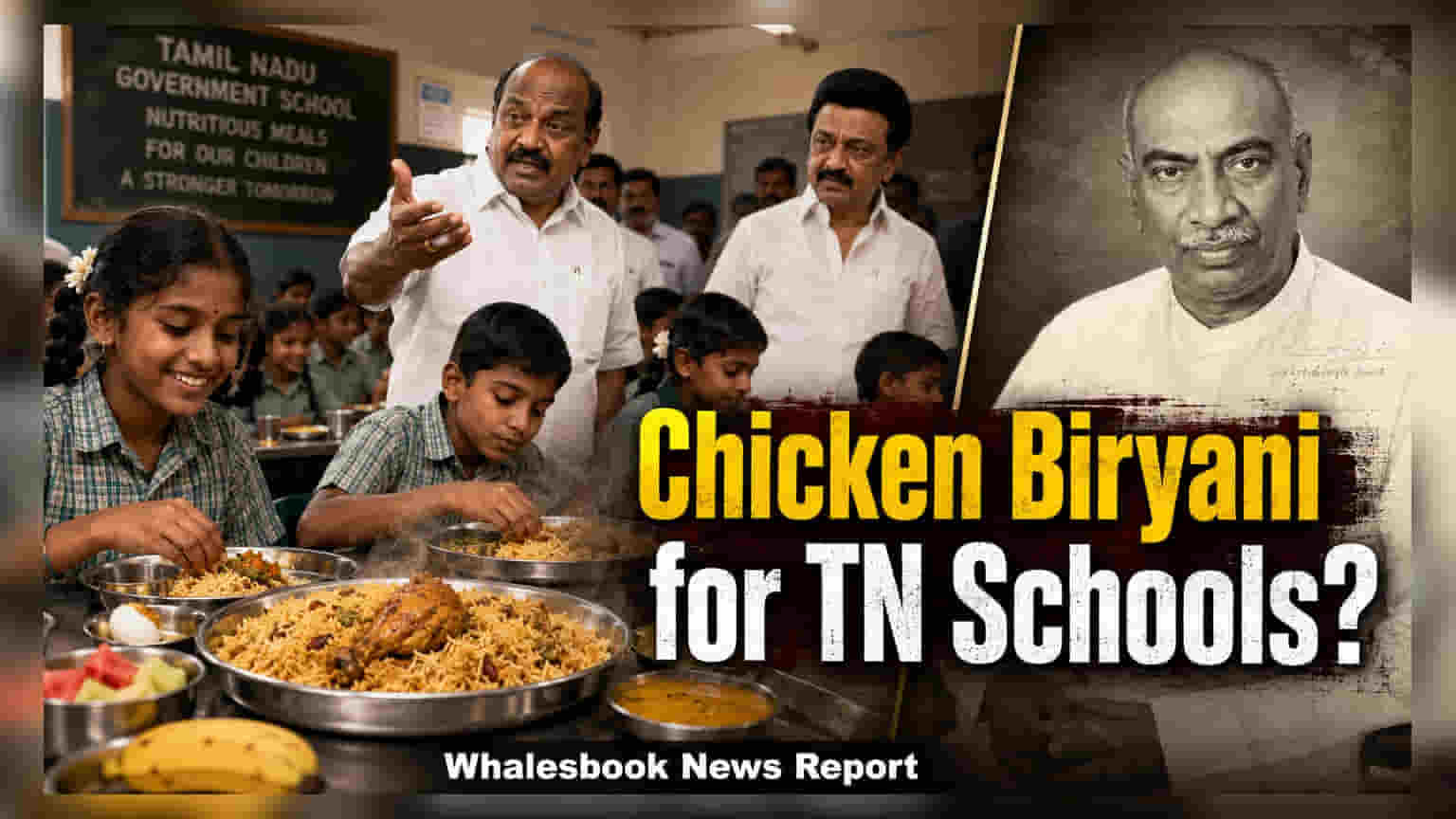
The Tamil Nadu government is reviewing a proposal to serve chicken biryani once a week in state-run schools. This potential update to the Mid-Day Meal Scheme aims to improve student nutrition and attendance. Officials are currently evaluating the feasibility of the plan alongside the existing breakfast program.
The Tamil Nadu government is evaluating a proposal to introduce chicken biryani to the weekly menu for students in state-run schools. This potential update to the long-standing Mid-Day Meal Scheme was formally presented by School Education Minister K. Rajmohan to Chief Minister M.K. Stalin.
Historical Context of School Nutrition Programs
Tamil Nadu has a long history of investing in school nutrition, with the state's mid-day meal initiatives serving as a model for similar programs across India. The program has evolved over several decades, starting with basic provisions under K. Kamarajar in the 1950s. Subsequent administrations, including those led by M. Karunanidhi, M.G. Ramachandran, and J. Jayalalithaa, gradually expanded the menu to include items such as eggs to improve protein intake.
In September 2022, the state government launched the Chief Minister's Breakfast Scheme, later renamed the Perunthalaivar Kamarajar Breakfast Scheme, which provides primary school students with an additional nutritious meal. These initiatives are designed not only to support child health but also to encourage consistent school attendance among children from various socio-economic backgrounds.
Financial and Operational Considerations
While the proposal for chicken biryani is under active consideration, it has not yet received final approval from the Chief Minister's office. A major factor in the decision-making process will be the operational cost. Currently, the allocation for the school meal program stands at approximately Rs 15 per student per day. Any addition of non-vegetarian menu items would likely require a review of current per-student spending limits to manage procurement, storage, and food safety standards.
Beyond this specific proposal, the state is also planning to diversify its existing breakfast menu to provide more variety for students. The primary monitorable for investors and stakeholders in the food and supply chain sector will be any forthcoming government tenders or policy updates that might increase procurement requirements for poultry and related ingredients in the state. The final decision will balance these nutritional objectives with the budgetary constraints of the state's welfare expenditure.