

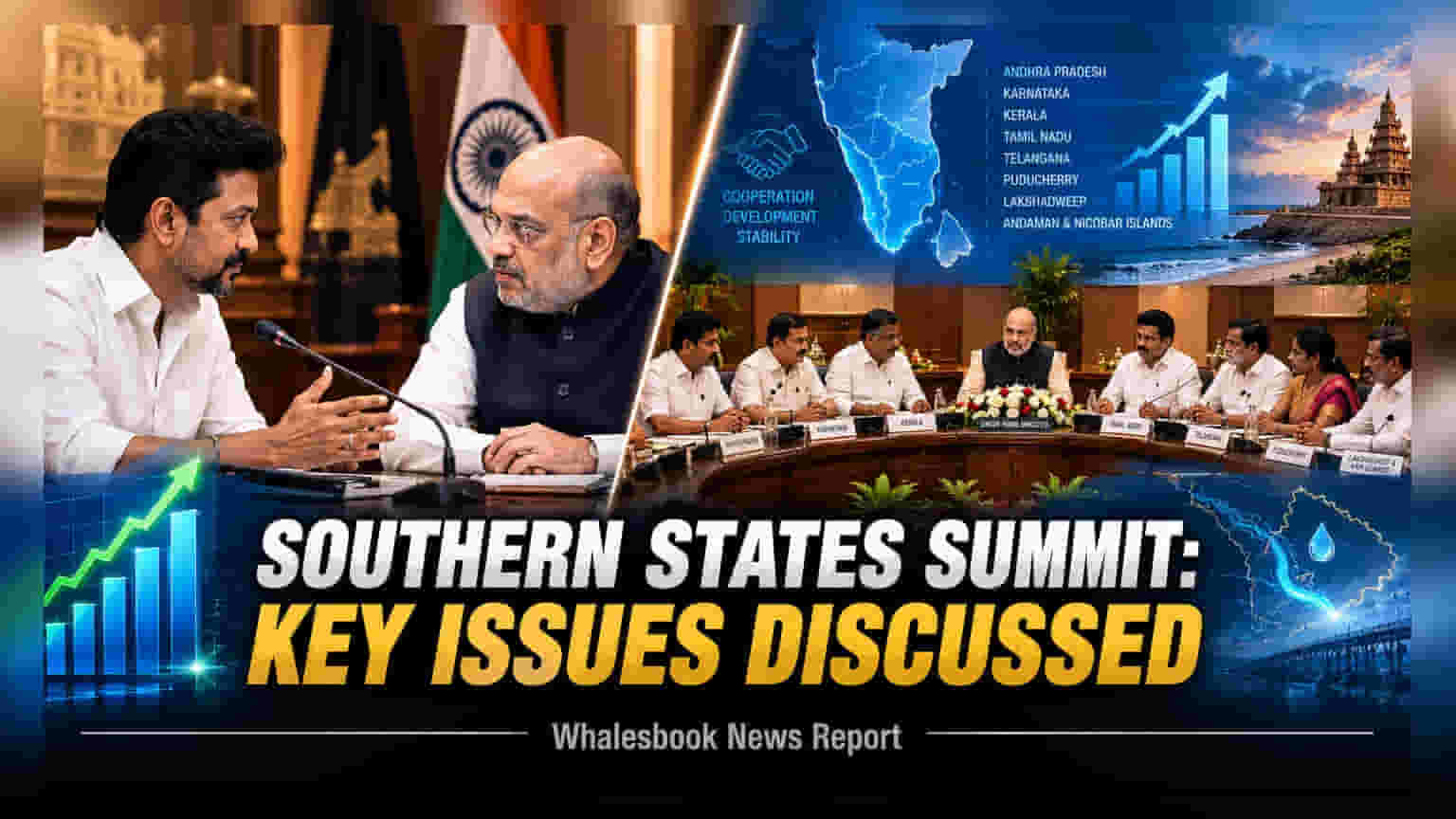
Tamil Nadu Chief Minister C. Joseph Vijay met Union Home Minister Amit Shah ahead of the 31st Southern Zonal Council summit on August 20, 2026. The meeting focuses on inter-state coordination, specifically concerning water sharing and regional development. For market observers, these forums are relevant as they influence long-term policy stability and infrastructure planning across the southern states.
Tamil Nadu Chief Minister C. Joseph Vijay held a meeting with Union Home Minister Amit Shah on Wednesday night, immediately preceding the 31st Southern Zonal Council summit held in Mahabalipuram on Thursday, August 20, 2026. The Southern Zonal Council is a statutory advisory body established under the States Reorganisation Act of 1956 to foster cooperation and resolve disputes between the central government and the southern states and union territories.
The summit, chaired by Union Home Minister Amit Shah, serves as a platform for Chief Ministers and representatives from Andhra Pradesh, Karnataka, Kerala, Tamil Nadu, and Telangana, along with Puducherry, Lakshadweep, and the Andaman and Nicobar Islands. While the event is political and administrative in nature, it holds significance for businesses operating in South India, as the council’s primary agenda items often include sensitive issues such as inter-state river water sharing and infrastructure coordination.
Key discussion points at the council meeting include the ongoing management of river water disputes, most notably the Cauvery water sharing issue, which remains a long-standing challenge for relations between Tamil Nadu and Karnataka. These disputes frequently impact agricultural planning, industrial water usage, and municipal supply in the affected regions. Decisions or resolutions reached during these council meetings provide a roadmap for the central and state governments to manage resources and maintain regional stability.
From a business and economic perspective, the Zonal Council meetings are important to monitor because they address regional bottlenecks. When inter-state friction is high, it can lead to complications in project implementation, transportation, and resource allocation. Conversely, agreements reached on development, fast-track courts, and security mechanisms contribute to a more predictable regulatory and operational environment for businesses established in the southern corridor.
Beyond the specific water disputes, the summit also reviews national policy implementation and regional development goals. The outcomes of these discussions are often translated into state-level policies or joint infrastructure projects. Investors and regional observers will now track the official statements and any signed agreements emerging from the summit, as these will indicate how the participating states plan to handle contentious inter-state issues in the coming months.