

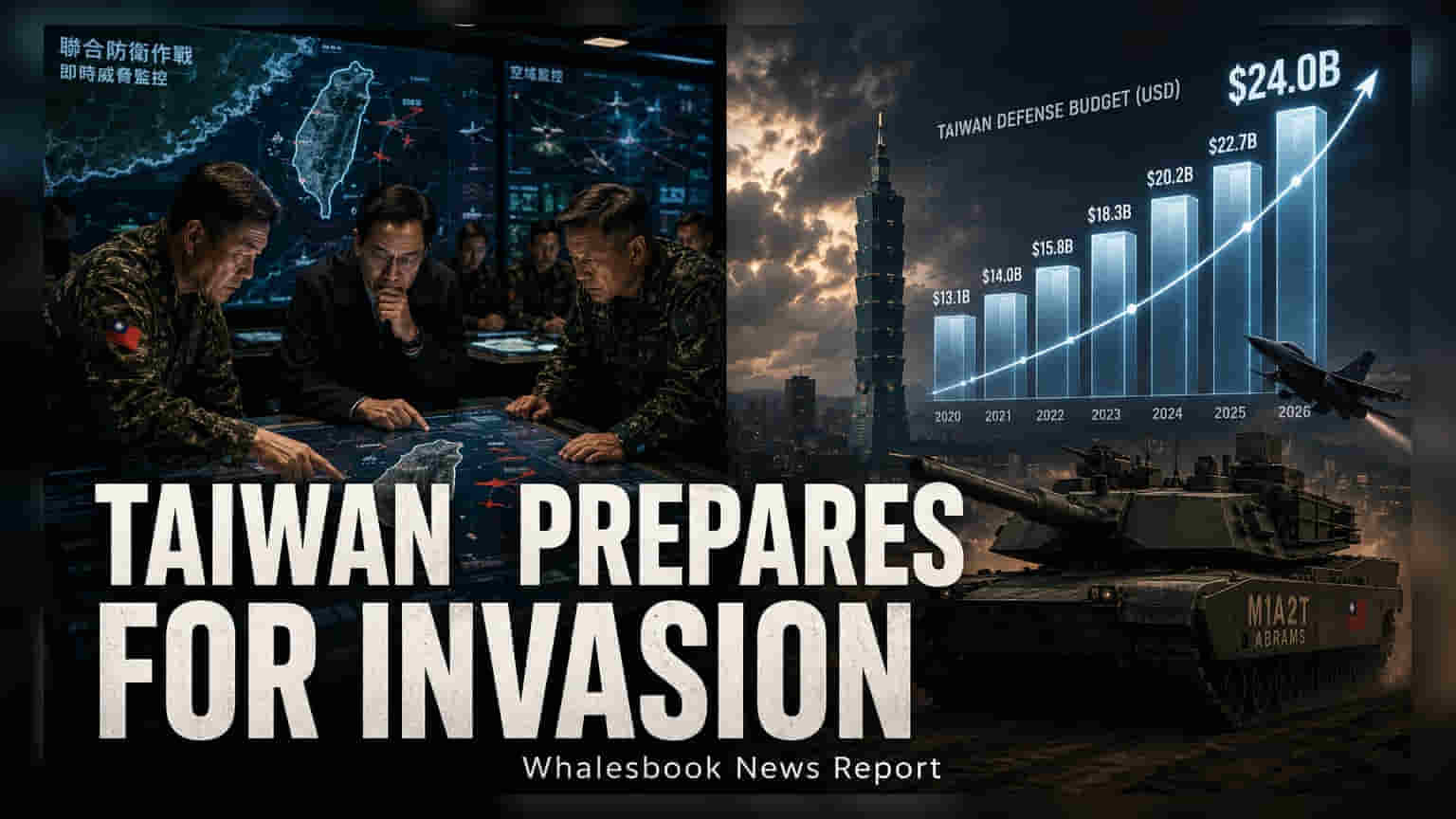
Taiwan has commenced its 10-day Han Kuang military exercises to test defense readiness against potential Chinese incursions. For investors, these drills underscore ongoing geopolitical tensions in the Taiwan Strait, a critical node for global semiconductor production. Any escalation in the region could impact global technology supply chains, making this a key area for long-term monitoring by market participants.
Taiwan has officially launched its annual 10-day Han Kuang military exercises, a major defensive drill designed to test the island's ability to withstand a potential Chinese invasion. Starting on August 5, 2026, the exercises are focusing on combat readiness, urban resilience, and strategies to counter what authorities describe as grey-zone tactics—actions that aim to pressure Taiwan without triggering open warfare.
While the primary purpose of these exercises is national security, the event carries significant weight for global financial markets. Taiwan is home to the Taiwan Semiconductor Manufacturing Company (TSMC), the world’s largest contract chipmaker. Because TSMC produces a vast majority of the world's advanced semiconductors, the Taiwan Strait is effectively a vital artery for the global technology sector. Any disruption, blockage, or escalation in tensions in this region poses a direct risk to the supply of essential components for everything from smartphones and cars to artificial intelligence hardware.
For investors, the drills highlight the fragility of the current global tech supply chain. While markets often digest geopolitical news quickly, the semiconductor sector remains sensitive to any signals of instability. A significant conflict would not only affect tech giants directly but would also ripple through global manufacturing hubs, including those in India, which rely on the steady import of advanced chips for electronics, automotive, and IT services industries.
Financial context also plays a role in the narrative. Taiwan's legislature recently approved a supplementary defense budget of approximately US$24.8 billion (NT$780 billion) in May 2026 to fund US arms procurement and strengthen local defense capabilities. This budget was the result of a compromise after initial government proposals faced resistance, reflecting the domestic fiscal balancing act between aggressive defense spending and economic sustainability.
The drills involve a record mobilization of over 5,000 reservists and are utilizing new US-modeled communication protocols to improve coordination between front-line units. While these maneuvers are defensive in nature, the simulation of events such as telecommunications interference and wartime relocation serves as a stark reminder of the potential operational risks businesses operating in the region face.
Investors should note that the primary risk in this region is not necessarily the drills themselves, but the potential for miscalculation or heightened posturing that leads to trade disruptions. Market analysts continue to monitor US-China relations and any shifts in the semiconductor supply chain status. The ability of the technology sector to diversify its manufacturing base remains a key structural theme for long-term investors. Moving forward, the most important updates to track will be any official developments regarding the semiconductor supply chain stability, changes in US-Taiwan defense agreements, and rhetoric from major global powers regarding regional maritime security.