

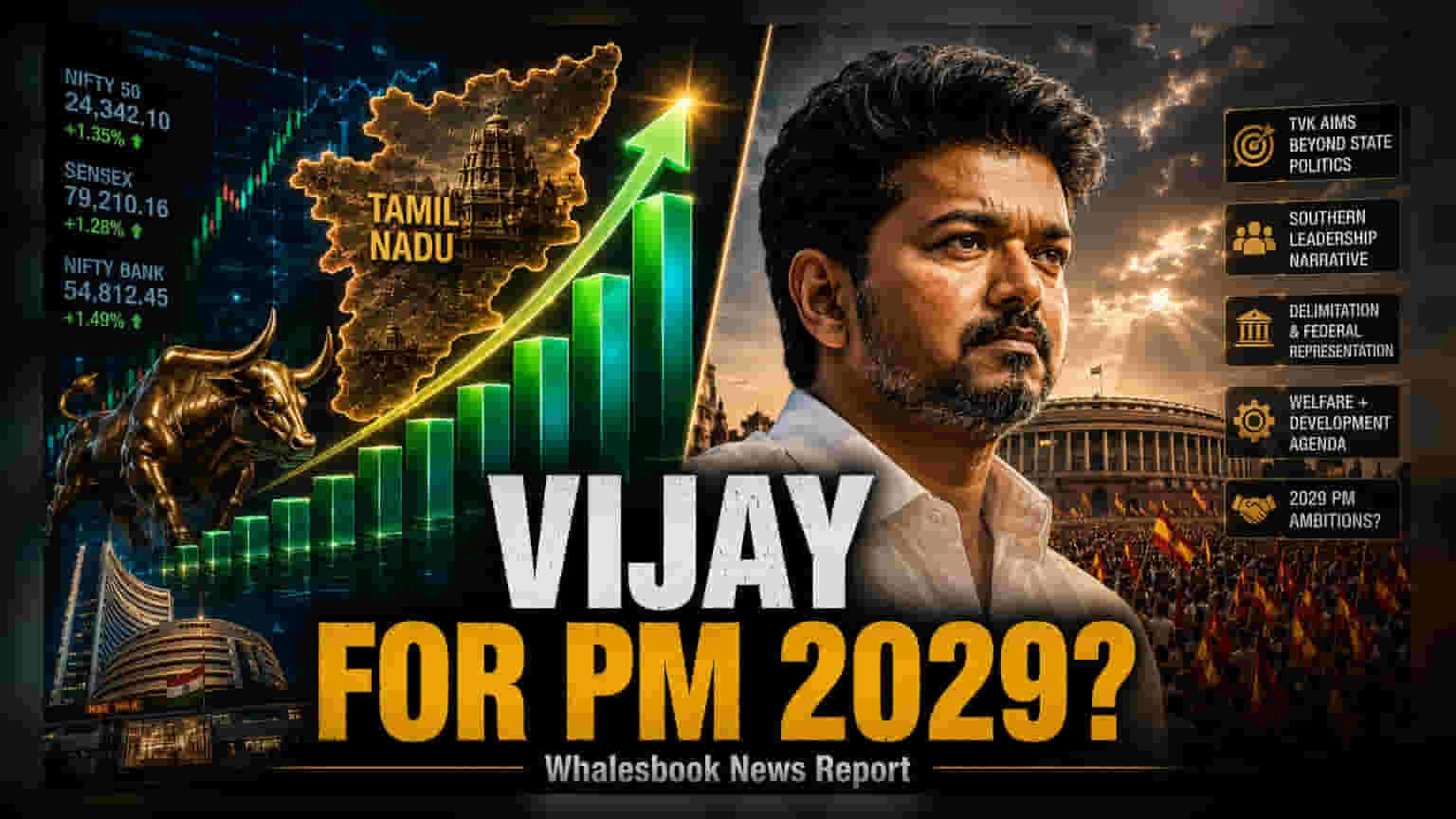
Tamil Nadu Chief Minister C. Joseph Vijay’s party, TVK, has publicly proposed his name for the 2029 Prime Minister’s race. This shift in tone comes as the government hits its 100-day milestone, with a focus on welfare and governance. For observers, this signals a potential push for national influence from a key southern state, raising questions about policy stability and state-centre ties.
Just 100 days after taking office, the Tamilaga Vettri Kazhagam (TVK) led by Tamil Nadu Chief Minister C. Joseph Vijay has begun signalling ambitions beyond state politics. Senior party leaders, including Minister for Human Resources Management D. Sarathkumar and Public Works Minister Aadhav Arjuna, have publicly projected the Chief Minister as a contender for the Prime Minister's post in the 2029 general election. This move marks a strategic shift for the newly formed administration, aiming to transition from state-level governance to a national political platform.
The timing of these statements aligns with a growing discourse in southern India regarding federal representation. Ministers have specifically highlighted the upcoming national delimitation exercise—a process to redraw electoral constituencies—as a key friction point, arguing that southern states must secure their political and economic influence against shifts in national legislative power. For market observers and businesses operating in Tamil Nadu, this narrative of "Southern leadership" is a significant indicator of the government's future stance in negotiations with the central government.
Governance and Economic Focus
While the national political debate is gathering momentum, the administration is currently balancing its expansionist political rhetoric with the execution of its initial state-level agenda. In its first 100 days, the government has launched several welfare initiatives, including the Singappen Special Task Force for women's safety, expanded breakfast schemes for students, and various housing and agricultural incentives. These schemes are central to the government's promise of corruption-free governance and public welfare.
However, the long-term fiscal impact of these welfare commitments remains a key monitorable for economic analysts. Ensuring the state's budget remains balanced while funding these schemes will be a primary challenge for the finance department, especially if the government pursues aggressive infrastructure development alongside social spending.
Political Stability and Federal Relations
For investors and corporate stakeholders, the primary concern lies in the stability of the current political setup. The TVK government is a coalition, and the success of its policy roadmap depends heavily on maintaining internal unity and legislative support. Any friction within the coalition or significant pushback from opposition parties regarding transparency and law enforcement could complicate the pace of project approvals and administrative decisions.
Furthermore, the ambition to play a larger role in national politics suggests that the government may increasingly adopt a more confrontational or distinct stance in its dealings with the central government. Whether this leads to efficient cooperation or policy gridlock on major infrastructure and industrial projects will be a crucial factor for the state’s industrial growth. As the government continues its tenure, observers will be tracking its ability to translate campaign promises into sustained economic output while managing the complexities of a national political pivot.