

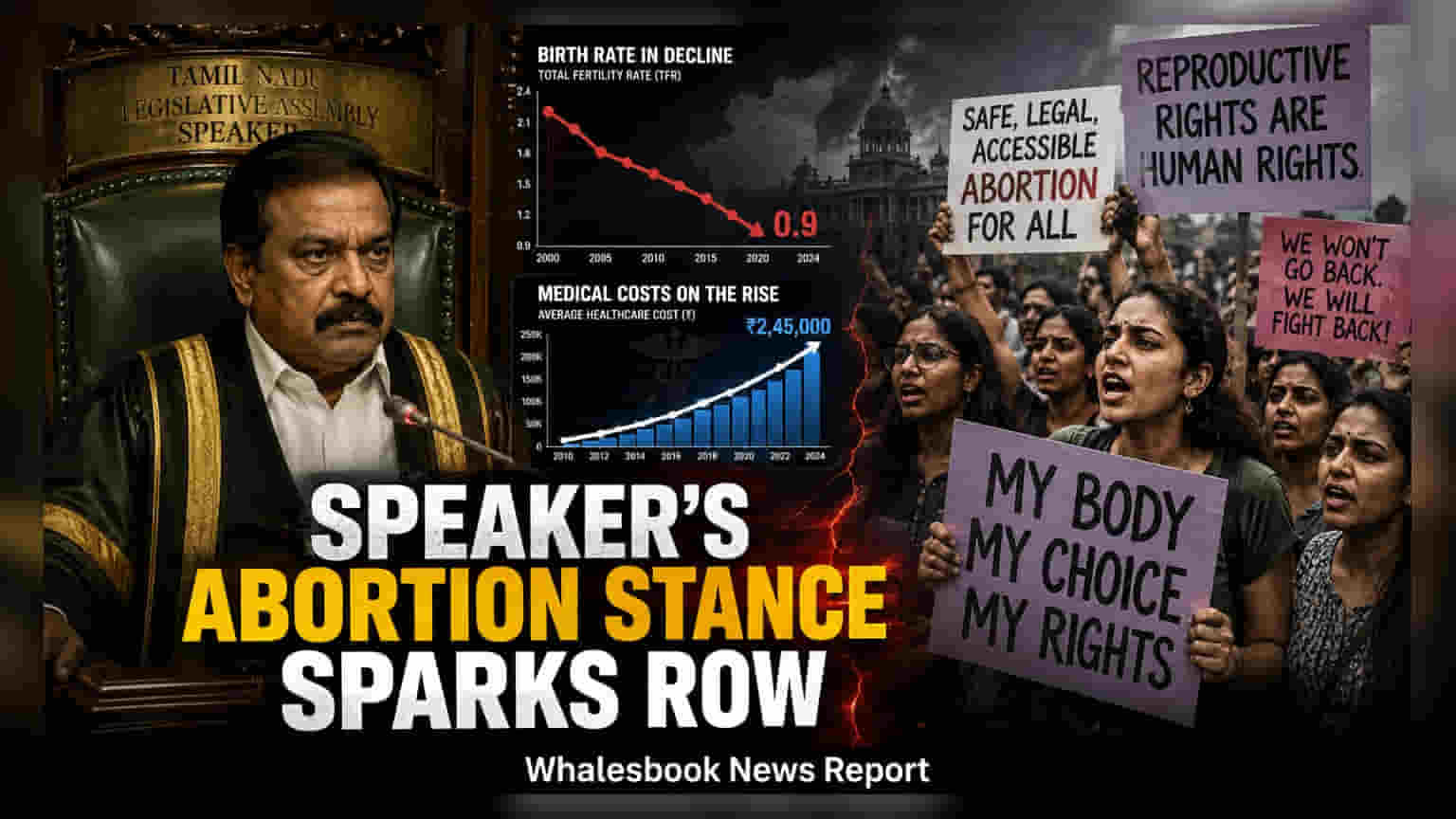
Tamil Nadu Assembly Speaker JCD Prabhakar faces backlash after participating in an anti-abortion rally in Chennai. While he presented his personal religious views, the event has triggered a debate on the impartiality of constitutional offices. State Health Minister K.G. Arunraj has since clarified that government policy on legal abortion remains unchanged under the Medical Termination of Pregnancy Act.
A significant political controversy has emerged in Tamil Nadu following Assembly Speaker JCD Prabhakar’s participation in a public event advocating against abortion. The Speaker, a member of the ruling Tamilaga Vettri Kazhagam (TVK), attended the '5th National March for Life India' in Chennai, where he publicly expressed views against the procedure, citing religious beliefs and the value of unborn life.
Official Clarification on Abortion Policy
The remarks from the Speaker, who assumed his constitutional role in May 2026, drew immediate criticism from opposition parties and rights activists. Critics argued that a person holding a constitutional office should remain neutral and not endorse religious positions that appear to challenge established reproductive rights. In response to the growing public debate, Tamil Nadu Health Minister K.G. Arunraj stepped in to clarify the government's stance. He reaffirmed that abortion services in the state remain governed by the Medical Termination of Pregnancy (MTP) Act, which permits the procedure under specific legal and medical conditions. The Health Minister urged the public to view the Speaker's comments as personal opinions rather than a reflection of state policy.
Political and Governance Impact
The Bharatiya Janata Party (BJP) has been among the most vocal critics, questioning the Speaker's participation in an event organized by a religious body. Party leaders raised concerns regarding the appropriateness of a constitutional authority endorsing such a stance, arguing that it could influence public perception of impartiality. This controversy has heightened political scrutiny of the ruling TVK party, particularly regarding its approach to women’s rights and the intersection of religious doctrine with public governance.
For citizens and observers of the state’s political climate, the primary monitorable in this situation is how the Speaker balances personal belief with the neutrality expected of his office. The incident also highlights the potential for friction when constitutional figures participate in advocacy-based public events. The government's swift clarification indicates an effort to prevent confusion regarding healthcare rights, but the political discourse surrounding the event is likely to continue as opposition parties seek to keep the issue in the spotlight.