

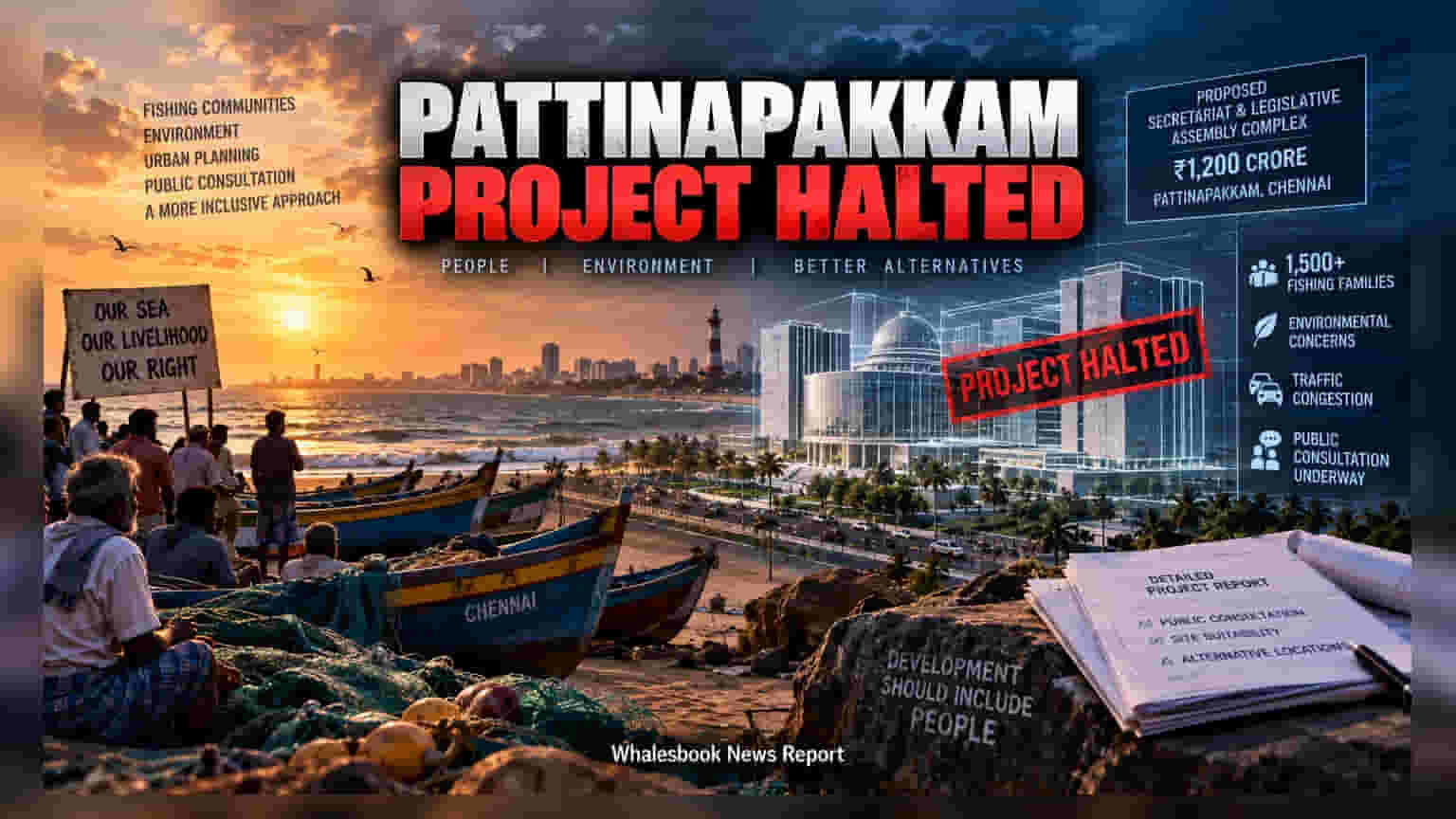
The Tamil Nadu government has deferred the Rs 1,200-crore Secretariat and Legislative Assembly project at Pattinapakkam following public and political pushback. The site, which supports over 1,500 fishing families, faces opposition regarding land use and traffic concerns. This pause emphasizes the execution challenges that can delay large-scale urban infrastructure projects and impact project timelines for associated contractors.
The Tamil Nadu government has officially paused its plans for the proposed Rs 1,200-crore Secretariat and Legislative Assembly complex in Chennai’s Pattinapakkam area. Minister Aadhav Arjuna stated that while a government order had been issued, the project is not finalized. The administration is now conducting a detailed project report and public consultation to assess the site's suitability.
This decision follows significant pushback from various stakeholders. More than 1,500 fishing families, who use the 25.55-acre plot for essential activities like net mending and boat anchoring, have raised concerns about losing access to the sea. The project has also faced opposition from political allies, including the CPI(M), who have warned that the government must adopt a more inclusive approach or risk losing their external support. Additionally, urban planning critics have pointed to the potential for severe traffic congestion on key routes such as Santhome High Road and Greenways Road, suggesting that an administrative hub on the outskirts of the city might be a more viable alternative.
From an investor and economic perspective, such delays serve as a reminder of the execution risks inherent in large-scale public infrastructure projects. For construction and engineering firms, these projects are significant revenue drivers. However, when plans face stiff social or political resistance, it often leads to project delays, cost overruns, or complete cancellations. Investors typically track these developments because they indicate the government's ability to navigate land acquisition, environmental clearances, and social impact assessments before breaking ground.
The pause also highlights the broader challenge of developing high-density urban zones. In major Indian cities, large infrastructure projects must balance state-level expansion goals with the socio-economic impact on local populations. The government is currently under pressure to balance its infrastructure ambitions with the need to maintain political stability and community goodwill. The next steps for the project will depend on the findings of the feasibility study and the outcome of ongoing public consultations. Market participants may track whether the administration pursues a revised location, scales down the project, or proceeds with modifications to address the local grievances.