

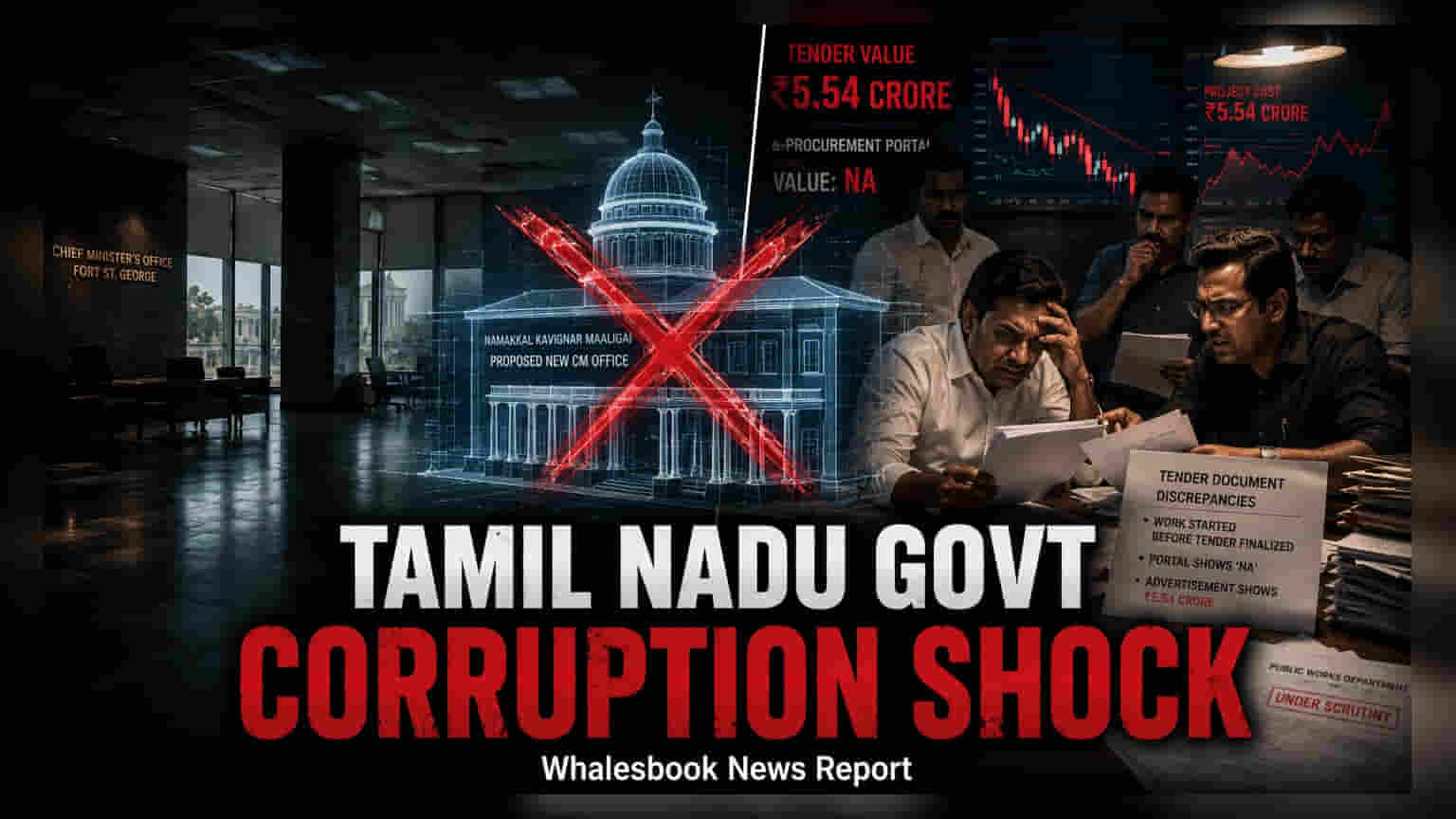
The Tamil Nadu government is facing its first major political controversy regarding a Rs 5.54 crore tender for relocating the Chief Minister’s office. Opposition parties have raised concerns about procedural lapses and the timeline of construction, while the state administration has denied any wrongdoing, attributing the issues to technical glitches.
The newly formed government in Tamil Nadu, led by Chief Minister C. Joseph Vijay of the Tamilaga Vettri Kazhagam (TVK), is navigating its first significant corruption controversy. The issue revolves around a Rs 5.54 crore tender initiated for the relocation of the Chief Minister’s Office from its current premises at Fort St. George to the Namakkal Kavignar Maaligai building.
Opposition parties, including the Bharatiya Janata Party (BJP) and the Dravida Munnetra Kazhagam (DMK), have flagged procedural concerns regarding the tender process. The primary allegation is that construction work for the new office space commenced before the formal tender process was finalized. Additionally, critics have pointed to discrepancies in the tender documentation, noting that the online e-procurement portal initially displayed the project value as 'NA' (Not Applicable), while print advertisements listed the specific cost of Rs 5.54 crore.
Public Works Minister Aadhav Arjuna has addressed these allegations in the state assembly, dismissing claims of a scam. He stated that the issues raised were merely technical lapses and not intentional irregularities. According to the government, no contract has been awarded for the work yet, and no public funds have been spent on the project. The administration has defended the move as a functional necessity, noting that the current office space is insufficient for the growing demands of the Chief Minister’s staff and meeting requirements.
For the state administration, which is roughly 100 days into its tenure, managing this controversy is a critical test of its administrative transparency. The government has sought to clear the air by announcing plans to release a detailed white paper regarding tender developments in the Public Works and Highways departments over the past five years. This move is aimed at addressing broader concerns about public procurement processes.
The key monitorable for the public and observers will be the release of this white paper and the subsequent handling of the tender process. The government's ability to demonstrate adherence to standard procedures and maintain transparency in its procurement will be essential in resolving the current political dispute and ensuring project execution without further delays.