

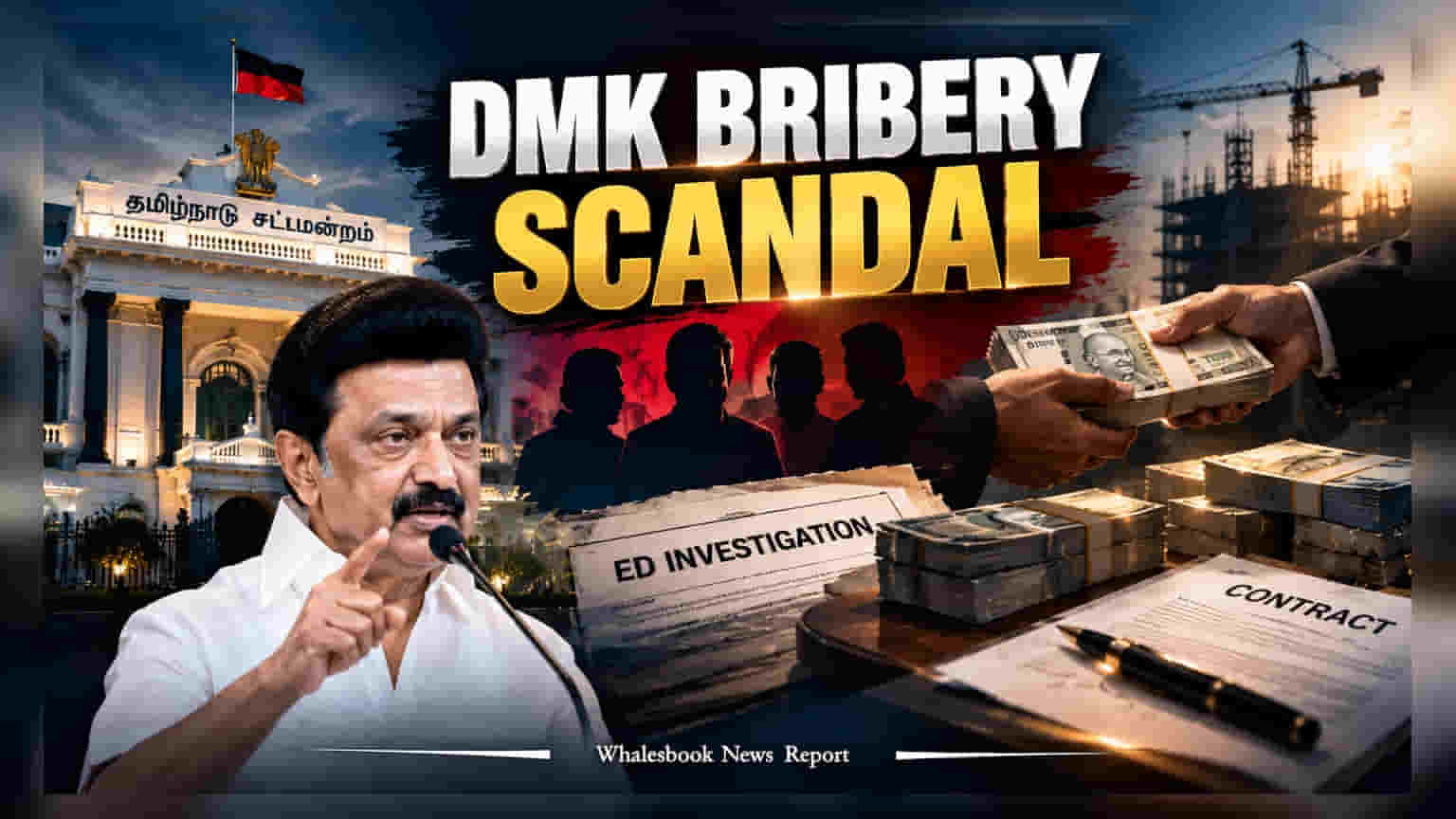
Tamil Nadu Chief Minister C. Joseph Vijay has accused the opposition DMK of running a systematic 'EMI-style' extortion racket, citing Enforcement Directorate documents. The allegations create political uncertainty that may impact the environment for state-led infrastructure projects and public procurement contracts.
Tamil Nadu Chief Minister C. Joseph Vijay ignited a significant political debate in the State Assembly on Monday, leveling serious corruption allegations against the opposition Dravida Munnetra Kazhagam (DMK). The Chief Minister, citing investigative documents from the Enforcement Directorate, claimed that the party had institutionalized a system of kickbacks from contractors during its previous tenure.
The 'EMI-Style' Extortion Allegation
In his address to the Assembly, the Chief Minister alleged that contractors working on state projects were coerced into paying bribes disguised as 'party funds.' He described these payments as 'EMI-style' collections, noting that the amounts were demanded with the regularity of loan installments. According to the Chief Minister, the alleged extortion involved demanding between 7.5% and 10% of the total contract value from vendors.
The allegations specifically center on projects under the Municipal Administration and Water Supply (MAWS) Department and the state-run liquor body, TASMAC. By presenting these claims in the legislative record, the Chief Minister sought to address previous opposition demands for evidence regarding corruption, pointing toward the trail established by central investigative agencies.
Impact on Business and Governance
For investors and companies operating in Tamil Nadu, this political escalation introduces a layer of governance risk. When major political parties engage in high-stakes public confrontations regarding procurement processes, it can lead to increased scrutiny of government tenders and public-private partnerships. Historically, such intense political friction has sometimes resulted in delays in project approvals, tender re-evaluations, or heightened caution among administrative officials, which may affect the operational speed of state-led infrastructure projects.
Business entities currently executing contracts or bidding for upcoming projects in the state may face a period of uncertainty. Investors typically watch for any signs that such political conflict could disrupt the timeline of project commissioning, payment processing, or the renewal of existing vendor contracts.
Historical Context and Political Fallout
The Chief Minister’s remarks also referenced historical precedents, including the findings of the Sarkaria Commission, to frame the current allegations as part of a recurring pattern of governance challenges. The claims have directly named senior DMK leadership, including former Chief Minister M.K. Stalin, Deputy Chief Minister Udhayanidhi Stalin, and former Minister V. Senthil Balaji, as beneficiaries of the diverted funds.
The immediate outlook suggests a period of intensified legislative deadlock. Stakeholders should monitor the ongoing assembly proceedings and any subsequent updates from investigative agencies, as these will determine whether the issue remains a political battle or evolves into a broader administrative overhaul of procurement processes within the state.