

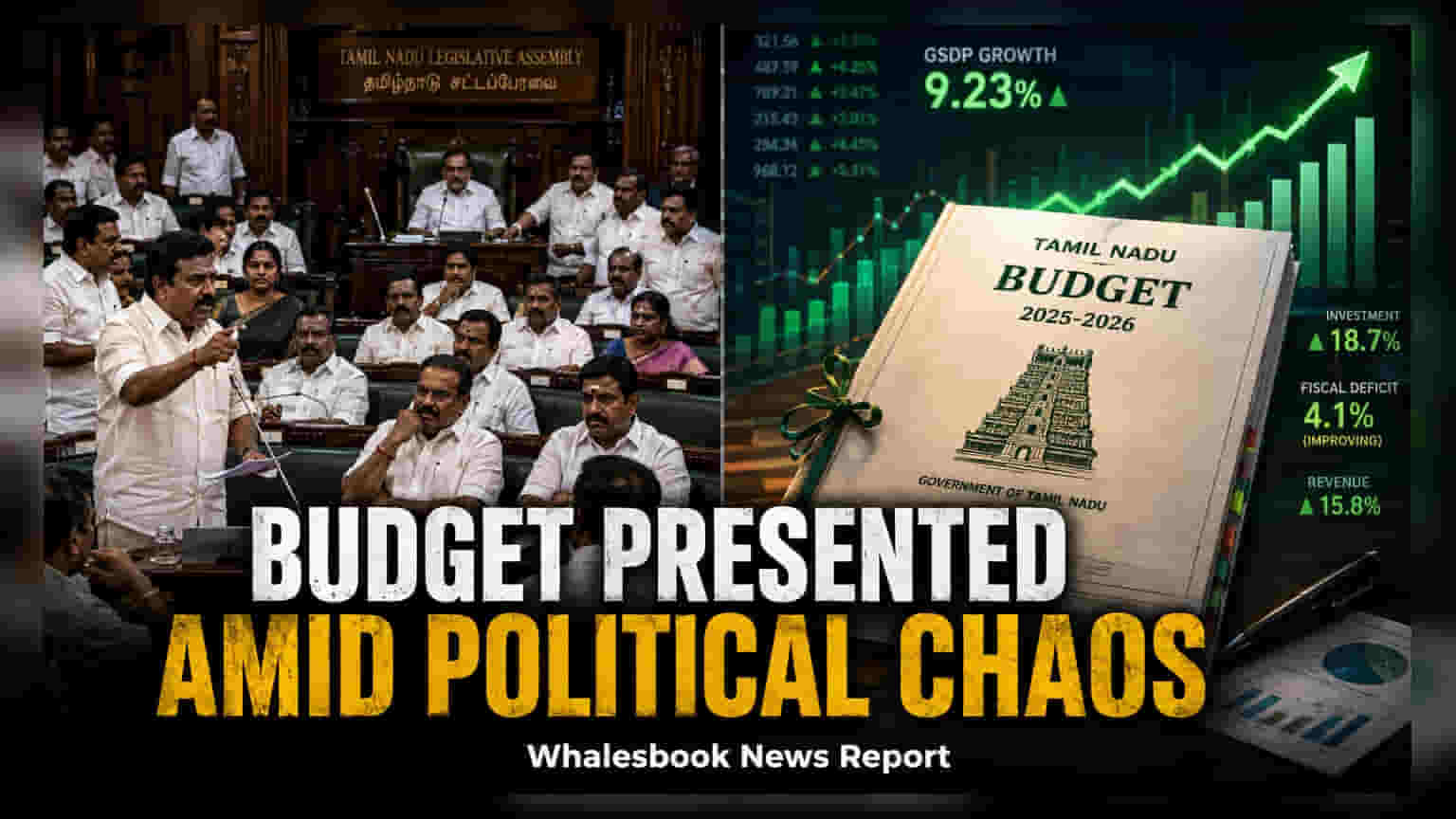
The Tamil Nadu government presents its maiden 2026-27 budget today, August 5, amid legislative tension following the arrest of opposition leader Udhayanidhi Stalin. The session faces potential disruption from DMK legislators. Investors are tracking the budget for clarity on industrial policy, youth schemes, and the state's long-term fiscal management strategy.
The Tamil Nadu government is scheduled to present its maiden budget for the 2026-27 fiscal year on Wednesday, August 5, 2026. This presentation is set to occur against a backdrop of significant legislative tension. The session comes just a day after the arrest of the Leader of the Opposition, Udhayanidhi Stalin, who was taken into custody on August 4 regarding remarks made during a recent public event. Although he was released on station bail following a court order, the situation has created a tense atmosphere within the State Assembly.
DMK party members have indicated that they may abstain from the budget session in protest, raising the risk of legislative disruption. For observers and stakeholders, a smooth budget presentation is essential to ensure that the government's economic agenda, including spending plans and policy shifts, is tabled without administrative delays. Legislative stability is often seen as a prerequisite for the effective passage of key fiscal bills and long-term economic planning.
Beyond the immediate political conflict, the market is looking for concrete details on the government’s 'Vettri Thamizhagam' (Prosperous Tamil Nadu) vision plan. This blueprint is expected to lay out the administration's goals for industrial growth, which is a major focus for the state. Given that Tamil Nadu is a key manufacturing hub in India, sector participants are interested in whether the budget will introduce new incentives for industrial development or policies aimed at supporting the youth and women, as previously indicated by the government.
From a fiscal perspective, investors and economic observers remain focused on the state's broader financial health. Managing the state's debt levels while balancing social welfare spending and infrastructure requirements remains a long-term challenge for the administration. Whether the government introduces measures for stricter fiscal discipline or prioritizes higher capital expenditure to drive economic activity will be a key point of interest in today's speech.
The most important monitorable today will be the actual budget proposals tabled by Finance Minister N. Marie Wilson. Stakeholders will be watching for the proposed allocations for infrastructure and industry, which will clarify the state's economic priorities for the coming year. Any announcement regarding the management of state debt or revenue mobilization strategies will also be crucial for understanding the financial roadmap for the 2026-27 period.