

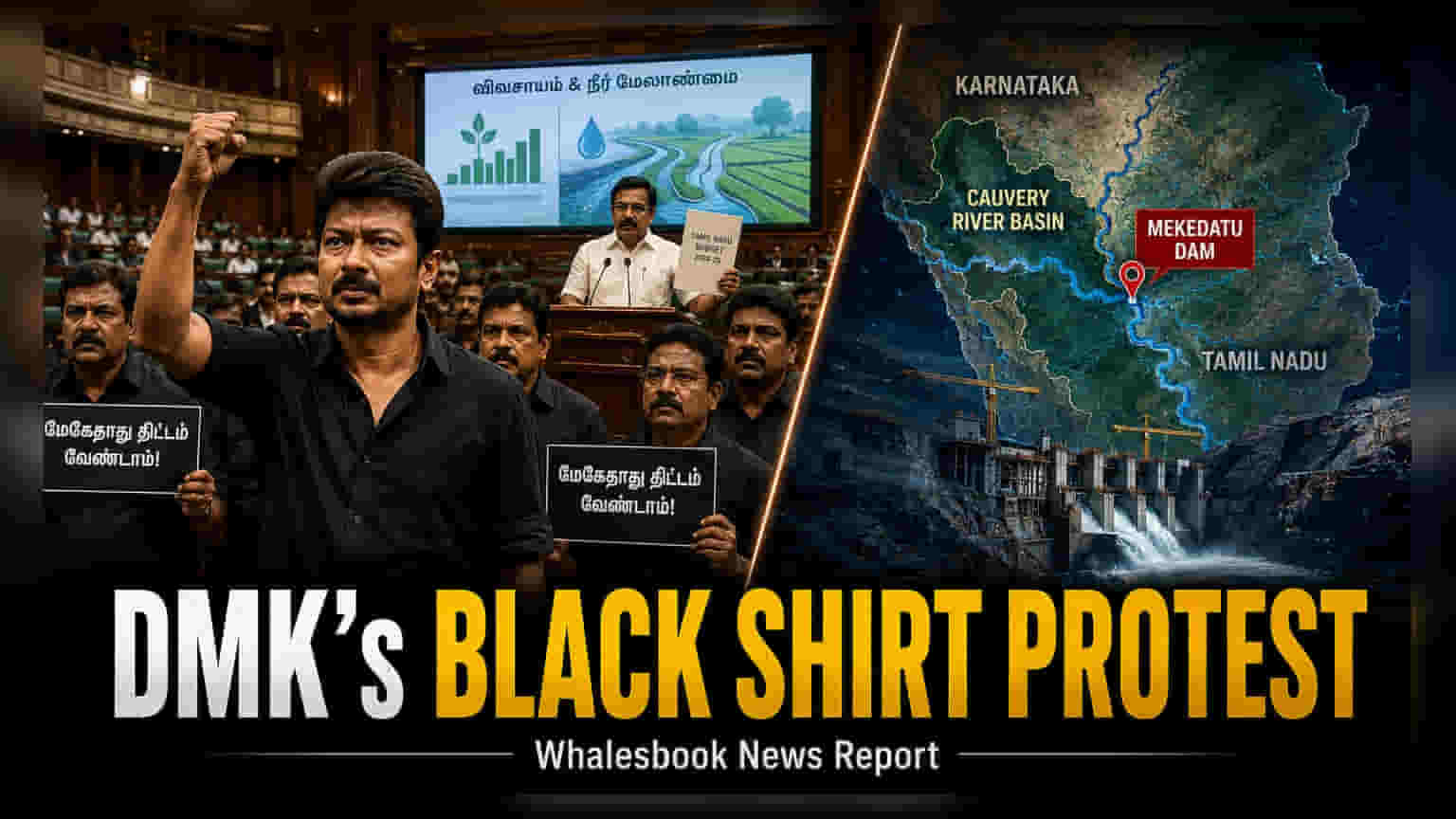
DMK legislators staged a protest in the Tamil Nadu Assembly, wearing black shirts to oppose the government's management of the Cauvery water dispute. This demonstration follows the presentation of the state's 2026-27 maiden budget, which set an ambitious $1.5 trillion economic target. The rising political tension highlights potential risks to policy continuity in a major industrial state.
The Tamil Nadu Legislative Assembly witnessed significant disruption on Thursday as DMK members arrived in black shirts, staging a protest against the ruling TVK government. Led by Leader of Opposition Udhayanidhi Stalin, the members targeted the administration's policy regarding the Cauvery water sharing dispute and the proposed Mekedatu dam project in Karnataka. This political action follows the presentation of the state's 2026-27 budget on August 5 by Finance Minister N. Marie Wilson.
For investors and businesses operating in Tamil Nadu, this legislative friction carries importance. The state serves as a major manufacturing and industrial hub for sectors including automobiles, electronics, and textiles. Ongoing legislative deadlock or intense political standoff can sometimes slow down the decision-making process for new infrastructure projects or policy reforms. While this protest is political, it highlights the broader challenge of navigating the state's current political environment for long-term project planning.
The 2026-27 budget, presented just a day prior to the protest, laid out an aggressive vision to reach a $1.5 trillion economy by 2031. However, the document also underscored the financial constraints facing the state. The budget projected a fiscal deficit of Rs 1,21,819 crore, which stands at approximately 3% of the Gross State Domestic Product (GSDP). Additionally, the state reported a revenue deficit of Rs 55,775 crore. These figures reflect the pressure on state finances, with total debt levels reported at Rs 13.18 lakh crore.
Udhayanidhi Stalin and the DMK have criticized the budget, labeling it a repackaging of earlier welfare schemes and a 'big zero' regarding substantive solutions for farmer welfare and rising living costs. This opposition, combined with recent political events involving the leadership, indicates a sustained period of intense scrutiny on the TVK government's performance.
The key monitorable for observers will be how this legislative environment affects the implementation of the ambitious economic targets and infrastructure spending outlined in the budget. Investors typically watch for stability in policy and fiscal management to ensure that state-led development plans remain on track without significant delays.