

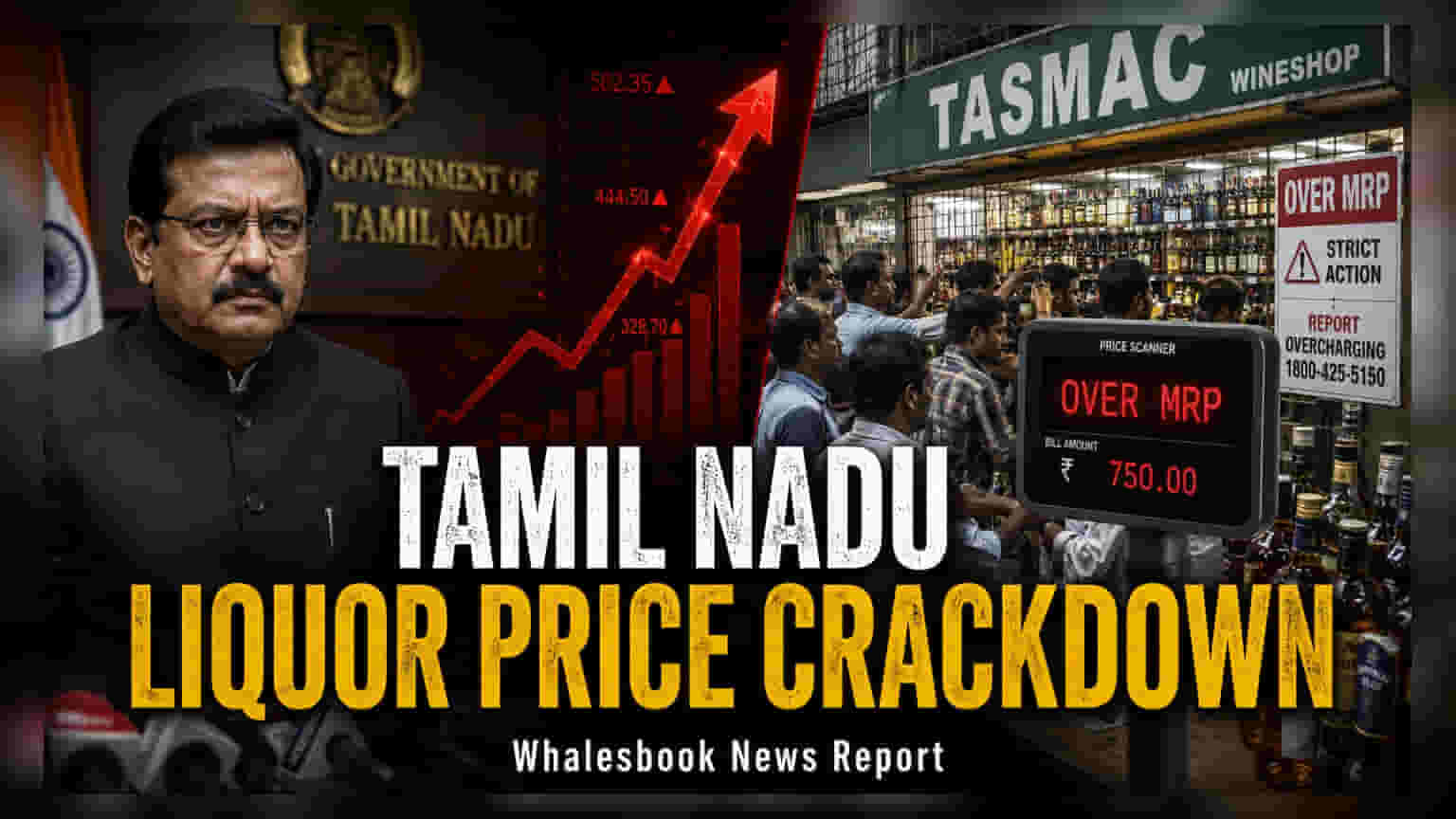
Tamil Nadu’s state liquor retailer, TASMAC, has introduced strict disciplinary rules to stop the sale of alcohol above the Maximum Retail Price. Employees caught overcharging now face escalating penalties, including suspension and potential termination, following directives from the Madras High Court.
Detailed Coverage
The Tamil Nadu State Marketing Corporation, popularly known as TASMAC, has rolled out a new disciplinary framework aimed at eliminating the practice of selling liquor above the printed Maximum Retail Price. As the sole entity responsible for wholesale and retail liquor distribution across the state, TASMAC’s operations are under heightened scrutiny following specific instructions from the Madras High Court to address recurring consumer grievances regarding illegal price hikes at retail outlets.
Escalating Penalties for Staff
Under the new guidelines, TASMAC has established a clear structure of consequences for shop supervisors and sales staff found violating pricing rules. The policy follows an escalating model based on the frequency of the offense. For a first-time violation, staff members face a one-month suspension without pay, a monetary penalty, and a mandatory transfer to a store with lower sales volume. Additionally, the employee is required to provide a formal written undertaking to follow fair pricing practices moving forward.
Should an employee be found overcharging a second time, the consequences become more severe. The disciplinary action includes a three-month suspension without pay and a compulsory reassignment to work at a liquor depot for at least three months. This move effectively removes the individual from direct retail interaction for a significant period. For those who continue to disregard the rules, a third offense results in immediate suspension and a formal departmental inquiry, which could lead to permanent termination of their employment.
Operational Impact and Oversight
TASMAC management has instructed district-level managers to enforce these rules immediately. For the state-run corporation, this initiative is part of an ongoing effort to improve transparency and public trust in its retail operations. Because TASMAC operates as a state monopoly with thousands of outlets, consistent enforcement of these price controls is necessary to maintain standard pricing across different districts.
For stakeholders and observers, the primary factor to monitor will be the effectiveness of these enforcement measures in reducing consumer complaints over the coming months. The success of this policy depends on the consistent application of these penalties by district managers and the ability of the corporation to monitor daily sales practices effectively at the ground level. Any further legal updates from the Madras High Court regarding this matter will also be important to track as the state continues to refine its retail management policies.