

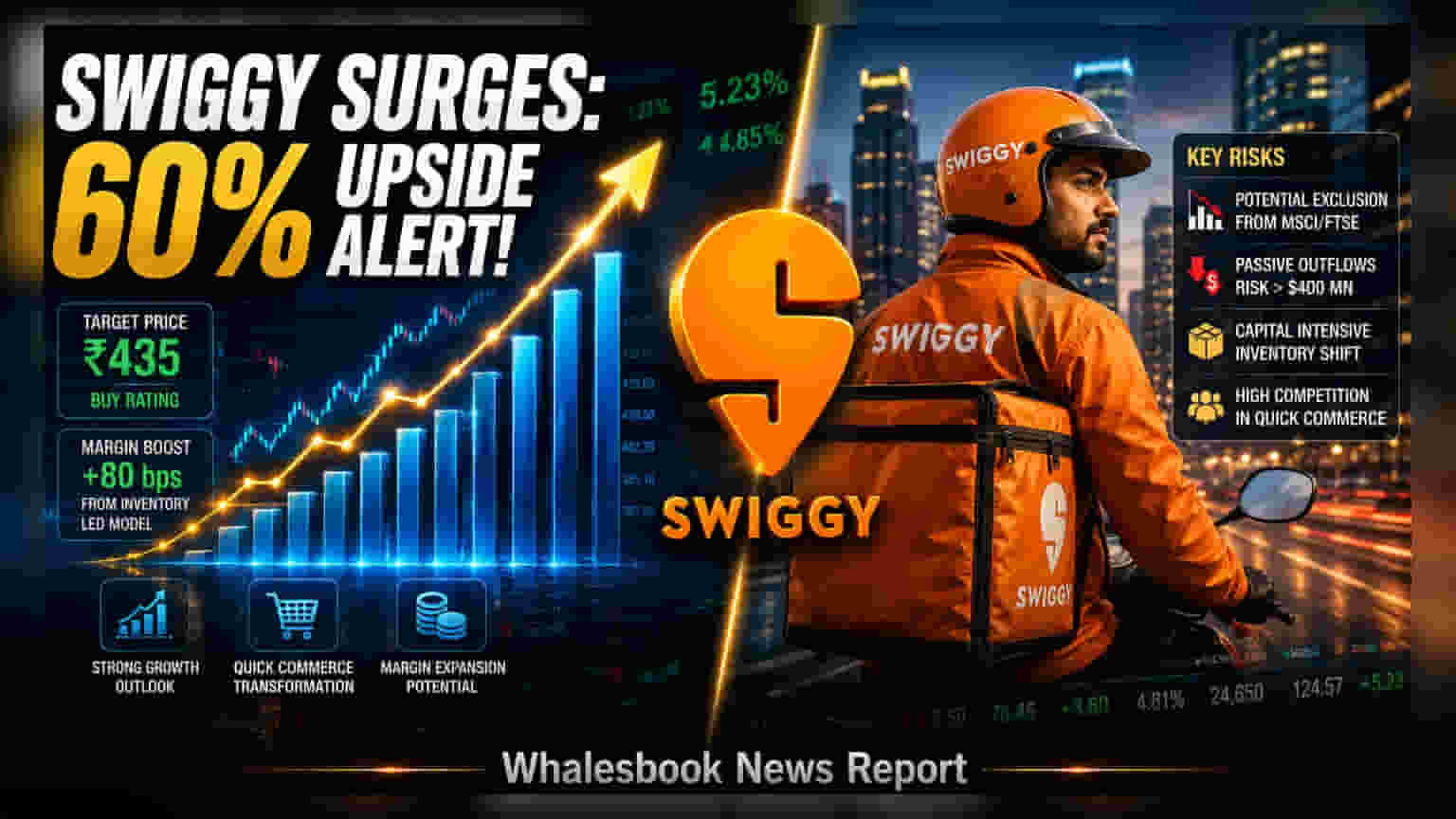
Swiggy shares rose nearly 5% today after shareholders approved a 49.5% foreign ownership cap, clearing the path for 'Indian Owned and Controlled Company' (IOCC) status. Brokerage firm Jefferies initiated a 'Buy' rating with a target of Rs 435. While the move could improve margins by 80 basis points, investors are watching for potential passive fund outflows of over $400 million due to possible index changes.
Swiggy shares rose nearly 5% in intraday trading on August 20, as the market reacted to a new positive outlook from global brokerage Jefferies. The firm initiated coverage on the stock with a 'Buy' rating and set a target price of Rs 435, which implies a significant potential upside from recent closing levels.
The positive sentiment is linked to a major strategic decision made by the company. On August 18, Swiggy's shareholders approved a resolution to cap aggregate foreign ownership at 49.5%. This is a critical step for the company to qualify as an 'Indian Owned and Controlled Company' (IOCC). Achieving this status is important for the future operations of its quick-commerce vertical, Instamart.
By qualifying as an IOCC, Swiggy gains the flexibility to transition its Instamart service to a 'first-party' or inventory-led business model. Currently, the company often relies on intermediaries for its supply chain. By owning the inventory directly, Swiggy can reduce the margins previously lost to these intermediaries. Analysts at Jefferies estimate that this structural shift could lead to an improvement of approximately 80 basis points in profit margins.
However, the transition to IOCC status introduces specific risks that shareholders should consider. Analysts have warned that changing the ownership structure could lead to Swiggy being excluded from major global stock market indices such as MSCI and FTSE. If this happens, passive investment funds that track these indices may be forced to sell their holdings. Estimates suggest this could result in passive outflows exceeding $400 million, which might create selling pressure on the stock in the weeks following the transition.
Beyond the index risk, the operational shift also requires careful monitoring. Moving to an inventory-led model is capital-intensive. It requires the company to invest more in working capital and inventory management. Success will depend on Swiggy's ability to maintain high service levels while effectively managing these increased costs. The quick-commerce sector remains highly competitive, with rivals also aggressively looking to optimize costs and improve delivery efficiency.
Investors may track the company's progress on three main fronts: the official timeline for implementing the IOCC status, any official announcements from global index providers regarding the stock's inclusion or exclusion, and the financial performance of Instamart as it begins to roll out the new inventory-led model. These developments will likely shape the company's profitability trajectory and market sentiment in the coming quarters.