

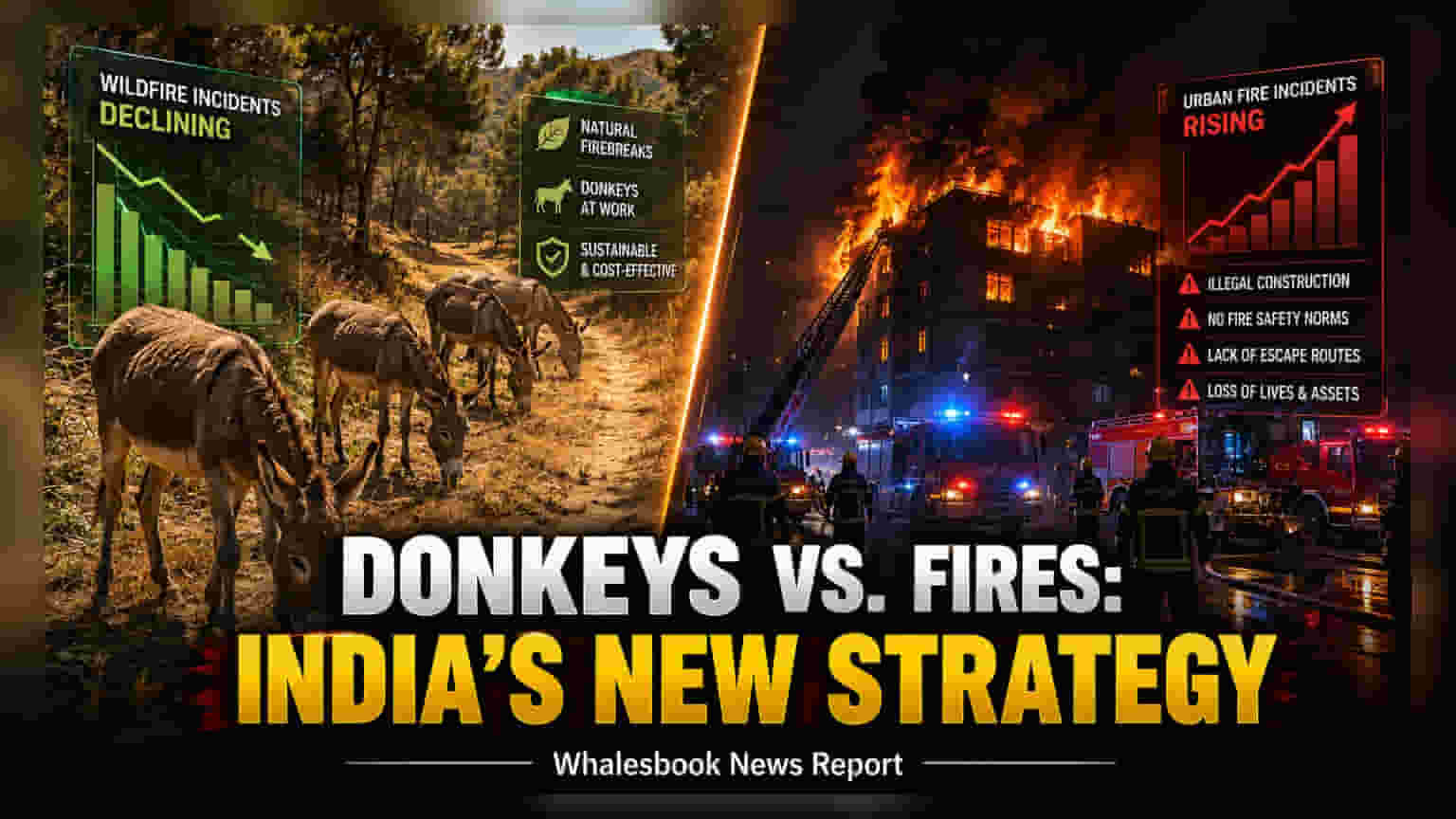
Spain is utilizing donkeys to clear dry vegetation and reduce wildfire risks, a low-cost, nature-based strategy. While the model offers solutions for India’s forest fire crisis, the country simultaneously struggles with systemic safety failures in urban infrastructure, highlighted by recent deadly hotel fires.
Spain has increasingly turned to nature-based solutions to manage wildfire risks, specifically through the use of donkeys. Organizations like the Tivissa Donkey Firefighters in Catalonia and El Burrito Feliz in Andalusia use these animals to graze on dry, flammable vegetation. This process naturally creates firebreaks, which act as a barrier to stop the spread of forest fires. This method is gaining attention because it is low-maintenance and effective in rugged terrain where heavy machinery cannot reach.
Scaling Nature-Based Solutions
For India, which frequently grapples with forest fires due to rising temperatures and dry conditions, this model presents an alternative to the heavy reliance on costly technological or mechanical interventions. The Spanish approach emphasizes working with the ecosystem rather than against it. While this cannot replace specialized firefighting equipment, it offers a sustainable complement that could be adapted for Indian forest management, potentially reducing the scale of fires before they become uncontrollable.
The Economic and Regulatory Reality
While nature-based strategies may address forest fire risks, the Indian market also faces severe challenges in urban fire safety and infrastructure compliance. Recent tragedies in Kolkata and Tarapith have exposed critical failures in regulatory enforcement and building safety. Investigations into these incidents revealed significant lapses, including buildings operating without sanctioned plans and a lack of emergency escape routes.
For businesses, these incidents highlight a major operational risk. The lack of adherence to fire safety norms is not just a public safety concern but also a financial one. Properties failing to comply with safety regulations face the risk of sudden shutdowns, legal liabilities, and massive asset devaluation. When regulations are ignored, the cost is ultimately paid by the business owner, the investor, and society at large.
The Need for Accountability
Experts argue that the solution to India's urban fire crisis lies in rigorous oversight and individual accountability rather than just new technology. The recurring nature of these accidents suggests that current inspection mechanisms are either ineffective or inadequately enforced. Whether in forest management or urban construction, the common thread is the need for proactive, consistent, and transparent safety policies. Investors and stakeholders should monitor whether authorities move beyond reactive measures to implement permanent, enforceable safety standards that protect infrastructure and human life.